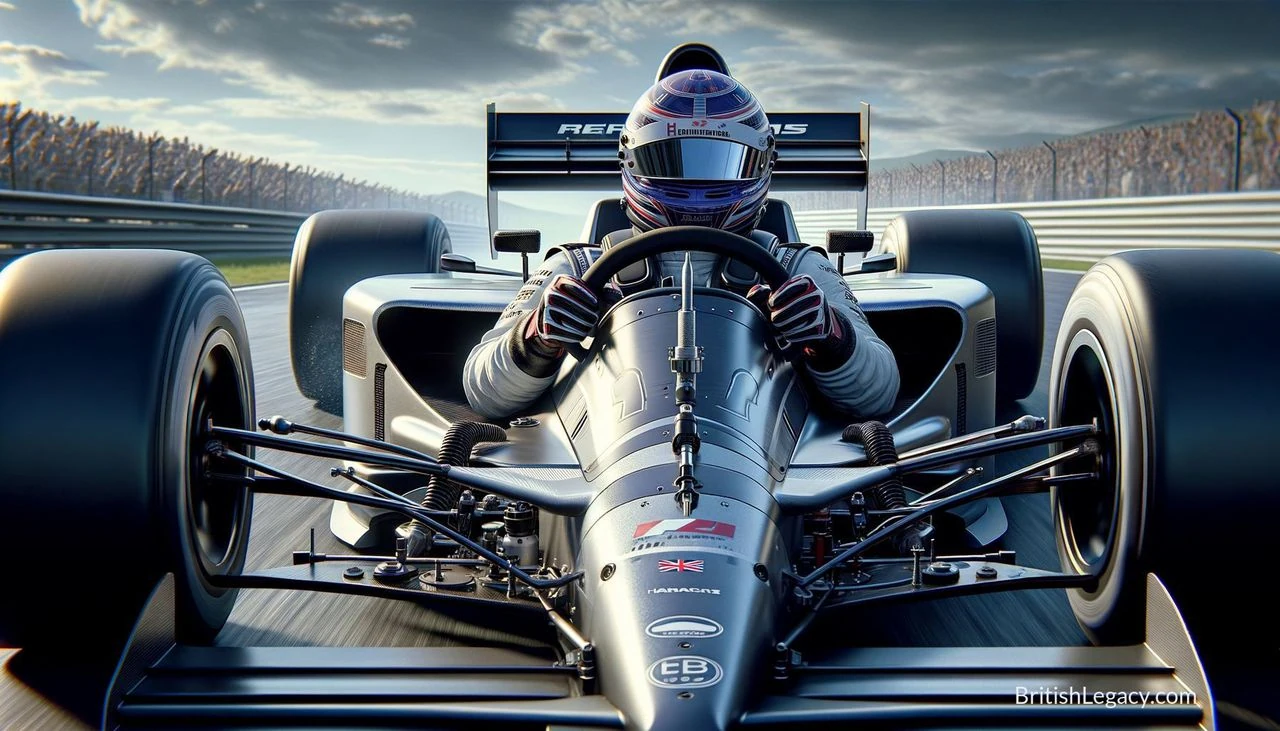
Nigel Mansell’s 1992 Formula One title was the reward for a long apprenticeship, not a sudden arrival. He had started in karting, financed his progress through the ranks himself and survived serious injuries before becoming one of the sport’s leading drivers. In a Williams FW14B, he won nine of that season’s 16 Grands Prix and secured the championship with two races remaining. The following year, he crossed the Atlantic and won the American open-wheel championship on his first attempt.
Building a career from the ground up
Mansell was born in Upton-upon-Severn, Worcestershire, on 8 August 1953. His parents, Eric and Joyce, ran a tea shop, and he grew up in Hall Green, Birmingham, attending Hall Green Secondary School. Racing demanded money as well as ability. He used his own funds to work his way up, moving from karting into Formula Ford despite his father’s disapproval.
In 1976, he won six of the nine Formula Ford races he entered. The following year he became British Formula Ford 1600 champion, winning 33 of 42 races. That campaign included a serious accident at Brands Hatch: he broke his neck in qualifying and was warned that he had narrowly avoided quadriplegia. He left hospital against medical advice and returned to racing. He had also resigned from his job as an aerospace engineer and sold most of his belongings to finance his racing career.
His next step, Formula Three, brought more difficult lessons. His first team’s car was uncompetitive, and a later collision left him with broken vertebrae. Colin Chapman, the owner of Lotus, noticed Mansell’s driving during a test. Mansell did not immediately receive a race seat: he became a Lotus test driver before making three Formula One starts in 1980. A full-time place followed, but his four seasons as a Lotus driver were often frustrated by unreliable cars. He finished just 24 of his 59 starts with the team.
Williams, Ferrari and the near misses
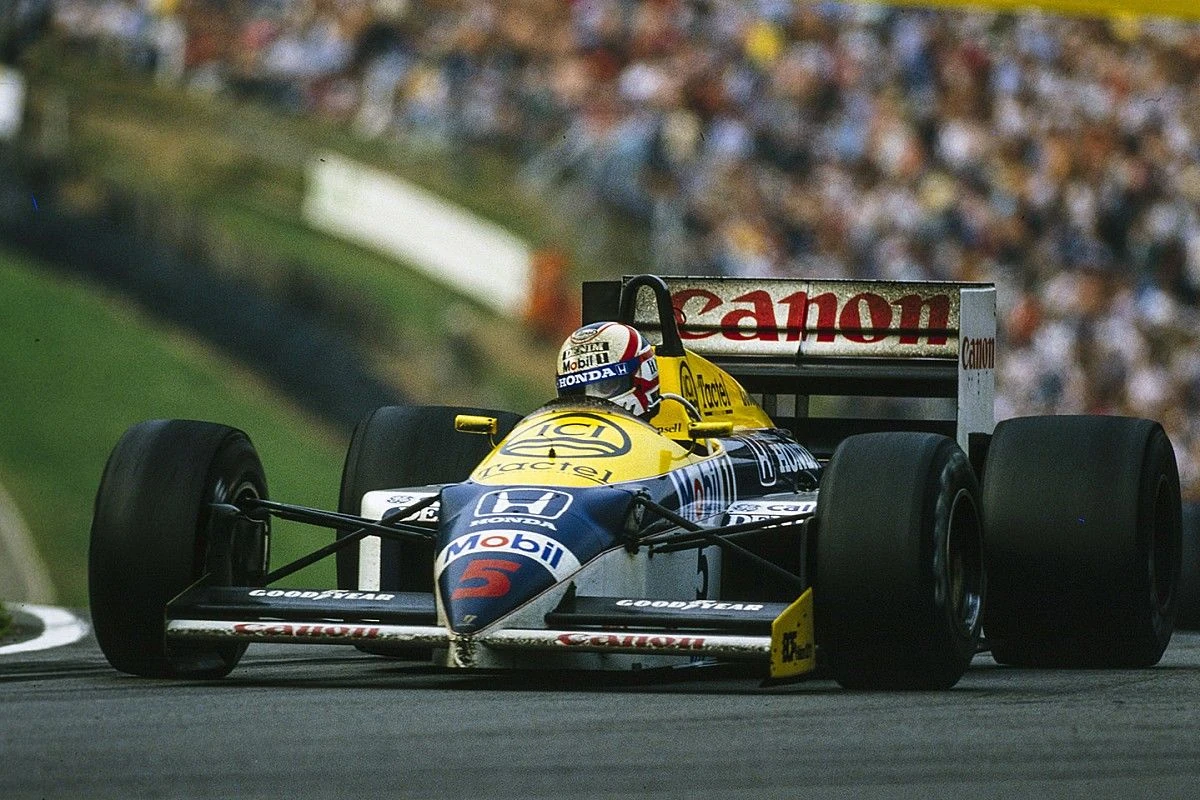
Mansell joined Williams in 1985. His first season there produced two victories, including his first Grand Prix win at Brands Hatch, and helped establish him as a front-running driver. The team’s red number 5 became his familiar calling card: a red numeral made the number easier to distinguish from his team-mate’s car, and BBC commentator Murray Walker popularised the name “Red Five”.
In 1986, Mansell won five races and led the championship before the final round in Australia. He was still in contention when a tyre failed with 19 laps remaining; he finished runner-up to Alain Prost. The following season brought six wins, but a qualifying crash in Japan injured his back and ruled him out of the final two races. Nelson Piquet, his Williams team-mate, took the title. In 1988, Williams lost its Honda engines and Mansell completed only two of the 14 races he entered, though both finishes were on the podium.
At Ferrari, in 1989 and 1990, the pattern remained uneven. Mansell won on his debut for the team in Brazil in 1989, becoming the first driver to win a Grand Prix in a car fitted with a semi-automatic gearbox. He ended that season fourth in the championship. Reliability problems and the arrival of Alain Prost as the team’s leading driver made 1990 more frustrating; Mansell won once and finished fifth overall. He announced that he would retire from Formula One, but Frank Williams persuaded him to return.
The title season and a change of continent
Mansell’s second Williams spell began with five consecutive wins in 1992. Driving the FW14B, with its active suspension, he built a commanding lead through the season. His title was confirmed at the Hungarian Grand Prix, where second place was enough to secure the championship with two rounds still to run. He finished the year with nine wins and 14 pole positions from 16 races. It was his third time finishing runner-up in the championship before finally becoming champion.
That success did not lead to an agreed return with Williams for 1993. Mansell moved instead to Newman/Haas Racing in the American CART series. He made an immediate impression, taking pole position and winning his first race at Surfers Paradise in Australia. After five victories that season, he won the CART championship. Because he remained the reigning Formula One champion while the CART season concluded, he became the only driver to hold both titles at the same time.
He returned briefly to Formula One with Williams in 1994, winning the final race of the season in Australia. In 1995, he joined McLaren but retired after two races, frustrated by the car’s handling. Later appearances included a return to the British Touring Car Championship in 1998 and, in 2005, victory in the inaugural Grand Prix Masters race. He also raced at the 24 Hours of Le Mans in 2010 with his sons Leo and Greg; their car retired after a crash.
British honours and a career beyond the cockpit
Mansell’s achievement was recognised in Britain as well as on the circuits. He won BBC Sports Personality of the Year in 1986 and 1992, and received the Hawthorn Memorial Trophy, awarded to the leading British or Commonwealth Formula One driver, seven times. He was appointed an Officer of the Order of the British Empire before being made a Commander in the 2012 New Year Honours for services to children and young people, through his role as president of UK Youth. He was inducted into the International Motorsports Hall of Fame in 2005.
He also served as a Formula One steward at several Grands Prix, including the British Grand Prix, after the sport introduced former drivers to its stewards’ panel. His racing identity travelled with him: in CART he continued to use the red number 5, while his 1994 Williams carried a red number 2. The familiar “Red Five” was not merely a nickname but a detail that connected his Williams years to his American title campaign.
Why Nigel Mansell deserves a place in British Legacy
Mansell’s place in British sporting history rests first on the route he took to the top. He began in Worcestershire and Birmingham, paid his way through the junior categories, and persisted after injuries that might have ended his career. His 1992 championship was built on a season of sustained results: nine victories and 14 pole positions, achieved in a British team’s Williams FW14B. The achievement gave British motor racing a world champion whose success was inseparable from the work of a major British constructor, not simply from individual courage behind the wheel.
His legacy also reaches beyond Formula One. By winning the CART title in his first season in the series, while still the reigning Formula One champion, Mansell achieved a distinction no other driver has matched. That move demonstrated his capacity to adapt to a different racing culture and machinery rather than relying on past acclaim. His honours, including two BBC Sports Personality awards and a CBE for services to children and young people, record both sporting achievement and public service. For British Legacy, his story offers a specific account of what persistence can produce: a driver who rose through British racing, became a world champion, then proved his ability on another continent.
Sources
Nigel Mansell — revision 1377887398 · Nigel Mansell
Adapted in part from Nigel Mansell by Wikipedia contributors, under CC BY-SA 4.0. Text has been edited and combined with the existing article; this adapted text is shared under the same licence. Contributor history.