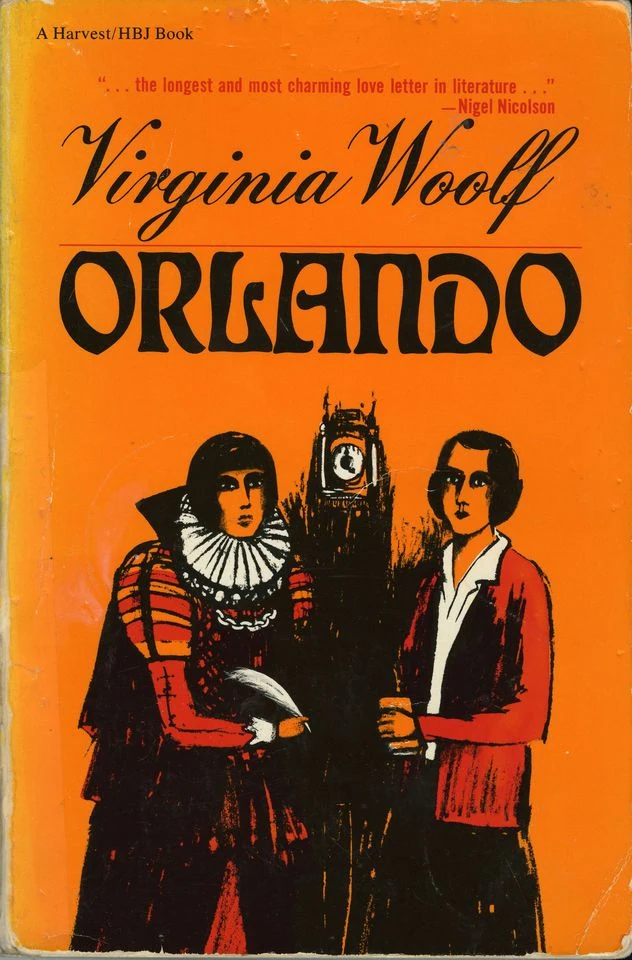
Virginia Woolf’s Orlando follows a life that ordinary biography could not contain. Its protagonist begins as an Elizabethan nobleman, passes through more than three centuries without ageing significantly and, in the eighteenth century, awakens as a woman. Published in 1928, the novel uses this fantastic premise to explore gender, identity and the ways a life is recorded. It is both a story about Orlando and a playful examination of the form that claims to tell it.
A life beyond ordinary biography
The story crosses successive historical periods, but Orlando does not experience time as a conventional biographical subject would. The change in sex is a turning point, while the protagonist’s continuing life invites questions about what remains constant and what changes. The novel’s biographical disguise is therefore more than a framing device: its extraordinary chronology puts the selection and arrangement of a life’s details in view.
That structure also makes gender and social roles part of the book’s inquiry. The supplied account describes the work as exploring the fluidity of gender and the expectations imposed by society. Rather than treating identity as a simple, fixed description, the story follows a protagonist whose place in the world changes. Woolf’s mixture of historical detail and fantasy gives her room to test the conventions through which both identity and history are represented.
Woolf, Sackville-West and the novel’s reception
Orlando appeared during a period the supplied article describes as one of innovation in literature and the arts. Woolf was a member of the Bloomsbury Group and is associated there with modernist literature and stream-of-consciousness writing. The novel’s unusual span and playful treatment of biography sit alongside those literary interests without making it a conventional historical account.
Woolf’s close friend Vita Sackville-West is identified as an inspiration. The original account connects this to Sackville-West’s androgynous beauty and complex sense of identity, and describes the book as often viewed as a tribute to her. That personal association provides context, but does not exhaust the novel’s concerns with gender, history and the representation of a life.
The article reports that the book was praised for its wit and innovative structure, and notes its blend of historical detail and fantasy. It has been celebrated as an early and striking exploration of gender fluidity in Western literature. Its afterlife includes stage productions and a film directed by Sally Potter in 1992. An edition is listed at Amazon; this is a purchase link, not research evidence.
Why Orlando deserves a place in British Legacy
Orlando merits a place in British Legacy because Woolf makes literary form serve the novel’s questions. By extending an Elizabethan protagonist’s life across centuries, and placing a transformation at the heart of that journey, she unsettles the assumption that a biography can describe identity as fixed or straightforward. The novel’s combination of fantasy and historical detail gives its examination of gender and social expectations a distinctive structure: the reader follows a life while also seeing how difficult it is to fit that life into familiar categories.
Its contribution also lies in the range of discussion it sustains. The book’s reported wit and innovative structure, its association with Sackville-West, and its subsequent stage and film adaptations give readers several points of entry, without reducing the work to any one of them. Potter’s 1992 film carried the story into another medium, while continuing attention to the novel’s treatment of gender and biography reflects the durability of its central questions. These specific literary and cultural qualities explain its British connection and make Orlando more than a celebrated premise: it is a work that asks how histories are shaped and who can be represented within them.