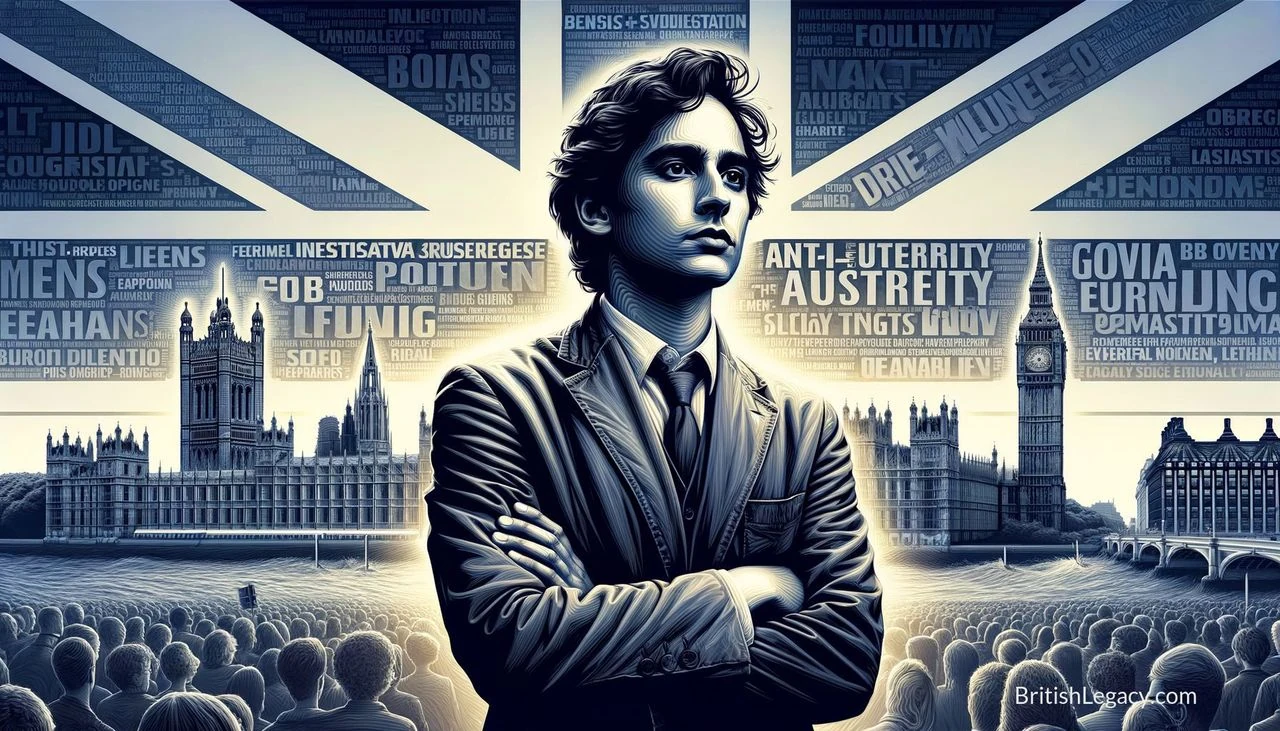
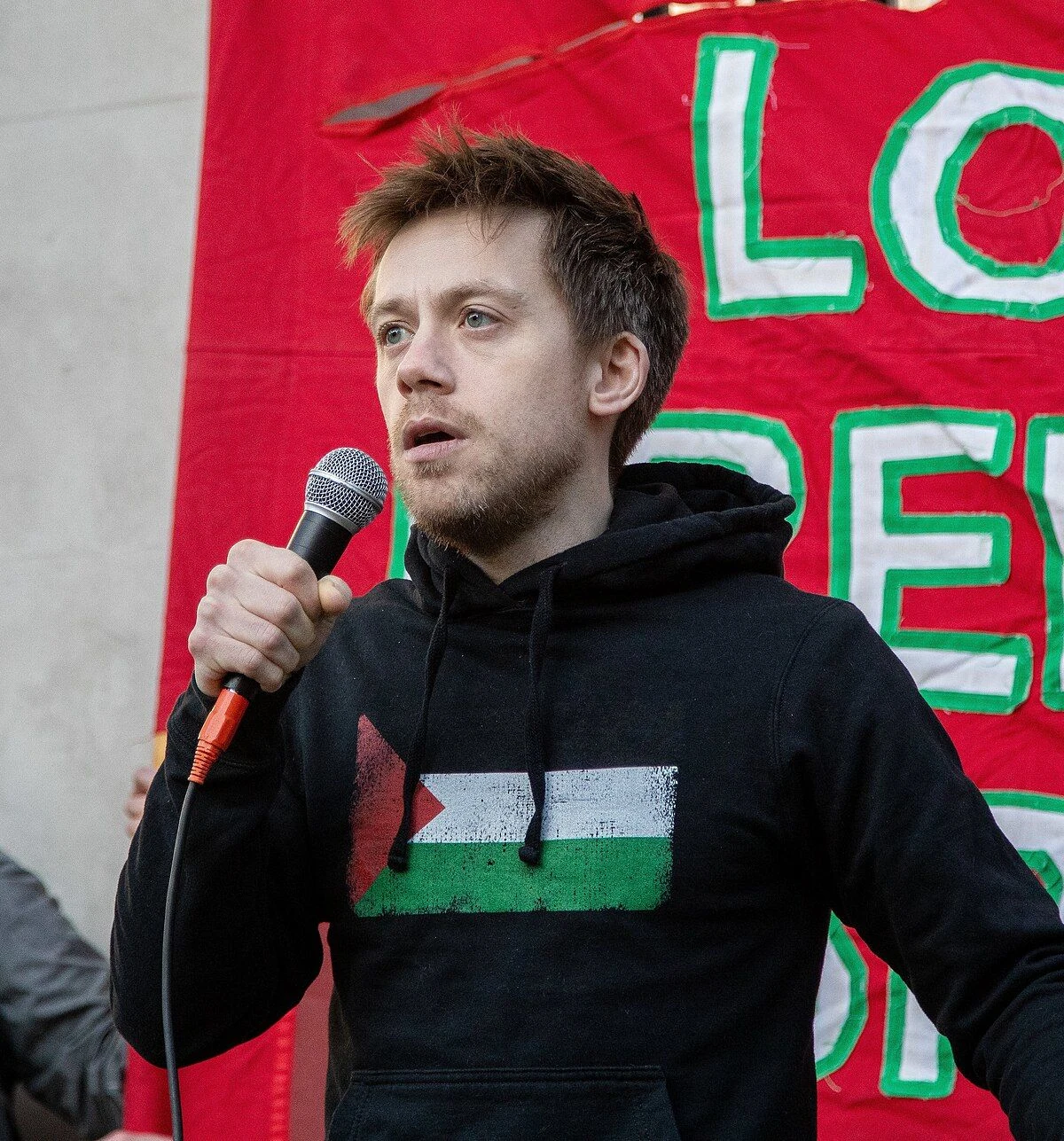
When Owen Jones published Chavs: The Demonization of the Working Class in 2011, he asked readers to take a familiar insult seriously. The word, he argued, was more than a sneer: it helped make contempt for working-class people seem ordinary, and disguised the inequality behind that contempt. The book established a subject that would run through much of his career: how Britain talks about class, who shapes that conversation, and what is obscured when prejudice passes for common sense.
Jones was born in Sheffield on 8 August 1984 and grew up in Stockport. He studied history at University College, Oxford, graduating in 2005, and worked in trade union and parliamentary politics before becoming a journalist. His writing has ranged across books, newspaper columns, public meetings, lectures and online programmes. It is openly political, but its reach does not depend on agreement with every conclusion. His distinctive contribution has been to make contested questions of inequality and power accessible to readers beyond specialist political circles.
From Stockport to journalism
Jones attended Bramhall High School and Ridge Danyers Sixth Form College before reading history at Oxford. After university, he worked as a trade union lobbyist and as a parliamentary researcher for Labour MP John McDonnell. These early jobs placed him close to organised labour and parliamentary politics, two settings that would remain important in his writing. They also gave him experience of institutions and political language he would later examine as a columnist and author.
Before his journalism career took shape, Jones was hired by the historian Eric Hobsbawm to index and archive his papers. His subsequent writing would combine political advocacy with an interest in history and the ways ideas about class become established and repeated.
Jones first wrote for The Independent, then moved to The Guardian, where he became a weekly columnist in March 2014. His work has also appeared in the New Statesman, the Sunday Mirror and Le Monde diplomatique. He writes from a left-wing perspective. That is not a neutral stance, and the value of his work does not depend on pretending otherwise: he argues from a declared political position and brings that perspective into debates often presented as settled or merely technical.
What Chavs made visible
Published in 2011, Chavs was Jones’s first book and the intervention that brought him national attention. Its subject was the cultural caricature of working-class people as boorish or antisocial. Jones examined that caricature and challenged the idea that it was harmless humour. His argument connected popular representations of working-class people with wider questions of inequality, social status and whose experiences receive respect.
The book’s force came from taking a routine form of ridicule as a subject for sustained political argument. Stereotypes can influence how people understand those they rarely meet; they can also make unequal treatment easier to defend. Jones’s approach encouraged readers to ask what a joke about class might conceal, and why some groups can be mocked with little public resistance while others are treated with greater care.
That method—taking familiar language apart and asking what it does—became a recognisable feature of his work. Rather than treating popular culture as separate from politics, Chavs put television caricatures and social attitudes into the same discussion as class and power. Readers need not accept every part of Jones’s analysis to see the importance of the question it posed: how does contempt become normal, and what consequences follow when it does?
The book received early recognition. Jones was named Journalist of the Year at the Stonewall Awards in 2012, jointly with The Times journalist Hugo Rifkind. In 2013, he won the Young Writer of the Year prize at the Political Book Awards. He donated half of the £3,000 award to support Labour parliamentary candidate Lisa Forbes’s campaign and half to Disabled People Against Cuts. The choices attached to the prize reflected the connection, central to his public identity, between political writing and practical campaigning.
From class stereotypes to institutions
Jones widened his subject with The Establishment: And How They Get Away With It, published in September 2014. Where Chavs concentrated on the treatment of working-class people, the later book examined networks of influence across British political and economic life. Its focus included Westminster, the media, business and finance. The change in scale mattered: it shifted attention from people made into objects of public judgement to the institutions and relationships that help decide how power is used.
The two books are linked by a question about who benefits from the stories Britain tells about itself. In Chavs, Jones challenged the assumptions carried by a label. In The Establishment, he turned towards the people and institutions able to set the terms of national debate. This is not a claim that every part of British public life works as one unified system. It is an attempt to make connections between politics, media and economic influence visible to a general readership.
His later books continued to address the prospects and arguments of the left. The Alternative: And How We Build It appeared in 2019. This Land, published in 2020, examined the struggle for the left; it was originally published under the title This Land: The Struggle for the Left. These works extend a career built around more than criticism. They address political choices and possible directions for change, while recording disputes and failures within the movements and parties involved.
Together, the books form a sustained engagement with Britain’s institutions and political culture. Jones writes for a broad audience rather than a specialist one, making arguments about class, influence and political organisation in a form that can travel beyond academic or parliamentary settings. The accessible style does not make the subject simple. It makes the argument available to people affected by political decisions but not usually treated as the intended audience for detailed discussion of power.
Journalism and campaigning
Jones’s work has crossed between the newspaper page and public campaigning. In 2013 he spoke at the launch of the People’s Assembly Against Austerity, which brought together trade unionists, campaigners and public figures opposed to spending cuts. He also addressed regional meetings leading up to a national meeting at Central Hall Westminster. These events placed his writing within a wider attempt to organise public opposition to austerity, rather than leaving the argument in print.
That year he delivered the Royal Television Society’s Huw Wheldon Memorial Lecture, titled Totally Shameless: How TV Portrays the Working Class. The subject continued the concerns of Chavs, while the setting made them part of a discussion about television and public representation. Jones has repeatedly treated the media not just as a channel for political messages, but as a force that shapes whose lives are shown and how audiences are invited to judge them.
His work has also moved into digital formats. He presents The Owen Jones Show and The Owen Jones Podcast, extending a career that has included columns, books, public meetings, lectures and broadcast appearances. Across these platforms, he has sought to make political debate available beyond Westminster. Commentary, in this approach, is not only a description of events but a way of arguing over what those events mean.
Such a position inevitably invites disagreement. Jones’s writing is openly left-wing and often polemical; it is not an attempt to stand above political conflict. A fair account of his contribution should neither disguise that commitment nor confuse it with universal agreement. His significance lies in taking arguments about class, inequality and power into mainstream discussion, where readers can contest them. The role of a columnist is not to settle every debate, but Jones has helped make some of its underlying questions harder to ignore.
LGBT rights and public life
Jones is gay and has spoken and written about LGBT rights as part of his wider political work. His recognition at the Stonewall Awards in 2012 came early in his career, but his public engagement has not been confined to receiving an honour. He has addressed LGBTQ rights and transphobia, bringing questions of dignity and equality into the same public arena as his writing on class and political power.
His approach treats the rights of minority groups as a matter of public life, not a separate concern for a specialist audience. That connection matters in a career that has repeatedly examined who is represented, whose interests count, and who is permitted to speak as part of the national conversation. Jones’s openness about his sexuality forms part of that record, without reducing his work to a single aspect of his identity.
In August 2019, Jones and friends were attacked outside a pub in north London. All the perpetrators were convicted. The judge at Snaresbrook Crown Court ruled that the attack had been carried out because of Jones’s sexuality and political views. The episode is a stark part of his public history, but it should not stand in place of the work itself. It shows that political identity and sexuality can become targets beyond the arguments made in newspapers or online.
Recognition and political change
In 2015, Staffordshire University awarded Jones an honorary Doctor of the University degree in recognition of his campaigning on social inequality. The award acknowledged a body of work that has tried to connect broad political claims with the consequences of inequality in people’s lives. It also recognised the public reach of work that brings questions of social power into wider debate.
Jones’s political affiliations have changed over time. He joined the Labour Party at 15 and remained a member until March 2024, when he cancelled his membership. In explaining his decision, he said the party had become a hostile environment for supporters of policies associated with Keir Starmer’s leadership campaign, including abolishing university tuition fees and supporting public ownership. He also criticised the party’s positions on bankers’ bonuses and a wealth tax. These were his stated reasons for leaving, not a neutral account of the party’s internal politics.
His relationship with Labour has not been one of unqualified loyalty. Jones has also criticised Jeremy Corbyn’s leadership. In a 2017 Guardian column, he argued that the leadership was clearly failing and warned that Labour risked electoral defeat under Corbyn. In the 2024 general election, Jones supported We Deserve Better, a group that campaigned against Labour in favour of Green and independent candidates. These changes show a political writer willing to argue with parties and leaders on his own side as well as with those he opposes.
That independence is useful context for reading his work. Jones has campaigned on the left, but his writing is not simply a record of repeating party positions. His public interventions have included criticism and changing political allegiances. A reader may disagree with his choices; understanding them is still important to understanding the writer. The thread joining them is continued argument about inequality, representation and political direction.
Why Owen Jones deserves a place in British Legacy
Owen Jones deserves a place in British Legacy because his work has made class prejudice and political power subjects for sustained popular argument. Chavs challenged readers to see that ridicule of working-class people is not necessarily harmless or detached from inequality. The Establishment widened the lens to the institutions and networks that influence British public life. Later books carried the inquiry into political alternatives and the condition of the left. Across those works, Jones has made complex arguments available to a broad readership without presenting them as politically neutral.
His contribution also lies in the range of settings in which he has pursued those arguments. He has worked in newspapers, published books, addressed meetings and lectures, spoken at the launch of the People’s Assembly Against Austerity and developed online programmes. His engagement with LGBT rights brings another strand of public life into that record. These activities do not prove that he has changed policy, and this feature makes no such claim. They do show a sustained effort to bring questions of dignity, inequality and influence into public conversation.
Jones is not a figure whose legacy rests on universal agreement. His openly left-wing writing invites challenge, and his changing relationship with Labour makes clear that his political commitments have not been identical to party loyalty. That is part of his significance as a British columnist: he has repeatedly argued over the language and institutions through which the country understands itself. Readers may dispute his analysis, but the debates he has helped foreground—about class, who holds power and whose rights receive attention—remain important to British public life.
Sources
Adapted in part from Owen Jones by Wikipedia contributors, under CC BY-SA 4.0. Text has been edited and combined with the existing article; this adapted text is shared under the same licence. Contributor history.