
Ozwald Boateng’s work brings together the precision of British tailoring and a confident approach to colour and form. He began selling clothes to fellow students, opened his first studio in Portobello Road in 1991 and presented a collection at Paris Fashion Week in 1994. The following year, he opened a boutique at the south end of Savile Row. Over the decades that followed, his work reached beyond bespoke suits, from a creative directorship at Givenchy to uniforms for British Airways.
Learning to cut and make clothes
Born in Muswell Hill, London, on 28 February 1967, Boateng is the son of Ghanaian immigrants. He has described being inspired by his father’s immaculate suits. When he was eight, his mother gave him a double-breasted suit in purple mohair; at 14, he found summer work sewing linings into suits. These early encounters with clothing combined an interest in how garments were made with an eye for their appearance.
Boateng was studying computer science at Southwark College when, aged 16, his then-girlfriend introduced him to cutting and design. He began making clothes on his mother’s old sewing machine and selling them to fellow students. He switched courses to fashion and design, then helped a friend make clothes for a fashion show. After his work was praised, he sold his first collection to a menswear shop in Covent Garden. The sales gave him the means to establish a studio in Portobello Road in 1991.
In 1994 he staged his first catwalk presentation during Paris Fashion Week. It was a significant public step for a young designer working in menswear: the show brought his tailoring to an international fashion audience, and its success helped make possible his move to Savile Row.
A new presence on Savile Row
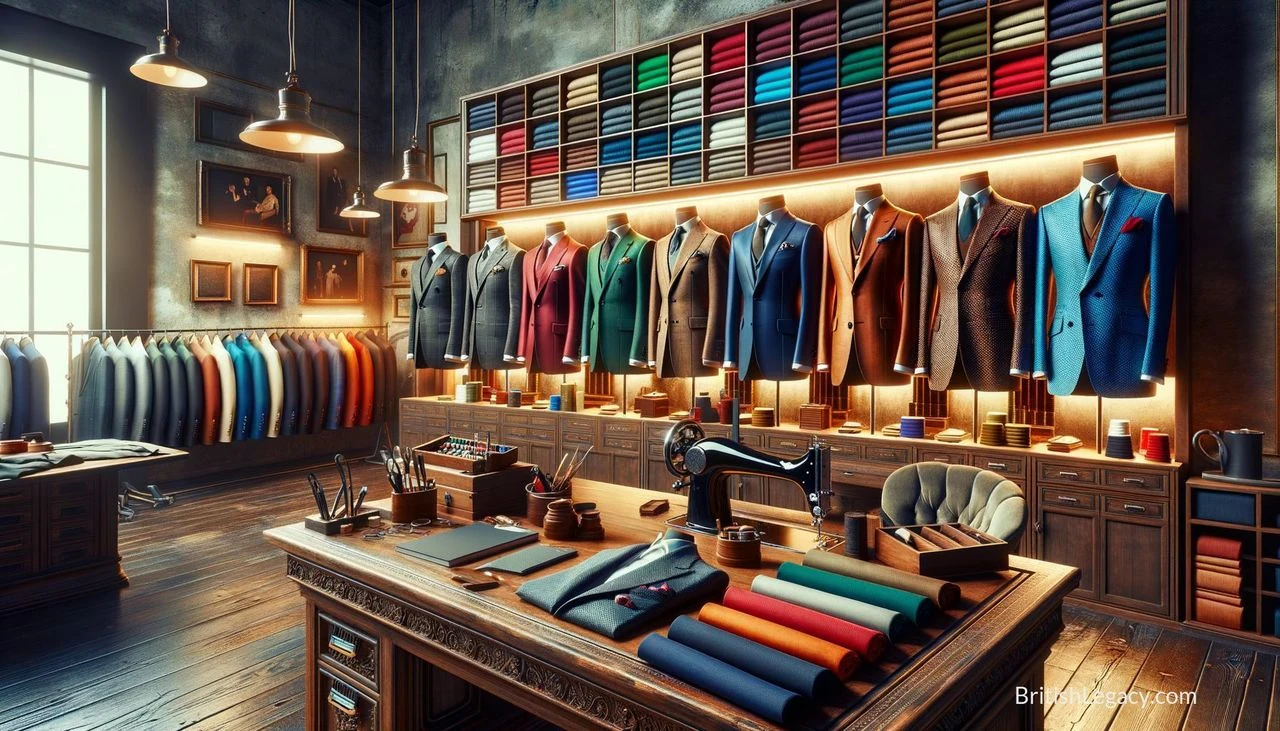
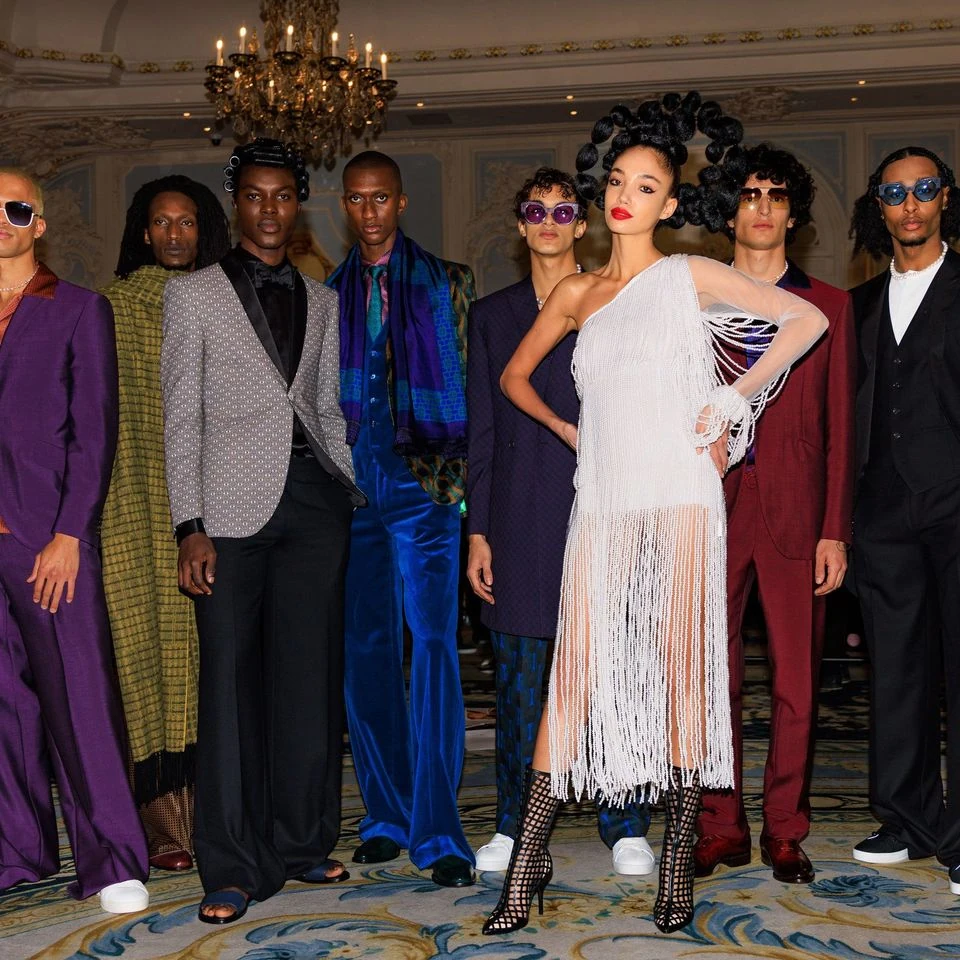
In 1995, Boateng opened a boutique on Vigo Street, at the southern end of Savile Row. His approach put a contemporary stamp on a street associated with bespoke tailoring. Strong colours, striking linings and a close attention to cut became part of the recognisable look of his suits, while the work remained grounded in the craft of tailoring. Rather than treating tradition as a fixed style, he used it as a basis for change.
Boateng’s designs helped draw younger customers to Savile Row and widen ideas about how a tailored suit could look. His business also grew beyond bespoke commissions. It produced two ready-to-wear collections a year, made at the former Chester Barrie factory in Crewe, Cheshire. The combination of bespoke work and ready-to-wear brought his designs to different kinds of customers without reducing his work to a single signature suit.
In June 2002, Boateng moved fully into Savile Row. A new flagship shop and headquarters opened at 30 Savile Row in 2008. The building’s signs and interiors were co-designed with British-Ghanaian architect David Adjaye. Alongside clothing, Boateng extended the brand into fragrance, launching a women’s perfume product in 2003. These projects show how his practice developed from a tailor’s studio into a broader design business.
Design beyond the suit
Boateng’s work has also appeared in film and television. He designed costumes for productions including Mo’ Better Blues, Lock, Stock and Two Smoking Barrels, Tomorrow Never Dies, The Matrix and Sex and the City. These commissions took his understanding of line, character and dress beyond the wardrobe of the private client.
In 2004, French fashion house Givenchy appointed him creative director of menswear. He presented his first collection for the house in Paris in July that year and left after the Spring 2007 collection. The role placed a designer known for tailoring on the international runway, working within a major fashion house and engaging with the question of how to give menswear a distinct contemporary identity.
His collaborations have included practical as well as ceremonial design. In 2004, he created amenity kits for Virgin Atlantic’s Upper Class and a purple “World Credit Card” for Coutts. In 2007, Ghana’s president, John Agyekum Kufuor, commissioned him to design and stage a show for the African Union summit in Accra. The event coincided with the 50th anniversary of Ghanaian independence and the bicentenary of the ending of the transatlantic slave trade.
In 2018, British Airways announced Boateng as the designer of its new uniform. The collection, developed over four years with departments across the airline, launched in 2023 as part of the carrier’s centenary celebrations. It was a large-scale design commission with a distinctly British setting: the clothes had to work for staff across different roles, while presenting a coherent identity to travellers.
Film, public life and African development
Boateng has made films as well as designing for them. His feature documentary, A Man’s Story, directed by Varon Bonicos, followed him from 1998 to 2010 and was released in 2012. An eight-part series, House of Boateng, tracked the expansion of his brand in the United States. He also directed short films and made Why Style Matters with BBC Four, a documentary about Savile Row and renewed interest in tailoring.
His public work has included involvement with the REACH committee, appointed in 2008 to identify and recruit role models to help raise the aspirations of black boys. He also co-founded the Made in Africa Foundation with Kola Aluko, in partnership with Atlantic Energy. The UK non-profit’s stated purpose was to assist development in Africa by providing first-stage funding for feasibility studies and business development for large-scale infrastructure projects. The foundation’s work extended Boateng’s engagement with African development beyond fashion, though it was distinct from his design business.
Why Ozwald Boateng deserves a place in British Legacy
Ozwald Boateng deserves a place in British Legacy because his career offers a specific account of how British tailoring can change without losing its technical foundations. His path ran from learning to sew and selling clothes to fellow students to opening a boutique on Savile Row, presenting work in Paris and building a business that encompassed bespoke tailoring, ready-to-wear and a flagship shop. His use of vivid colour and contemporary cuts helped bring a younger audience to a tradition often associated with restraint. That contribution is more substantial than a change in appearance: it showed that the established craft could accommodate new customers, ideas and designers.
His influence also reached beyond the suit. Costume work, Givenchy collections, commercial collaborations and the British Airways uniform put his design practice into settings where clothing communicates character, service and institutional identity. The uniform project, in particular, connected a British-Ghanaian designer’s work with the everyday working lives of airline staff and the experience of passengers. His involvement with REACH and the Made in Africa Foundation further records work outside fashion, including efforts to raise aspirations and support development planning. Taken together, these achievements make Boateng’s legacy one of design rooted in British tailoring but not confined to it: a body of work that has widened who and what Savile Row can represent.
Sources
Ozwald Boateng — Wikipedia revision
Adapted in part from Ozwald Boateng by Wikipedia contributors, under CC BY-SA 4.0. Text has been edited and combined with the existing article; this adapted text is shared under the same licence. Contributor history.
.jpg)