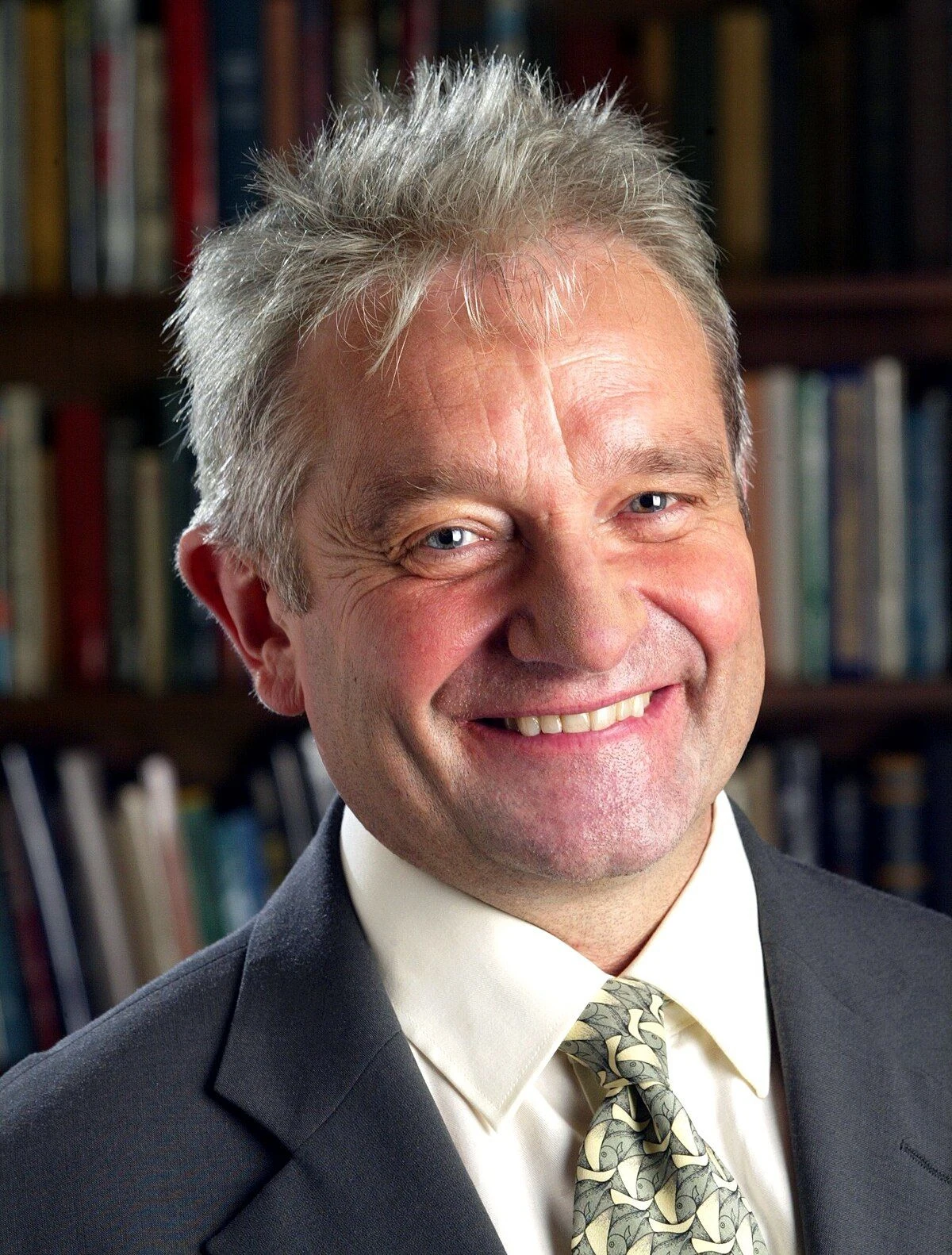
Cell division is a basic process of life, but it depends on a tightly controlled sequence of events. Paul Nurse’s research helped reveal part of the molecular machinery that governs that sequence. His identification of a key gene in fission yeast, and the later identification of its human counterpart, contributed to discoveries recognised with the 2001 Nobel Prize in Physiology or Medicine. Alongside his laboratory work, Nurse has held senior roles in British cancer research and scientific institutions, and has served two separate terms as President of the Royal Society.
Education and the beginnings of a research career
Nurse was born in Norwich, Norfolk, on 25 January 1949. He studied biology at the University of Birmingham, graduating with a BSc in 1970, and completed a PhD at the University of East Anglia in 1973. His doctoral research concerned the yeast Candida utilis. After his PhD, he continued his research at the University of Edinburgh, working in Murdoch Mitchison’s laboratory from 1973 to 1979. He also undertook postdoctoral work at the University of Bern and the University of Sussex.
These early years established a pattern that would shape his career: fundamental questions about cell biology pursued through experimental genetics. Rather than beginning with a particular treatment or disease, Nurse investigated the mechanisms that allow a cell to grow, copy its genetic material and divide. Understanding those mechanisms would become important to biology well beyond the study of yeast.
Following the machinery of cell division
From 1976, Nurse identified and studied cdc2 in fission yeast, Schizosaccharomyces pombe. The gene helps regulate transitions in the cell cycle: the stages through which a cell grows, prepares to duplicate its DNA and divides. In 1987, working with postdoctoral researcher Melanie Lee, he identified the corresponding human gene, Cdk1.
The work connected a gene found in yeast with a related mechanism in human cells. The genes produce proteins involved in regulating cyclin-dependent kinase activity, a central part of the control system for the cell cycle. Nurse shared the 2001 Nobel Prize in Physiology or Medicine with Leland Hartwell and Tim Hunt for discoveries concerning the protein molecules that control cell division. Their work helped explain how the orderly progression of the cell cycle is regulated.
Cell-cycle control is relevant to cancer because disruption of normal controls can contribute to abnormal cell growth. Nurse’s research provided fundamental knowledge about those controls; it is more precise to describe it as foundational biological research than to claim that it directly produced particular cancer therapies. Its significance lies in clarifying processes that researchers need to understand when investigating both normal development and disease.
From cancer research to scientific institutions
In 1984, Nurse joined the Imperial Cancer Research Fund (ICRF). He left in 1988 to chair the University of Oxford’s department of microbiology, then returned to the ICRF as Director of Research in 1993. In 1996 he became its Director-General. The ICRF and the Cancer Research Campaign merged in 2002 to form Cancer Research UK. This chronology places Nurse’s ICRF leadership before the merger; it does not support the claim that he was Chief Executive of Cancer Research UK from 2003 to 2010.
In 2003, Nurse became President of Rockefeller University in New York, where he continued research on the cell cycle of fission yeast. He held the post until 2011. The same year, he became the first Director and Chief Executive of the UK Centre for Medical Research and Innovation, which became the Francis Crick Institute. His association with the Crick was therefore a leadership role beginning in 2011, not a current directorship.
Nurse first served as President of the Royal Society from December 2010 to December 2015. He returned to the office on 1 December 2025. These two terms link his scientific leadership to one of Britain’s principal learned societies, whose work includes making the case for science in public life. He has also been Chancellor of the University of Bristol since 2017.
Recognition and public engagement
The Nobel Prize is among a series of honours recognising Nurse’s research. He was elected a Fellow of the Royal Society in 1989, received the Royal Medal in 1995 and the Albert Lasker Award for Basic Medical Research in 1998, and was knighted in 1999. Later awards include the Copley Medal in 2005 and the Albert Einstein World Award of Science in 2013. He was appointed a Member of the Order of the Companions of Honour in 2022 and to the Order of Merit in November of that year.
Nurse has also written for a broader readership. His book What Is Life?: Understand Biology in Five Steps appeared in 2020; a version titled What Is Life?: Five Great Ideas in Biology followed in 2021. The titles reflect a continuing interest in communicating the principles of biology beyond specialist research. His scientific career has included laboratory work, leadership of research organisations and roles through which he can speak about the place of science in society.
Why Paul Nurse deserves a place in British Legacy
Paul Nurse’s place in British Legacy rests first on a specific scientific contribution. By identifying cdc2 in fission yeast and, with Melanie Lee, its human counterpart, he helped show how a key regulator of cell-cycle progression operates across very different organisms. The 2001 Nobel Prize recognised this work as part of a wider set of discoveries about the proteins controlling cell division. Its importance is not a promise of a direct cure; it is the deeper contribution of explaining a basic process on which further biological and medical research depends.
His British connection is also evident in the institutions where he has worked and served. He studied at Birmingham and the University of East Anglia, pursued research at Edinburgh and Sussex, and held senior posts at the Imperial Cancer Research Fund and the Francis Crick Institute. His two terms as President of the Royal Society place him in a position to represent science in a prominent British institution, while his Bristol chancellorship extends that connection into higher education. The combination of research, cancer-research leadership and public scientific service makes his legacy more substantial than a list of prizes: it shows how discoveries made through basic biology can sit alongside the work of sustaining research institutions and communicating why evidence matters.
Sources
Paul Nurse — Wikipedia revision 1375455506
Adapted in part from Paul Nurse by Wikipedia contributors, under CC BY-SA 4.0. Text has been edited and combined with the existing article; this adapted text is shared under the same licence. Contributor history.