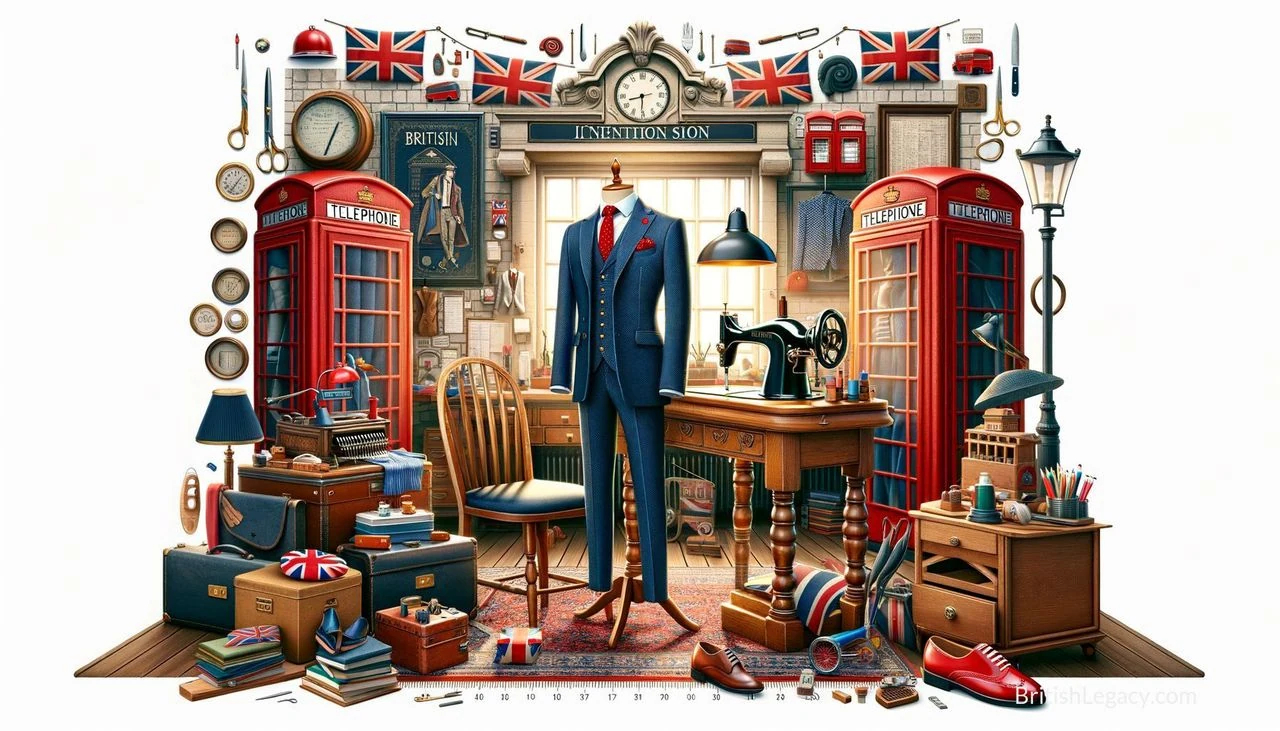
Paul Smith’s fashion career began in Nottingham, not in a grand design house but with a shop he opened in 1970. The business grew around a clear contrast: familiar tailoring and carefully made clothes, enlivened by colour, wit and unexpected details. That combination became the defining idea of the Paul Smith label and helped carry a distinctly British approach to clothing into an international market.
A change of direction
Smith was born in Beeston, Nottinghamshire, in 1946. As a young man, he was passionate about cycling and hoped to pursue it seriously. The supplied account says that a serious accident at 17 changed the course of his plans. During his recovery, he became interested in art and fashion. Rather than entering the industry through formal design training, he developed that interest locally, with Nottingham as the setting for his first steps into retail.
In 1970, he opened his first shop in the city. It was modest in scale, but gave Smith a place to develop his own eye and begin building a business. The original account describes regular trips to Paris, twice a year, as part of this early period. Those visits connected his work with an international fashion centre while his base remained in Nottingham. In 1976, he presented a collection in Paris, an early milestone in the label’s move beyond its home city.
Classic clothes, unexpected details
The central idea in Smith’s designs is the meeting of convention and surprise. Tailoring provides a recognisable structure; colour, pattern and smaller irregularities prevent it from feeling predictable. The supplied article points to bright linings, mismatched buttons and unconventional prints, including a floral pattern inside a jacket. These details suggest a design approach that does not discard traditional clothing so much as alter the experience of wearing it.
That contrast also gives the brand a practical identity. A suit can retain the lines and finish associated with conventional tailoring while revealing a more playful character in its lining or colour. The original account characterises Smith’s outlook as “classic with a twist”. The phrase is useful not as a claim that every garment follows one formula, but as a concise description of the balance the label sought: familiarity without solemnity, and novelty without abandoning craft.
Beyond the first shop
Smith’s business expanded from Nottingham into a wider retail presence. The supplied article describes a Covent Garden flagship and more than 300 shops worldwide, although it gives no date for that figure; it should therefore be read as a snapshot in the original account rather than a current store count. It also notes the use of antiques and artworks in shop interiors, indicating that the retail environment was intended to express a broader visual sensibility as well as display clothes.
The article reports that Smith’s creative work extended to photography and furniture design, and names collaborations with Mini, Burton Snowboards and the English Football Association. It also associates him with the design of British Olympic team uniforms. These examples point to a career presented as reaching beyond clothing, but the supplied material does not provide dates or further detail about those projects. The account records that Smith was knighted by Queen Elizabeth II in 2000 for services to British fashion.
Why Paul Smith deserves a place in British Legacy
Paul Smith’s place in British Legacy rests on a specific achievement: building a fashion identity from the combination of British tailoring and an individual, playful treatment of colour and detail. The story begins in Nottingham, where a first shop gave him a base from which to develop a business, and reaches Paris through the presentation of a collection in 1976. That chronology matters. It shows a designer whose international profile grew from a British retail and creative base, rather than from an abstract claim to national style.
The label’s enduring idea also helps explain its wider cultural significance. By keeping the structure of familiar clothes while introducing unexpected elements, Smith’s approach made tradition available for reinterpretation rather than treating it as something fixed. The supplied account describes a business that extended into international shops and collaborations beyond fashion; it also records a knighthood for services to British fashion. Taken together, these details support a legacy grounded in design, enterprise and the projection of a British fashion identity abroad. The evidence here is limited to the supplied article, but its central account is clear: Smith made a recognisable contribution by giving classic tailoring a distinctive, less formal voice.