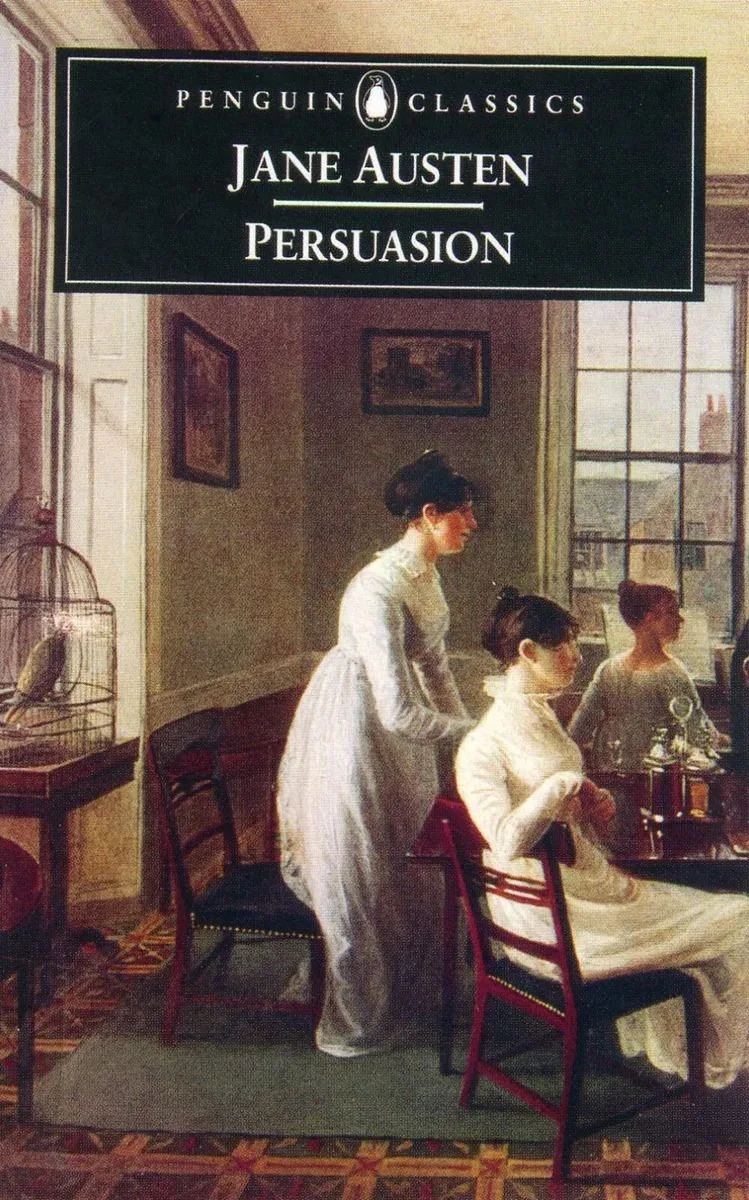
"Persuasion" by Jane Austen: A British Literary Gem
Overview
"Persuasion", the final completed novel by the beloved British author Jane Austen, stands as a poignant and mature exploration of love, loss, and the possibility of rekindled romance. Published posthumously in 1818, this work bridges the gap between the light-heartedness of Austen's earlier novels and the more contemplative themes of modern literature.
The Story
At its heart, "Persuasion" tells the story of Anne Elliot, a woman in her late twenties who had once been persuaded by her family and friends to break off her engagement to the man she loved, Captain Frederick Wentworth, due to his lack of fortune and uncertain prospects. Eight years later, Anne and Wentworth cross paths once more. Now a successful and wealthy naval officer, Wentworth re-enters Anne's social circle, reviving old feelings and offering both Anne and the reader a meditation on the theme of 'second chances'.
Origins and Authorship
Jane Austen began writing "Persuasion" in 1815, and completed it in 1816, just a year before her untimely death at the age of 41. Unlike her previous works that sparkle with wit and playful irony, "Persuasion" is characterised by a more somber and reflective tone, reflecting perhaps Austen's own life experiences and the maturity she gained over the years. This novel bears the mark of a writer who had grown in introspection and in her understanding of human nature.
Success and Legacy
Despite being published posthumously, "Persuasion" quickly found its place in the canon of classic British literature. Its more subdued and serious treatment of themes contributed to its reputation as one of Austen's finest works. Today, it is celebrated not just for its storyline, but for its rich characterisations and its adept portrayal of the social nuances of the early 19th century.
In promotion of the British legacy, "Persuasion" stands out for its comprehensive depiction of a society in transition, where personal merit and steadfastness begin to take precedence over aristocratic connections and inherited wealth. This can be seen as an innovative perspective for its time, thus endowing the novel with enduring relevance.
Contribution to British Literature
"Persuasion" holds a significant place in British heritage, representing a turning point in the Romantic era, where personal feelings and internal conflicts started being portrayed with greater complexity. Austen’s deft hand at illustrating the delicacies of human emotions, her insightful critique of societal norms, and her skill in unravelling the quieter tribulations of life, establishes "Persuasion" as a timeless piece that transcends its period.
The novel has inspired countless adaptations, including films, television series, and modern retellings, each bringing new audiences to Austen's work and ensuring its place in both academic and popular discussions of literary excellence.
Purchase Link
For those interested in delving into this moving tale, "Persuasion" is available on Amazon.
Wrap-Up
"Persuasion" is more than a mere novel; it is a symphony of unspoken emotions, societal criticisms, and eloquent prose. Jane Austen’s final completed work remains a testament to her unparalleled skill in capturing the essence of human experience, ensuring her prominent place in the annals of British literary heritage. For readers seeking a blend of romance, introspection, and social commentary, "Persuasion" stands as an exemplary choice.