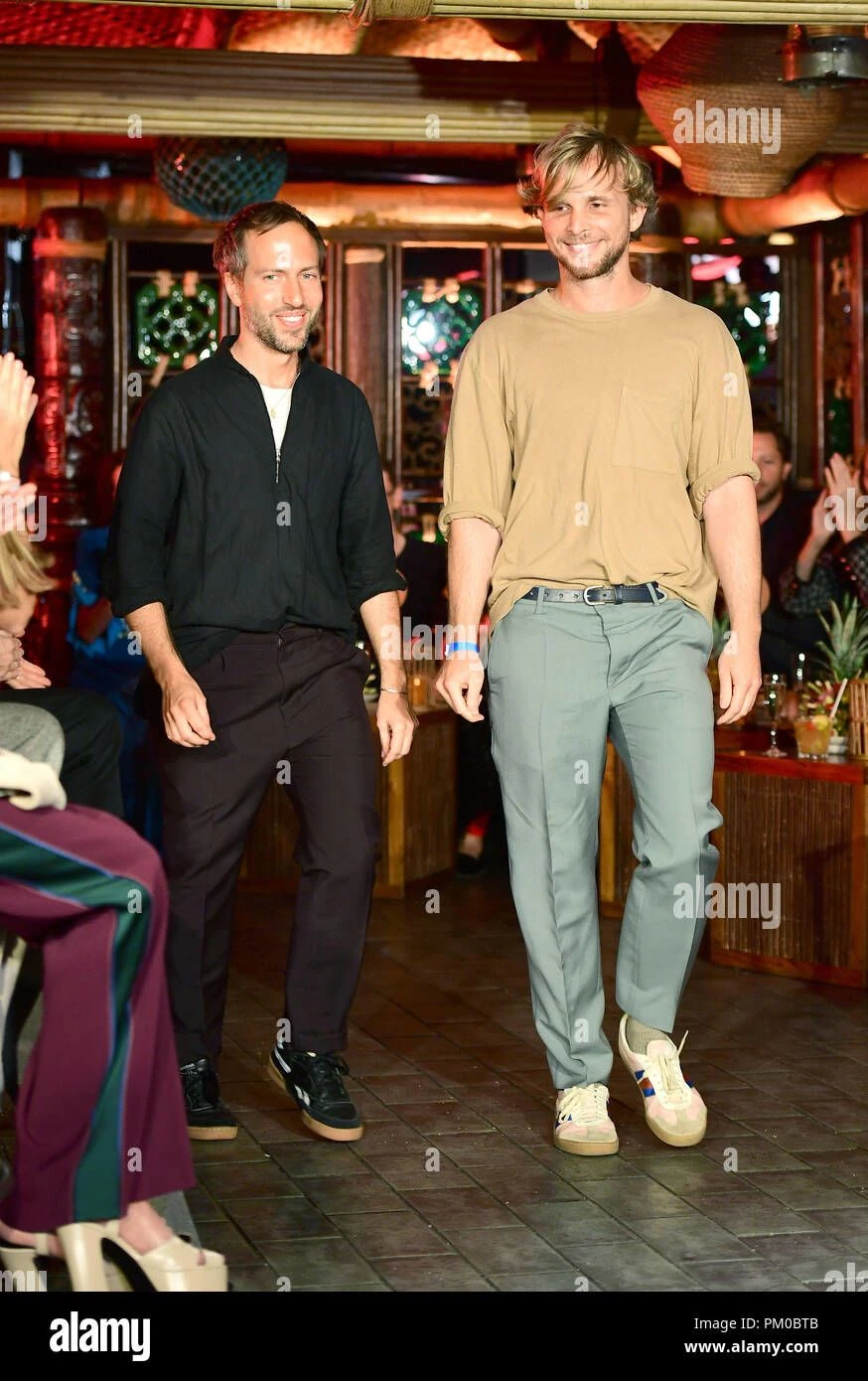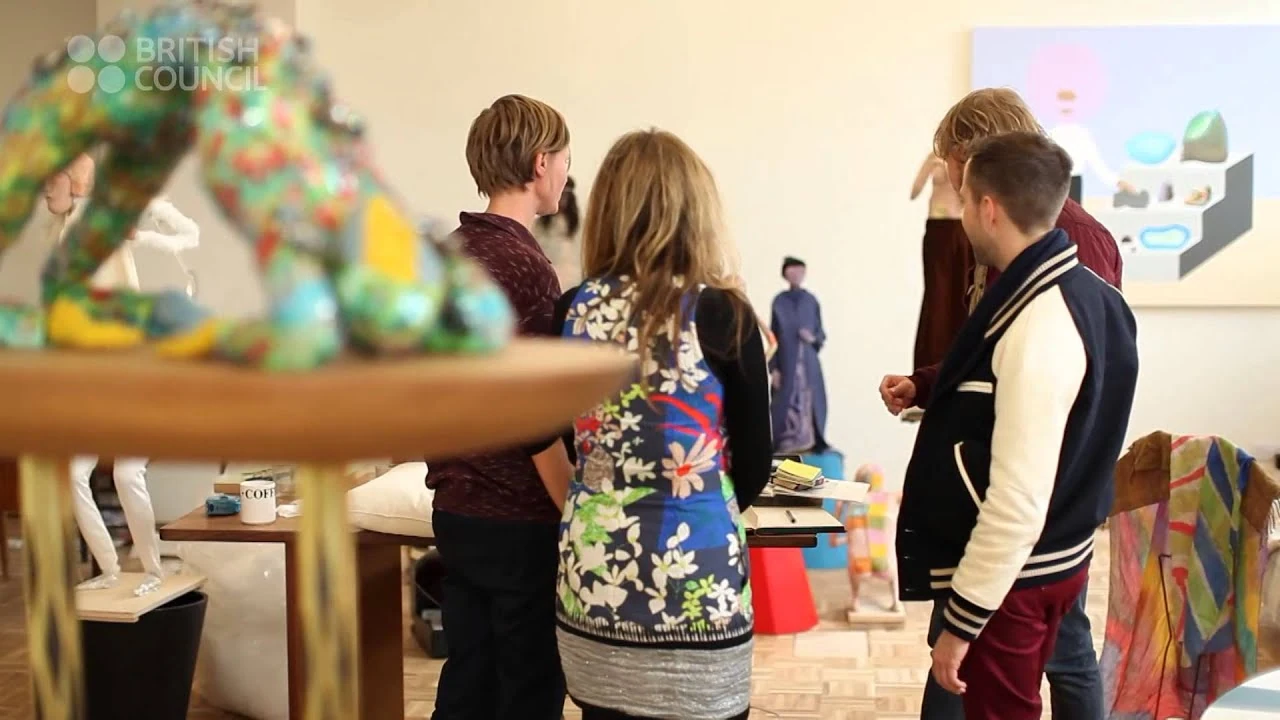
Peter Pilotto and Christopher De Vos built a fashion label around colour, print and the treatment of fabric. They met while studying at the Royal Academy of Fine Arts in Antwerp and established the Peter Pilotto label in 2007. Its collections combined playful patterns with modern designs, using techniques such as digital printing, embroidery and jacquard weaving. The designers’ work also reached beyond the fashion calendar: the supplied account names Emma Watson, Michelle Obama and the Duchess of Cambridge among those who wore their designs.
A partnership formed in Antwerp
The two designers met while attending the Royal Academy of Fine Arts in Antwerp, Belgium. The imported account gives a brief outline of their different backgrounds: it describes Pilotto as having Austrian and Italian heritage, and De Vos as half-Belgian and half-Peruvian. It presents those cultural influences as part of their shared creative outlook, rather than providing details of particular garments or collections through which to trace them.
Their partnership took the name Peter Pilotto, and the label was established in 2007. From the outset, its stated aim was to combine vibrant, playful prints with intricate contemporary design. The account describes the designers’ work as cosmopolitan, shaped by their different backgrounds and experiences. Its clearest evidence of that outlook is in the clothes themselves: colour and pattern are foregrounded, while the fabric is treated as an important part of a garment’s visual character.
Making fabric part of the design
Print was not the only element of the label’s approach. The designers used digital prints, embroidery and jacquard weaves, bringing several textile techniques into their collections. These methods offer different ways to build colour, pattern and surface into clothing. Together, they help explain the label’s recognisable emphasis on richly patterned designs without relying on the broad praise of the original article.
The source describes fabric as a canvas for artistic expression and says that the designers experimented with its manipulation. It does not name particular collections or set out how an individual technique was developed, so the account is best understood through the methods it identifies. Digital printing, embroidery and jacquard are specific features of the label’s textile vocabulary; they place the material itself at the centre of the design, rather than treating it as a neutral background.
Public figures and a London platform
The imported article says that Emma Watson, Michelle Obama and the Duchess of Cambridge, Kate Middleton, wore designs by the label. It does not specify the garments or occasions, and therefore offers no basis for a more detailed account of those appearances. Even so, the names show the range of public contexts in which the designers’ work was seen, from celebrity to royal attention.
The account also says that the label’s collections were presented at London Fashion Week. That provides a concrete British connection: a partnership formed in Antwerp, with the varied backgrounds described above, presented its work through a major London fashion event. The source credits the designers with contributing to London’s standing as a global fashion capital, but gives no examples or measure for that wider claim. Their presence at London Fashion Week is the more precise point to retain.
Influence and what the evidence shows
The original text claims that Pilotto and De Vos inspired a generation of designers to experiment with print and fabric. It does not name those designers or provide examples of direct influence. Their broader impact cannot be established from the supplied account alone. What it does set out is a consistent design emphasis: vivid patterns, modern forms and the use of digital printing, embroidery and jacquard. Those details make a more grounded account of the label’s approach than general assertions about its influence.
The source also describes the work as combining art, culture and colour, and as broadening ideas about fashion. These are interpretations rather than specific, independently supported outcomes. The tangible details are the collaboration, the label’s 2007 establishment, its textile methods, its named public wearers and its place on the London Fashion Week programme. Together they give a concise picture of a label whose visual identity depended on print and fabric, and whose work connected an international creative partnership with a British fashion platform.
Why Peter Pilotto and Christopher De Vos deserve a place in British Legacy
Pilotto and De Vos deserve a place in British Legacy for the specific connection between their label and London Fashion Week. Their story should not be presented as exclusively British: they met in Antwerp, and the supplied account describes Austrian, Italian, Belgian and Peruvian heritage within the partnership. Their British significance lies in presenting their collections in London and forming part of the fashion scene represented there. This is a clear, evidenced connection, rather than a claim based on birthplace or nationality.
Their design contribution is equally concrete. The label put colour and pattern at the forefront and used digital printing, embroidery and jacquard weaving to give fabric an active role in the finished clothes. The supplied account also names prominent figures who wore the designs, indicating that the work reached audiences beyond the fashion event itself. The available material does not establish the scale of the designers’ influence on other creators, and their place in British Legacy need not depend on that claim. Their collaboration, distinctive textile emphasis and presentation at a major London fashion event together show how an international partnership contributed to contemporary fashion in Britain.