Phoebe Philo’s fashion career has been defined by clothes and accessories that put the wearer first. From the boyish-and-girlish contrasts of her Chloé collections to the clean lines and tonal palettes of Céline, she developed a distinctive approach to modern dressing. Her work has travelled well beyond Britain, but its foundations are closely tied to London: she grew up in Harrow, studied at Central Saint Martins and, while leading Céline, established its design studio in the capital.
From Paris to Central Saint Martins
Philo was born in Paris on 25 October 1973 to British parents working there. The family returned to Britain when she was two, and she grew up in Harrow, London, with her two younger siblings. At 14, after receiving a sewing machine for her birthday, she began altering her own clothes. That early practical interest developed into formal training at Central Saint Martins College of Art and Design in London, where she graduated in 1996.
Her final student collection drew on Latino influences and featured large gold jewellery. After graduating, Philo moved into the Paris fashion industry, joining Chloé in 1997 as Stella McCartney’s design assistant for ready-to-wear. Her route from a London art school to a major French fashion house would become a recurring feature of her career: British training and working methods meeting the international reach of luxury fashion.
Chloé: from assistant to creative director
Philo succeeded McCartney as Chloé’s creative director in 2001 and held the role until 2006. Her collections combined contrasting references: babydoll dresses with substantial leather accessories, and boyish shapes with girlish details. The Paddington bag became one of the accessories associated with her tenure. More broadly, her designs offered a relaxed, wearable mix of retro and contemporary elements, rather than treating fashion as separate from everyday life.
Her work at Chloé also included thinking about the experience around the clothes. In 2002 she commissioned architect Sophie Hicks to develop a concept for the brand’s stores. Philo was also the first designer at a major fashion brand to take an official extended maternity leave. In 2006 she left Chloé and moved back to London to be with her family.
Building a new identity for Céline
In 2008, LVMH offered Philo the position of creative director and board member at the French house Céline. She accepted on the condition that she could continue working in London while presenting collections in Paris. She spent her first year rebuilding the business, opening a design studio in a disused Georgian townhouse on Cavendish Square. Her first collection for the house appeared the following year.
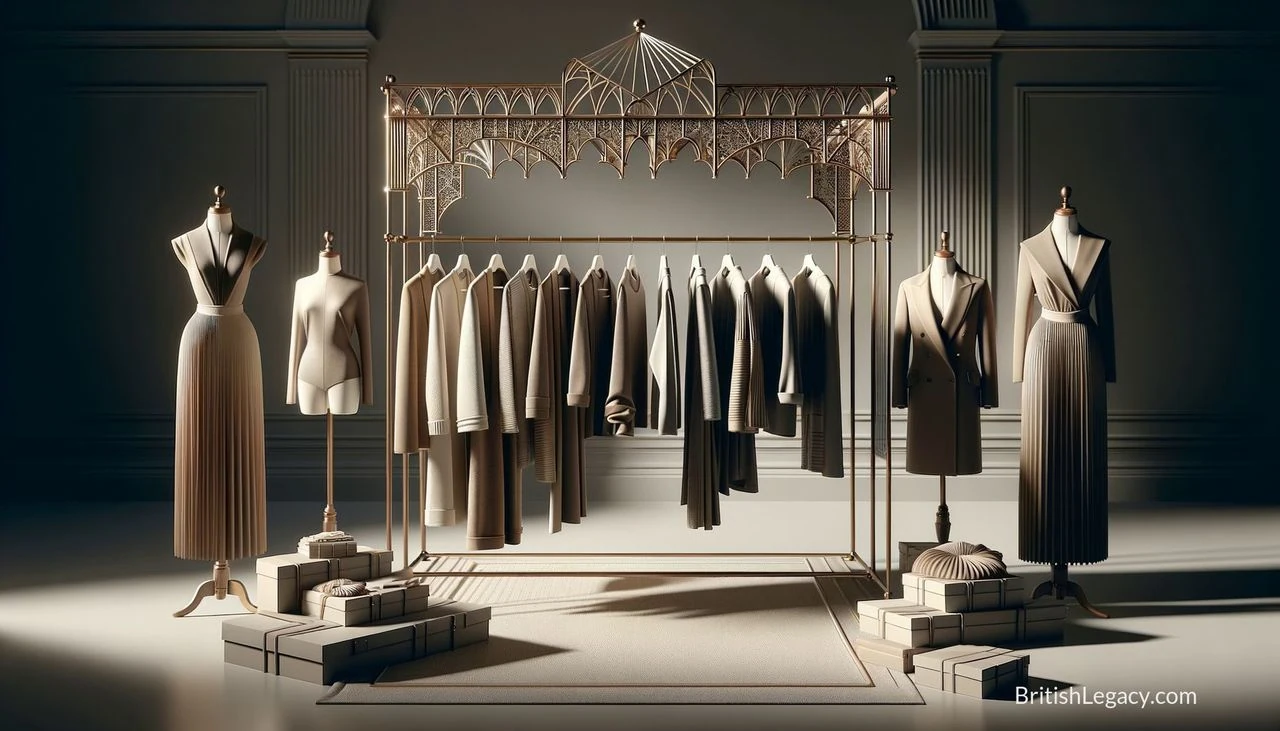
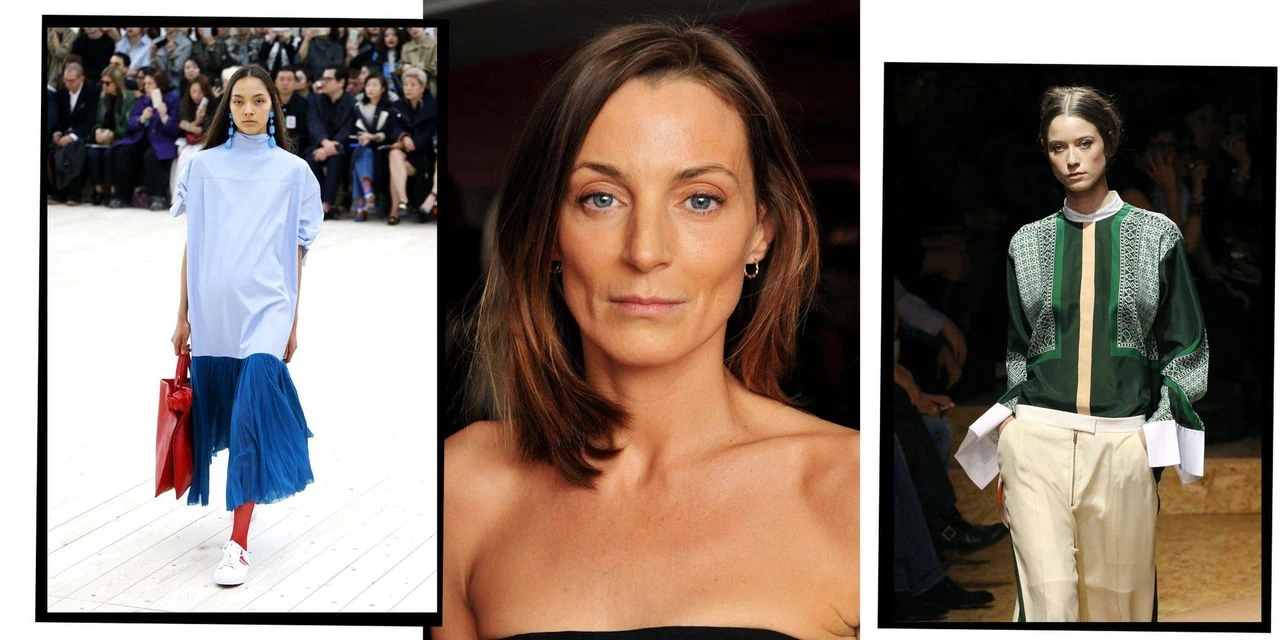
At Céline, Philo developed a pared-back visual language: clean lines, restrained colours and clothes designed to be worn. The house’s bags became especially successful, including the Trapeze and Luggage totes and the slim Trio cross-body. Other projects showed how she extended her design approach beyond clothing and accessories. A 2013 sandal took inspiration from a classic Birkenstock, with a mink-covered footbed; for a 2015 advertising campaign, photographer Juergen Teller portrayed writer Joan Didion.
Philo also made choices that kept attention on the work. Her first Céline advertising campaign omitted the models’ heads, directing the viewer towards the garments and bags. For the Spring/Summer 2017 collection, she worked with artist Dan Graham on a glass, S-shaped pavilion that served as the setting for the runway show at the Tennis Club de Paris. After a decade at the house, she announced in 2017 that she would leave following the Pre-Fall 2018 collection.
A design language with a wide reach
Philo’s Céline years established her as a major influence on contemporary fashion. Her collections repeatedly returned to the question of what women want to wear, rather than relying on spectacle alone. The result was a recognisable balance of practicality and visual precision: generous or unconventional shapes, carefully controlled palettes and accessories that became central to the identity of the house.
Her work was not confined to the runway. In 2010, she appeared on the cover of the inaugural issue of The Gentlewoman. She was named British Designer of the Year by the British Fashion Council in 2005 and 2010, and International Designer of the Year by the Council of Fashion Designers of America in 2011. In 2014, she was appointed an Officer of the Order of the British Empire for services to fashion and was included in Time magazine’s list of the world’s 100 most influential people.
Her own label
In 2021, Philo announced that she would create a brand under her own name. She and her husband are majority owners of the business, with LVMH as a minority shareholder. The label launched its first collection in October 2023, selling it exclusively through its own website. The move gave Philo a new platform after her departure from Céline, while continuing her close involvement in the identity and presentation of her work.
In 2024, the label began an exclusive distribution deal with Bergdorf Goodman. It subsequently expanded its retail presence to include 10 Corso Como in Milan, Dover Street Market in London and Paris, Maxfield and Neiman Marcus in Los Angeles, and The Webster in Miami. The brand’s headquarters are in Ladbroke Grove, bringing this latest chapter of an international career back to west London.
Why Phoebe Philo deserves a place in British Legacy
Phoebe Philo’s place in British Legacy rests on a clear and specific connection: she grew up in London, studied at Central Saint Martins and built a career that has repeatedly linked British design education and practice with leading international fashion houses. At Céline, she negotiated to work from London, where she established the house’s design studio, while presenting collections in Paris. Her career therefore reflects not a general claim about British fashion, but the way London can serve as a base for design with global reach.
Her contribution is also visible in the choices and objects that made her work distinctive. At Chloé, she brought together contrasting shapes and references, and helped define accessories such as the Paddington bag. At Céline, she made clean lines, tonal palettes and highly recognisable bags central to the house’s identity, while treating advertising, stores and runway settings as parts of the same design world. Her own label, launched in 2023 and headquartered in Ladbroke Grove, extends that work on her own terms. The honours she received from the British Fashion Council and her appointment as an OBE recognise a career whose influence is international but whose education, working base and continuing presence are firmly connected to Britain.
Sources
Phoebe Philo — revision 1379116450 · Phoebe Philo
Adapted in part from Phoebe Philo by Wikipedia contributors, under CC BY-SA 4.0. Text has been edited and combined with the existing article; this adapted text is shared under the same licence. Contributor history.