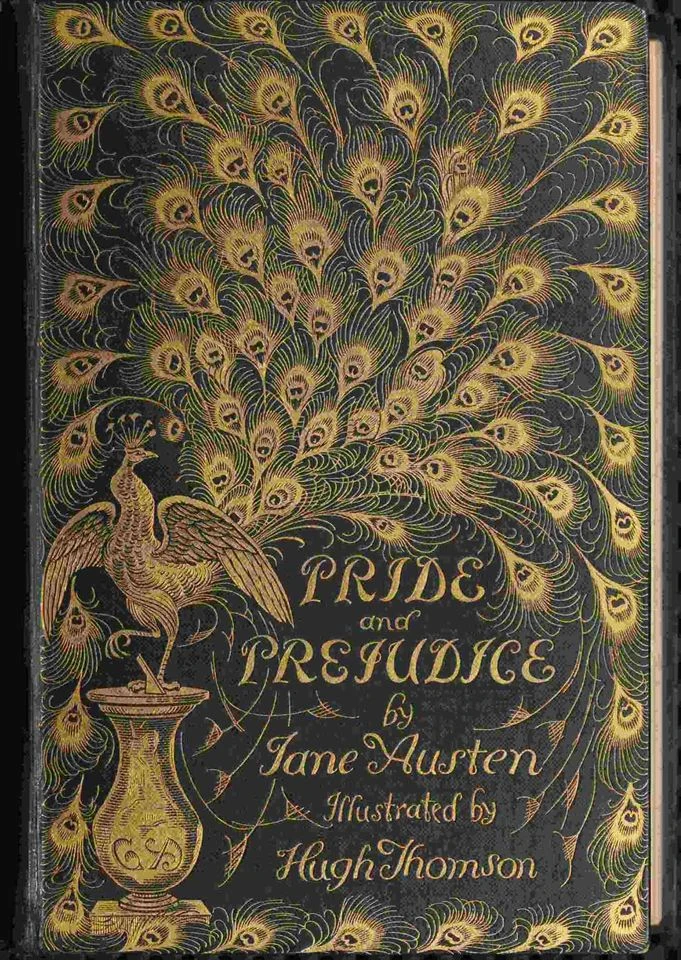
Jane Austen’s Pride and Prejudice begins with the pressures of marriage but turns on a more searching question: how well can people judge one another? Elizabeth Bennet’s sharp observations and Mr Darcy’s initially forbidding manner make their changing relationship a story of attraction and correction. Around them, Austen sets the fortunes of a family against the expectations of the British landed gentry, finding comedy in manners while examining the consequences of limited choices.
A family navigating Meryton
The novel centres on Elizabeth Bennet, an intelligent young woman whose wit and sharp-tongued commentary shape much of its humour. She lives with her family in the fictional rural community of Meryton. The story follows not only Elizabeth’s prospects but those of her sisters: Jane, described in the supplied account as beautiful and passive; flirtatious Lydia; practical Mary; and immature Kitty. Their contrasting temperaments give the family’s matrimonial concerns several different forms.
At the centre is Elizabeth’s relationship with Mr Fitzwilliam Darcy. He first appears haughty; she meets him with distrust. Their movement from mutual disdain towards love depends on reconsidering first impressions and recognising character more accurately. Romance, in this account, is not simply a matter of two people overcoming dislike. It is also the means by which the novel tests their judgement, and the assumptions each brings to the other.
Marriage gives these personal encounters their wider stakes. Austen places individual desire within a social world where the prospects and expectations of women are restricted. Elizabeth’s intelligence and willingness to form opinions make her an active participant in that world, but do not remove its constraints. The parallel stories of her sisters broaden the picture: their differing personalities meet the same concern with prospects and social position in different ways.
From First Impressions to publication
Austen began drafting the work that became Pride and Prejudice in 1796, under the title First Impressions. It underwent substantial revision before publication in 1813 with its familiar title. The change points towards one of the novel’s central concerns: people act on impressions, but those impressions can be incomplete or mistaken. The plot’s turn from mutual dislike to love makes that process part of the action rather than a lesson detached from it.
The supplied account describes novels of Austen’s period as often being treated as frivolous, and presents her work as a subtle challenge to social norms. Its method is not to set aside the pleasures of comic characters and engaging prose, but to use them while observing manners, upbringing, morality and marriage. The combination lets social criticism sit within an entertaining story rather than replacing it.
Austen’s attention to ordinary life and her use of humour are central to the work’s particular effect. Domestic relationships and social encounters become material for close observation. Character is revealed through what people say and do, while the reader watches their understanding change. That approach connects the comedy to the novel’s interest in judgement: the same social exchanges that amuse also disclose expectations and misreadings.
Marriage, society and the novel’s reception
Pride and Prejudice is more than a romance in the supplied account: it is also a portrait of the landed gentry and their manners, customs and moral values. The setting makes private choices legible as social choices. Elizabeth and Darcy’s relationship matters to them personally, but its development belongs to a wider world of family fortunes and expectations. Austen’s account of that world offers a view of early nineteenth-century British society through everyday conduct rather than grand public events.
The novel’s treatment of women’s limited roles sits alongside its attention to individual wishes and social obligations. Those pressures are not confined to Elizabeth’s story; the fortunes of her sisters make marriage a family concern as well as a personal one. Austen’s humour does not erase the restrictions she depicts. Instead, it makes their effects visible through the way characters negotiate manners, relationships and prospects.
The supplied article describes the book as translated into numerous languages and adapted for film, television, stage and modern retellings. It also says that the novel has never been out of print. Those statements convey the scale of its reported reception, although no independent verification or supporting research URLs were supplied for them. Its continued place in discussion is also attributed to its prose, characterisation and social commentary: qualities that give readers more to consider than the resolution of a courtship.
Where to buy the novel
The supplied article notes that Pride and Prejudice is available to buy from Amazon UK or from a local bookshop.
Why Pride and Prejudice deserves a place in British Legacy
Pride and Prejudice deserves a place in British Legacy because it makes a particular social world intelligible through the decisions of individuals. Austen’s portrait of the landed gentry attends to manners, family fortunes, moral values and the expectations surrounding marriage. Through Elizabeth and her sisters, those conventions are not merely background: they shape the choices available to women and the consequences those choices carry. The novel’s interest in individual desire and social obligation therefore gives its comedy historical and human substance.
Its British literary significance also lies in the way its form serves its subject. Austen uses witty, engaging prose and vivid characters to examine how people form opinions, misunderstand one another and revise their judgements. Elizabeth and Darcy’s movement from mutual disdain to love makes recognition an earned part of the plot. The supplied article reports a wide international afterlife, including translations and adaptations across several media; that reach sits alongside the novel’s continuing value as a portrait of early nineteenth-century British society. Together, its social observation, comic intelligence and account of changing judgement explain why this work remains a distinctive part of Britain’s literary inheritance.