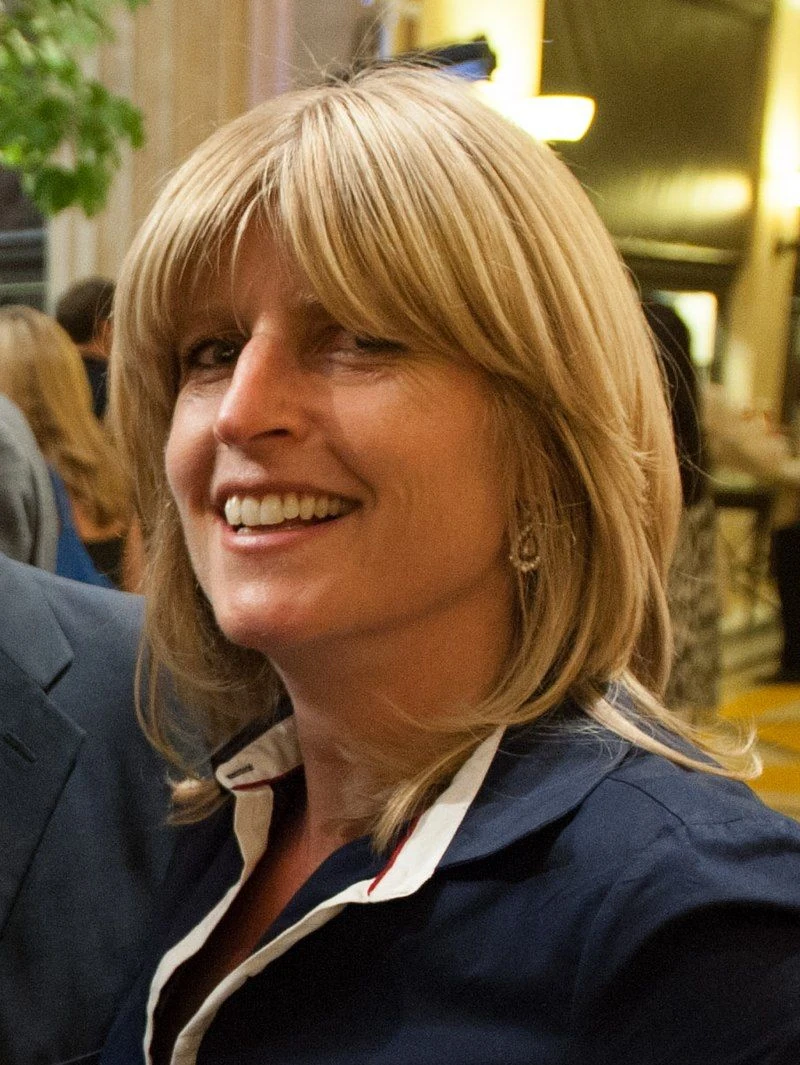
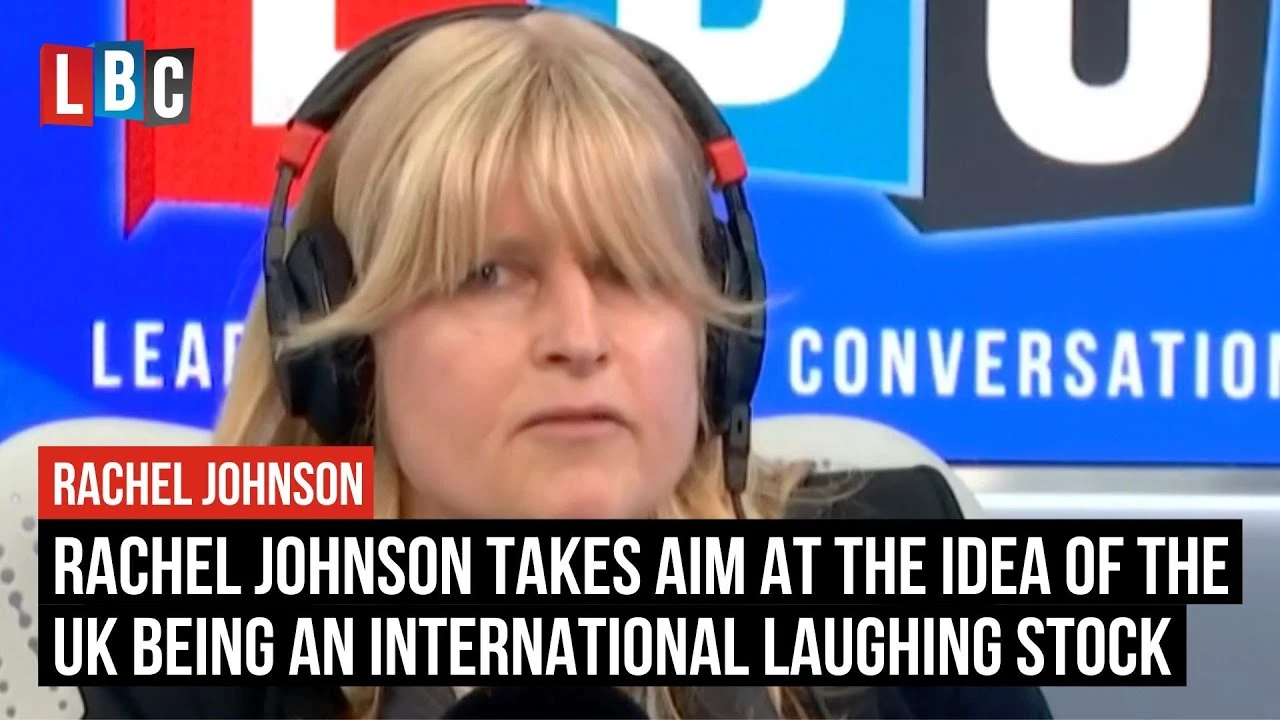
Rachel Johnson’s career has moved between reporting, column writing, magazine editing, books, television and party politics. She joined the Financial Times as a graduate trainee in 1989, later worked at the BBC and edited The Lady. Her public profile has also extended to political discussion programmes and, in 2019, a campaign as Change UK’s lead candidate in South West England.
Education and first steps in journalism
Born in London on 3 September 1965, Johnson was educated at a number of schools in England and Brussels before going to New College, Oxford, to read Classics. At Oxford she edited the student newspaper, Isis, an early editorial role that preceded her move into professional journalism.
In 1989 she joined the staff of the Financial Times as its first female graduate trainee. She wrote about the economy, a start that gave her experience of explaining subjects with direct public and political relevance. In 1992–93 she spent a year on secondment to the Foreign Office Policy Planning Staff. She moved to the BBC in 1994, then left in 1997 to live in Washington, DC, working as a columnist and freelance journalist.
Her subsequent newspaper work included weekly columns for The Sunday Telegraph, The Daily Telegraph and the Evening Standard, as well as work for the Financial Times. She also wrote regular columns for Easy Living and She. These roles provide a more concrete account of her journalism than general descriptions of her style: across different publications, she worked in both reporting and opinion writing.
Editing The Lady
In September 2009, Johnson became the ninth editor of The Lady, a weekly magazine founded in 1885. The editorship gave her responsibility for a publication with a long-established identity, and her first months in the role became the subject of the Channel 4 documentary The Lady and the Revamp. The programme was nominated for a Grierson Award. Johnson was replaced as editor by Matt Warren in January 2012.
She later presented How to Be a Lady: An Elegant History, an hour-long BBC Four documentary broadcast in 2013. Her time at The Lady and the subsequent programme show two different ways she engaged with the history and presentation of British media: as an editor responsible for a magazine and as a presenter exploring the idea of being a lady on television.
Books and broadcasting
Johnson’s writing has not been limited to journalism. Her books include The Oxford Myth (1988), The Mummy Diaries (2004), Notting Hell (2006), Shire Hell (2008), In a Good Place (2009) and Winter Games (2012). She also wrote accounts of her experience editing The Lady: A Diary of The Lady, My First Year as Editor (2010) and A Diary of The Lady, My First Year and a Half (2011). In 2020 and 2021 she published two versions of Rake’s Progress, describing a political midlife crisis.
In 2008, Shire Hell won the Bad Sex in Fiction Prize; Johnson described the award as an “absolute honour”. Her short story “Severely Gifted” appeared in The Sunday Times in December that year. The range of titles and formats is a more useful measure of her literary activity than unsupported claims about how widely particular books were received.
On television, Johnson has appeared on political discussion panels, including Sky News’ The Pledge and BBC One’s Question Time. She was a panellist on The Pledge until production was suspended in 2020. In January 2018, she took part in the 21st series of Celebrity Big Brother and was evicted second. The appearance placed a journalist known for commentary in a different kind of television programme, but the documented result is more precise than claims about how it changed her public appeal.
Political affiliations and the 2019 election
Johnson’s political activity has included changing party affiliations and a European election campaign. She was a member of the Conservative Party from 2008 to 2011. In the run-up to the 2017 general election, she joined the Liberal Democrats, citing Conservative support for Brexit. She considered standing for the party in a West Country seat but was barred under its rules because she had been a member for less than a year.
In April 2019 she joined Change UK, the anti-Brexit party, and became its lead candidate in South West England for that year’s European Parliament election. She later criticised the party and her decision to join it, calling herself the “rat that jumped onto a sinking ship” and describing Change UK as a “terrible” name. The episode belongs in an account of her career not as a claim to political office, but as a documented attempt to turn public commentary into electoral participation.
Alongside her journalism, Johnson has contributed to public discussion through institutional and media roles. She was a judge for the BBC Woman’s Hour power list in 2014 and has sat on the boards of Bright Blue, a modernising Conservative think tank, and the debate forum Intelligence Squared. She has also written for The Spectator, The Mail on Sunday, The Big Issue and The Oldie.
Why Rachel Johnson deserves a place in British Legacy
Rachel Johnson’s place in a record of British public life rests on the breadth of her work and the institutions through which she has carried it out. Her career began at the Financial Times, where she became the paper’s first female graduate trainee, and continued through newspaper columns, BBC work and freelance journalism. As editor of The Lady, she took charge of a weekly magazine founded in 1885; the documentary about her first months there made the work of magazine editing itself a subject of television. Her subsequent presentation of a BBC Four programme about the idea of being a lady extended that engagement with British publishing and media history.
Johnson has also worked across forms that are often kept separate: novels and memoir-like diaries, newspaper opinion, political panels, popular television and an election campaign. That variety does not need to be inflated into a claim that she represents journalism as a whole. It does show how one British journalist and author has moved between cultural commentary and public debate, adapting her work to different platforms and audiences. Her candid criticism of Change UK after standing for it adds a documented instance of reflection on the gap between political ambition and party organisation. Together, these activities make her career a specific part of the story of contemporary British journalism, publishing and media.
Sources
Adapted in part from Rachel Johnson by Wikipedia contributors, under CC BY-SA 4.0. Text has been edited and combined with the existing article; this adapted text is shared under the same licence. Contributor history.