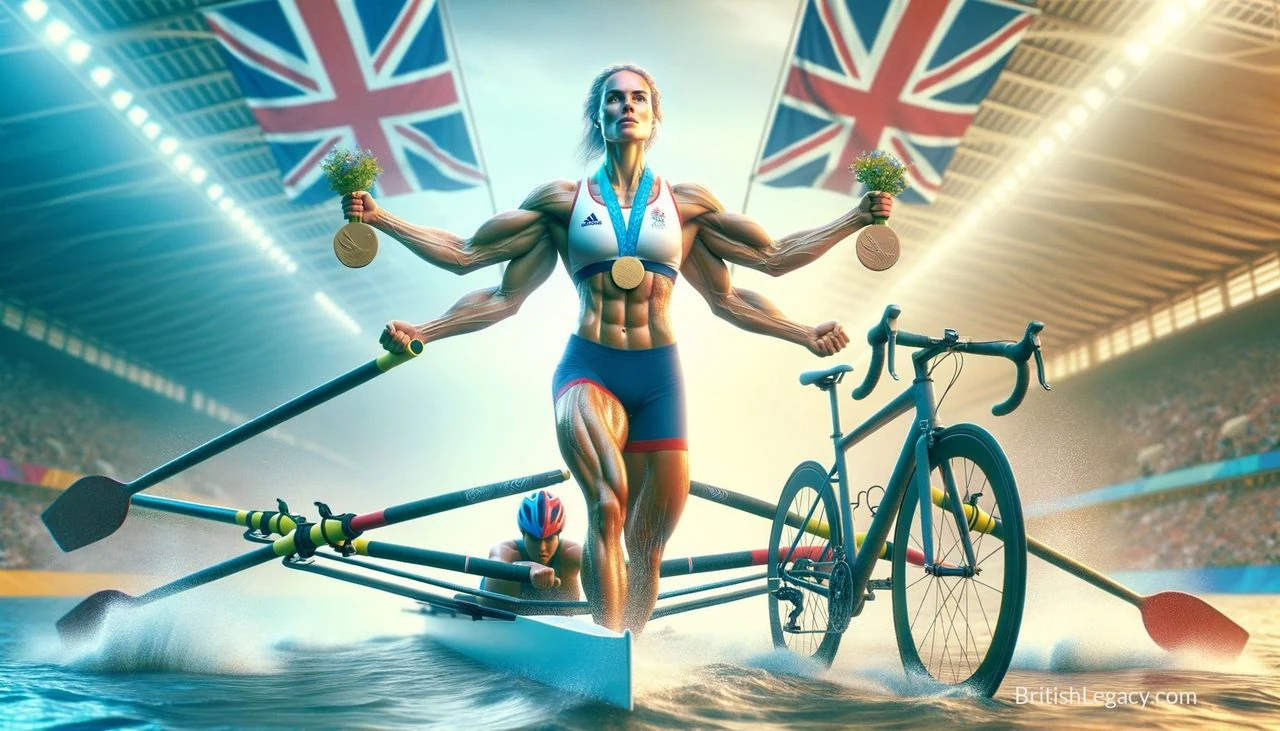
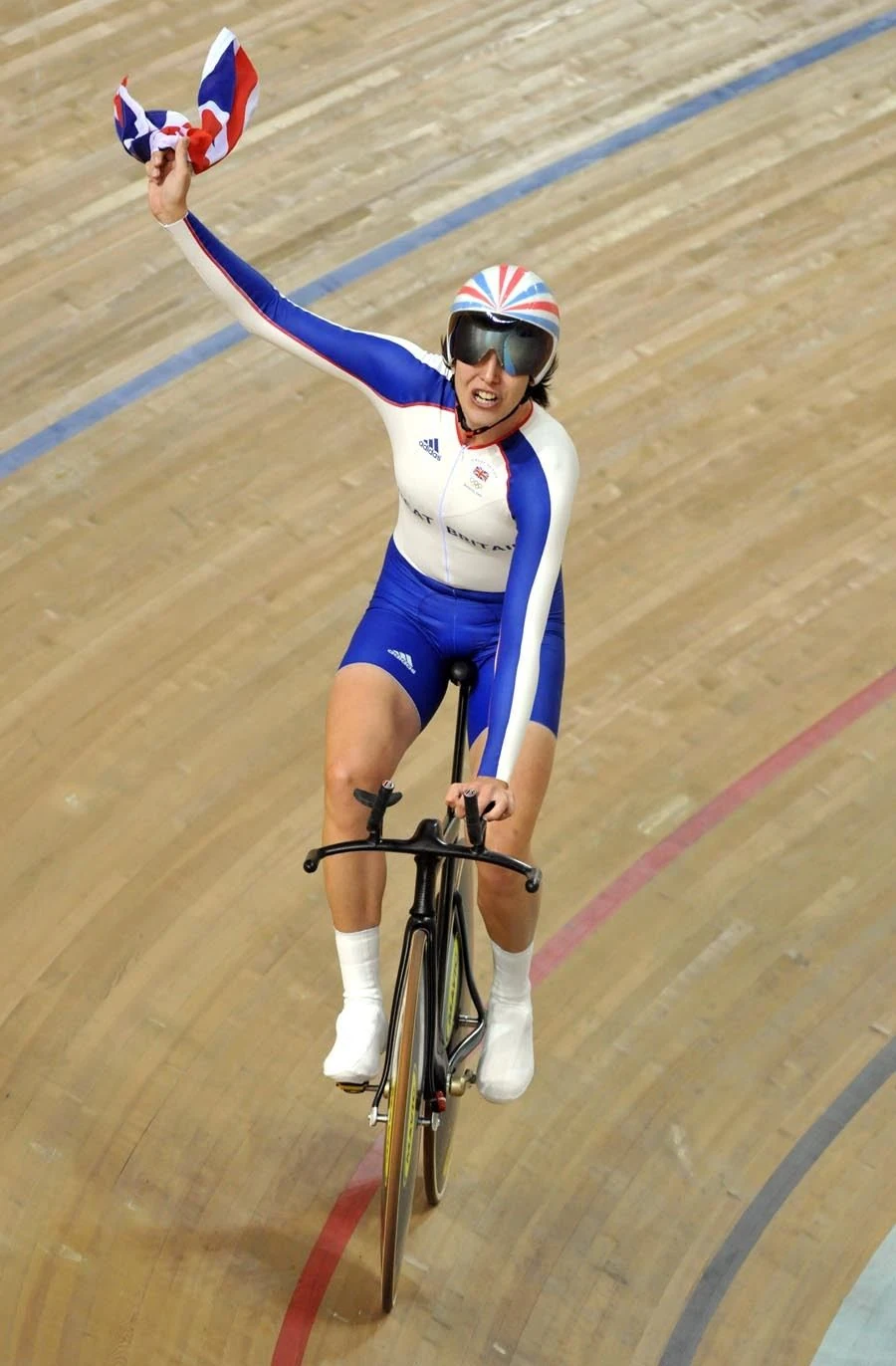
Rebecca Romero’s sporting career took her from the rowing boat to the velodrome and, in 2008, to Olympic gold. She first won an Olympic silver medal in the British women’s quadruple sculls at Athens in 2004. After a persistent back injury ended her rowing career, she took up cycling and became world champion before winning the individual pursuit at the Beijing Olympics. The change of discipline was more than a striking turn in one athlete’s story: Romero became the first British woman to compete in two different sports at the Summer Olympics.
Learning to row in London
Born in Carshalton on 24 January 1980, Romero grew up in Wallington and attended Wallington High School for Girls. She took up rowing at 17, joining Kingston Rowing Club. A coach there helped fund her ambitions, and she progressed from club rowing to international competition.
Her early results included fifth place in the quadruple sculls at the World Rowing Championships in both 2001 and 2002. At the 2003 championships in Milan, she and Debbie Flood finished fourth in the double sculls. The next year brought a run of stronger results with Flood, Frances Houghton and Alison Mowbray. The crew won a World Cup event in Lucerne in June, took the Princess Grace Trophy at Henley Royal Regatta and finished top of the overall World Cup series.
At the 2004 Athens Olympics, Romero, Houghton, Mowbray and Flood won silver in the quadruple sculls. Germany took gold, continuing a run of victories in the event that had lasted since 1988. Romero’s Olympic medal was followed in 2005 by further success: she was part of the British crew that won World Cup gold in Munich and the quadruple sculls at the World Championships in Japan. The championship crew, which included Katherine Grainger, Houghton and Sarah Winckless, beat Germany by 0.34 seconds.
A change of sport
A persistent back injury brought Romero’s rowing career to an end in 2006. British Cycling contacted her in April that year to ask whether she would try racing. The switch demanded a different set of skills and a new event programme, but her progress was rapid. In September she won the British National Time Trial Championships, finishing 15 seconds ahead of Wendy Houvenaghel. In December, she made her international cycling debut at a Track World Cup in Moscow and won silver in the individual pursuit. She took another silver behind Houvenaghel at the following event in Manchester.
Romero’s first world championship cycling medal came in 2007: silver in the 3 km individual pursuit, after American rider Sarah Hammer won their final by more than three seconds. Romero also became national champion in the pursuit that year. In the 2007–08 World Cup, she won her first event at Copenhagen, beating Vilija Sereikaitė in the individual-pursuit final.
At the 2008 Track Cycling World Championships in Manchester, Romero defeated Hammer to win the individual pursuit. She later joined Houvenaghel and Joanna Rowsell in the team pursuit; the British trio beat Ukraine by more than seven seconds. The victories made Romero a world champion in two sports within a three-year period, following her rowing world title in 2005.
Beijing and the years that followed
Romero competed in the individual pursuit at the 2008 Beijing Olympics, becoming the first British woman to take part in two different sports at the Summer Games. In the final she faced fellow Briton Houvenaghel and won gold by more than two seconds. She also raced in the points race, finishing 11th. Her second Olympic medal, and first gold, made her only the second woman to win Summer Olympic medals in two different sports. The first was Roswitha Krause of East Germany, who won medals in swimming and handball.
After Beijing, Romero did not return to track cycling as expected in October 2009. The individual pursuit was due to be removed from the Olympic programme, leaving her unable to defend her title at the 2012 London Games. She criticised the decision and considered switching to the road time trial. In August 2009 she had also attempted a non-stop mixed tandem record ride from Land’s End to John o’Groats with rower James Cracknell. A knee injury forced her to abandon the attempt more than halfway through.
In September 2011, Romero finished fourth at the British Time Trial Championships. The following month she announced that she was withdrawing from British Cycling’s Olympic programme and would not compete at the 2012 Olympics. She later confirmed plans to compete in Ironman events, including the 2012 Ironman 70.3 in Mallorca, Ironman UK in Bolton and the Ironman World Championship.
Recognition and work beyond competition
Romero was nominated for the 2008 BBC Sports Personality of the Year Award and was appointed a Member of the Order of the British Empire in the 2009 New Year Honours. In 2013 she launched Romero Performance, a sports performance consultancy. In 2023 she was inducted into the British Cycling Hall of Fame.
Her career also includes a range of results beyond the two Olympic podiums: an under-23 world title in the coxless pairs in 2000, a British time-trial title in 2006, and world championship gold in both individual and team pursuit in 2008. These results show the breadth of her competition record, from rowing crews to solo and team cycling events. They also place the Olympic change of sport within a longer progression of national and international performances, rather than as a single isolated achievement.
Why Rebecca Romero deserves a place in British Legacy
Romero deserves a place in British Legacy because her achievements span two sports at the highest level. She helped Britain win Olympic silver in the quadruple sculls at Athens, then rebuilt her sporting career in cycling after a persistent back injury forced her to leave rowing. In Beijing she won Olympic gold in the individual pursuit. Her earlier world championship success in rowing and her 2008 world titles in both individual and team pursuit underline that this was not simply a change of uniform: she established herself as a champion in distinct disciplines, each with its own demands and competitive field.
Her record also has a specific place in British Olympic history. Romero became the first British woman to compete in two different sports at the Summer Games, and her Beijing gold made her only the second woman, of any country, to win Summer Olympic medals in two sports. That combination of British first and international rarity gives her story its wider significance. Her later work in sports performance consultancy extends her connection to sport beyond her own racing career. Together, her medals, national and world titles, and contribution to British cycling’s history make her an example of what sustained elite achievement across disciplines can look like.
Sources
Rebecca Romero — Wikipedia revision 1359147322
Adapted in part from Rebecca Romero by Wikipedia contributors, under CC BY-SA 4.0. Text has been edited and combined with the existing article; this adapted text is shared under the same licence. Contributor history.