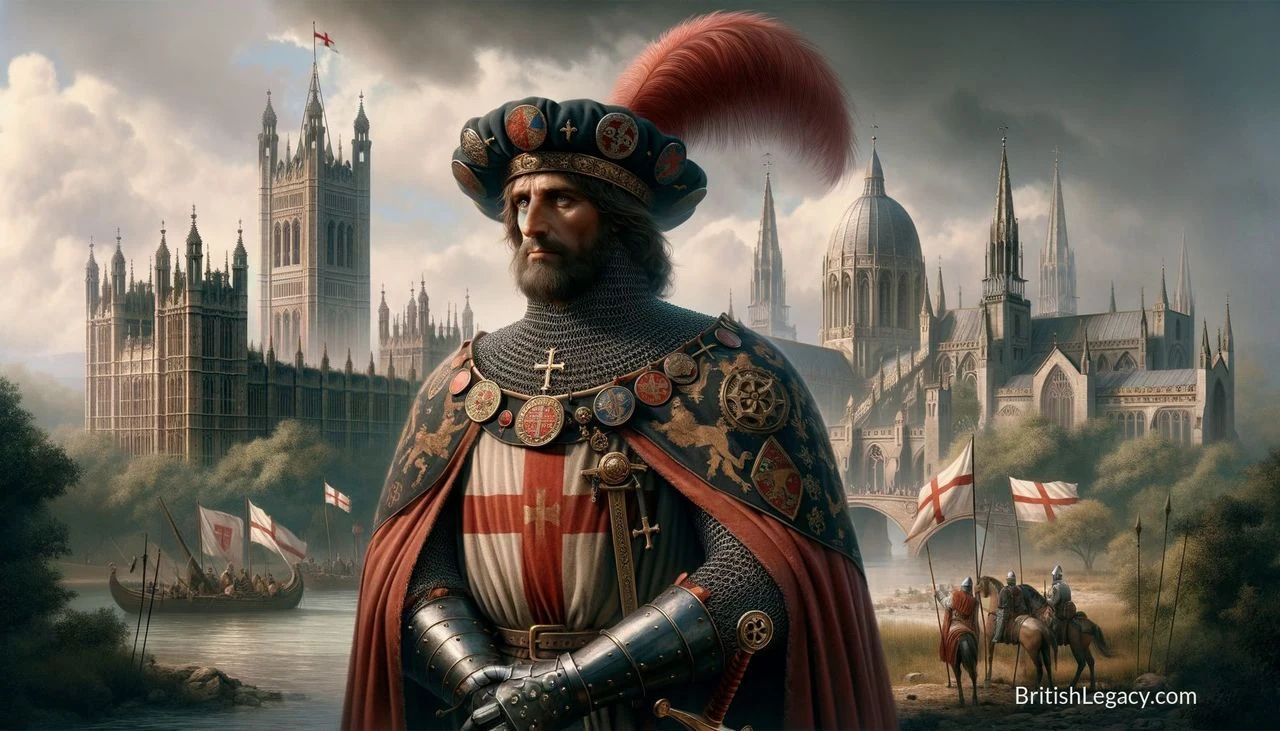
Richard the Lionheart: The Gallant Crusader King
To delve into the annals of British history is to uncover a treasure trove of remarkable figures whose legacies have forged the nation’s rich heritage. Among these, Richard I, more commonly known as Richard the Lionheart, stands out as a paragon of medieval chivalry and martial prowess. His reign, though relatively short, left an indelible mark on the British psyche and the broader historical tapestry of Europe.
The Lionhearted Prince
Born on 8 September 1157, Richard's early years were steeped in the political machinations of the Angevin Empire, a patchwork of territories stretching from the Scottish border to the Pyrenees. The third son of King Henry II and Eleanor of Aquitaine, Richard was never expected to ascend the throne. Yet fate had other plans, and the premature demise of his elder brothers placed the crown upon his head in 1189.
From his youth, Richard showcased a predilection for the martial arts and the chivalric code, a characteristic that was to define his reign. Known for his exceptional military acumen, he quickly earned the appellation "Lionheart" for his courage and battlefield heroics. This moniker wasn't mere hyperbole; it encapsulated the fearless spirit of a king who would come to embody the martial ideals of medieval knighthood.
The Clarion Call of the Crusade
Richard's reign coincided with a period of fervent religious zeal, spurred by the struggle to reclaim the Holy Land from Muslim control. The Third Crusade (1189-1192), called by Pope Gregory VIII in response to the fall of Jerusalem to Saladin, saw Richard emerge as one of its most prominent leaders. It was this campaign that would cement Richard’s place in both British and global history.
His journey to the Holy Land was fraught with peril and political intrigue. Richard’s dispute with Philip II of France, a fellow Crusader, would foreshadow the turbulent relations between England and France for centuries to come. Yet, despite these impediments, Richard's military genius shone through. His capture of Acre and his victory at the Battle of Arsuf were testament to his capability and strategic mind.
What distinguishes Richard in the annals of history is not just his battlefield successes but his chivalrous conduct. The often narrated chivalric warfare against Saladin, his Muslim counterpart, is steeped in legends of mutual respect and knightly valor. This period, imbued with a sense of romantic heroism, continues to captivate and inspire even the modern imagination.
Legacy and Impact
Despite spending only six months of his ten-year reign in England, Richard's influence on British history is profound. His reign underscored a shift toward a monarch exemplifying ideals of chivalry and honour. Richard's involvement in the Crusades echoed through the ages, influencing not only the domestic realm but also shaping European politics.
His absence from England, while crusading and during subsequent ransom captivity, necessitated the delegation of power, leading to administrative changes that would evolve the English monarchy and governance. Richard's mother, Eleanor of Aquitaine, and his brother John were pivotal figures in maintaining the stability of the realm during his prolonged absences.
Furthermore, Richard the Lionheart’s legend endures in the cultural consciousness, depicted in literature, film, and folklore. Perhaps most famously, he features in the tales of Robin Hood, acting as the magnanimous hero to Prince John’s villainous rule. Such stories, though largely apocryphal, reflect Richard's lasting impact on British identity as a symbol of valour and justice.
Wrap-Up
Richard the Lionheart remains a towering figure in British history, emblematic of the medieval knight-crusader par excellence. His martial feats and the chivalric ideals he espoused have left an indelible mark on British heritage, fostering a legacy of knightly valor that resonates within the national consciousness even today. Though his time on the throne may have been fleeting, Richard’s impact is enduring, and his story continues to be a testament to the complex and rich tapestry of British history.