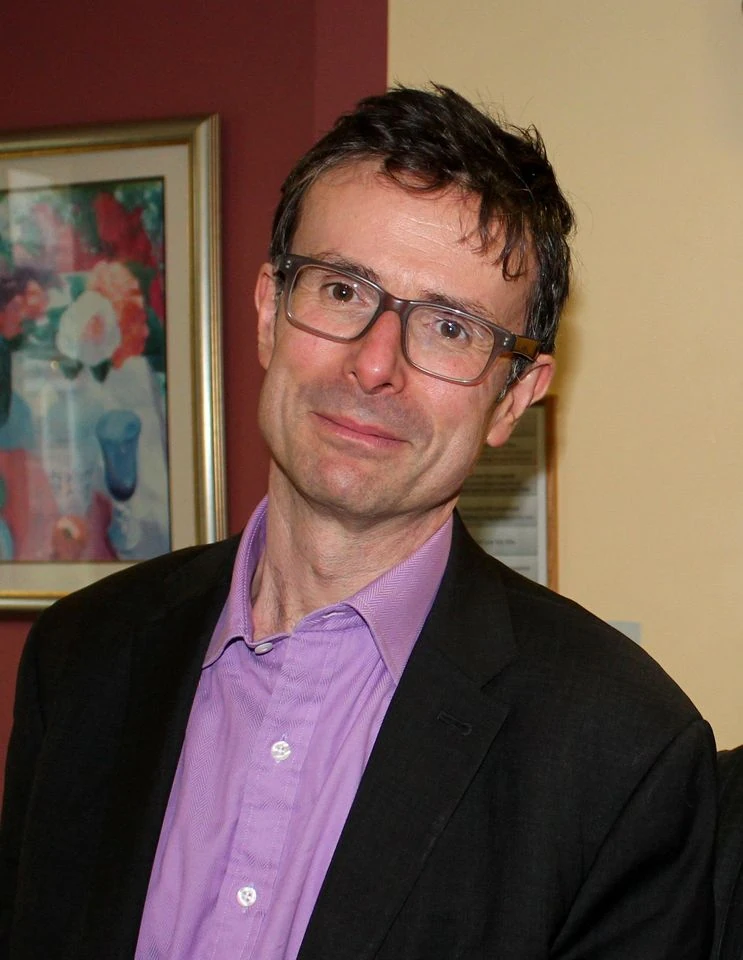
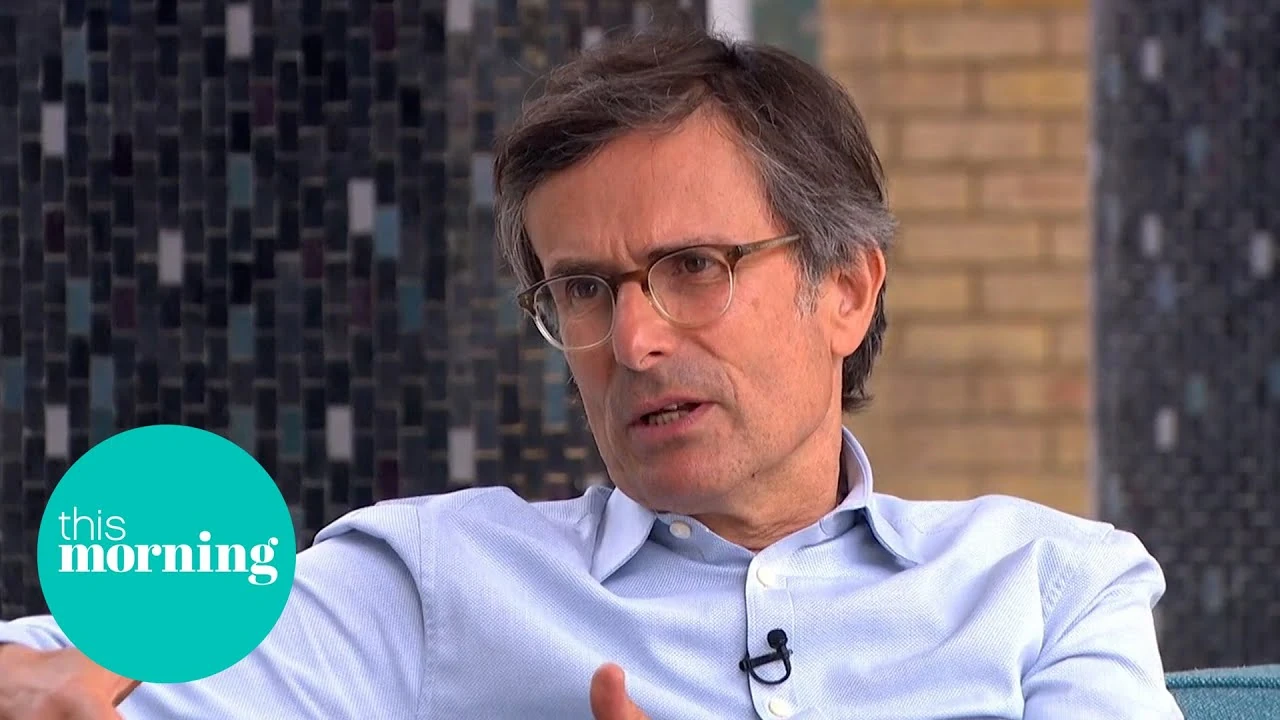
Robert Peston became widely known for reporting on the 2008 financial crisis, especially his exclusive coverage of Northern Rock. His work brought the language and consequences of banking turmoil into British news broadcasts at a moment when the stability of financial institutions had become a matter of public concern. A career spanning newspapers, the BBC and ITV has since made him a familiar presence in political as well as economic journalism.
From newspapers to the BBC
Robert James Kenneth Peston was born on 25 April 1960. He attended Highgate Wood Secondary School, studied philosophy, politics and economics at Balliol College, Oxford, and then continued his studies at the Université libre de Bruxelles. Before becoming a journalist, he briefly worked as a stockbroker. In 1983 he joined the Investors Chronicle; three years later, he moved to The Independent as the newspaper launched.
His early reporting career developed through a succession of financial and political desks. He was deputy City editor of the short-lived Sunday Correspondent from 1989 to 1990, then City editor of the Independent on Sunday. From 1991 to 2000 he worked for the Financial Times, holding roles that included political editor and banking editor, and establishing an investigations unit. He later became financial editor, responsible for the paper’s business and financial coverage.
After leaving the Financial Times, Peston worked across newspapers, magazines and online financial analysis. His roles included editorial director of Quest, a contributing editor at The Spectator, a columnist for The Daily Telegraph and The New Statesman, and City editor and assistant editor at the Sunday Telegraph. He became associate editor there in 2005. This range of experience put financial reporting, political coverage and longer-form analysis within the same professional frame.
The BBC announced in late 2005 that Peston would become its Business Editor. He joined the corporation in 2006, taking responsibility for business and City coverage across television, radio, the BBC News website and Today on Radio 4. In October 2013 he was appointed Economics Editor as well, while continuing as Business Editor until Kamal Ahmed took over that post in March 2014.
Northern Rock and the financial crisis
Peston’s reporting on the financial crisis brought his work to a much larger audience. His coverage of Northern Rock, including the bank’s request for emergency financial support from the Bank of England, became one of the scoops associated with his BBC years. The episode showed how a developing financial story could quickly become a question for depositors, policymakers and the public, rather than remaining inside the City.
His crisis reporting also included an exclusive in September 2008 that merger talks between HBOS and Lloyds TSB were at an advanced stage. The report attracted attention beyond its immediate news value: the timing of trading in HBOS shares before and after broadcast prompted questions about the source of the information. The supplied account records that Peston’s conduct was not itself alleged to be improper. In February 2009 he appeared before the House of Commons Treasury Select Committee, alongside other senior journalists, to discuss the media’s role in financial stability and whether reporting restrictions should apply during banking crises.
His work during this period received industry recognition. At the Royal Television Society’s Television Journalism Awards for 2008–09, he won Specialist Journalist of the Year and Television Journalist of the Year for credit-crunch coverage and related scoops. His reporting on Lloyds TSB’s takeover of HBOS also won the society’s Scoop of the Year. These awards recognised both individual revelations and sustained coverage of a crisis whose effects reached well beyond financial markets.
ITV, political reporting and public discussion
In October 2015, ITV announced that Peston would leave the BBC to become its Political Editor. His last BBC appearance was in November that year; he made his first appearance on ITV’s News at Ten in January 2016. At ITV, his remit placed him at the centre of the broadcaster’s coverage of Westminster and national political debate.
In May 2016 he began presenting Peston on Sunday, a weekly political discussion programme. In 2018 the show moved to Wednesday evenings and was renamed Peston. The format gave Peston a role beyond reporting individual developments: through interviews and discussion, the programme offered viewers a regular setting in which political decisions and arguments could be examined.
Peston’s broadcasting has attracted comment for its distinctive delivery. Rather than making it the measure of his journalism, it is part of the public-facing character of a reporter whose work has often been associated with breaking news and explanation. His career illustrates that broadcast authority does not depend on a single, uniform presentation style; it also rests on access, reporting and the ability to make consequential stories understandable.
Books and work beyond the newsroom
Peston has written about the people and forces shaping British economic and political life. His books include Brown’s Britain, a study of Gordon Brown published in 2005; Who Runs Britain? How the Super-Rich are Changing our Lives, published in 2008; and How Do We Fix This Mess? The Economic Price of Having it All and the Route to Lasting Prosperity, published in 2012. These titles extend themes found in his reporting: the distribution of power, the workings of the economy and the consequences of political choices.
His later books broadened that work. WTF?, published in 2017, examined events leading to the 2016 Brexit referendum. In 2021 he published Whistleblower, his first novel, set around the 1997 general election and centred on a lobby journalist. In 2024, he co-wrote How To Run Britain: Therapy For A Traumatised Nation with Kishan Koria.
In 2010 Peston founded Speakers for Schools, now called Futures for All. The education venture arranges free talks in state schools by speakers from fields including business, politics, the media, arts, science, engineering and sport. It connects professional experience with pupils who might otherwise have limited access to such speakers. Peston has also co-presented the podcast The Rest Is Money with Steph McGovern.
Why Robert Peston deserves a place in British Legacy
Robert Peston’s place in British Legacy rests first on the public importance of his financial reporting. His coverage of Northern Rock and the wider 2008 crisis helped make banking developments part of the national conversation. Reporting on a bank’s need for emergency support, or on a proposed merger between major institutions, carries responsibilities beyond simply being first: the story has to be communicated in a way that allows viewers to understand why it matters. Peston’s awards for specialist and television journalism, alongside recognition for the HBOS–Lloyds scoop, mark the significance attributed to that work by his profession.
His contribution is not confined to crisis coverage. Across newspapers, the BBC and ITV, Peston has worked in both business and political journalism, bringing those areas together in reporting, interviews and discussion programmes. His books have carried questions about wealth, economic choices and political power to readers, while Futures for All applies his public profile to widening access to speakers in state schools. These strands give his legacy a concrete British connection: they concern the institutions, economic decisions, political arguments and educational opportunities that shape life in the UK. Peston’s career shows how journalism can make complex matters visible to a broad audience, while his education work seeks to open another route into public knowledge for young people.
Sources
Robert Peston — revision 1377674000
Adapted in part from Robert Peston by Wikipedia contributors, under CC BY-SA 4.0. Text has been edited and combined with the existing article; this adapted text is shared under the same licence. Contributor history.