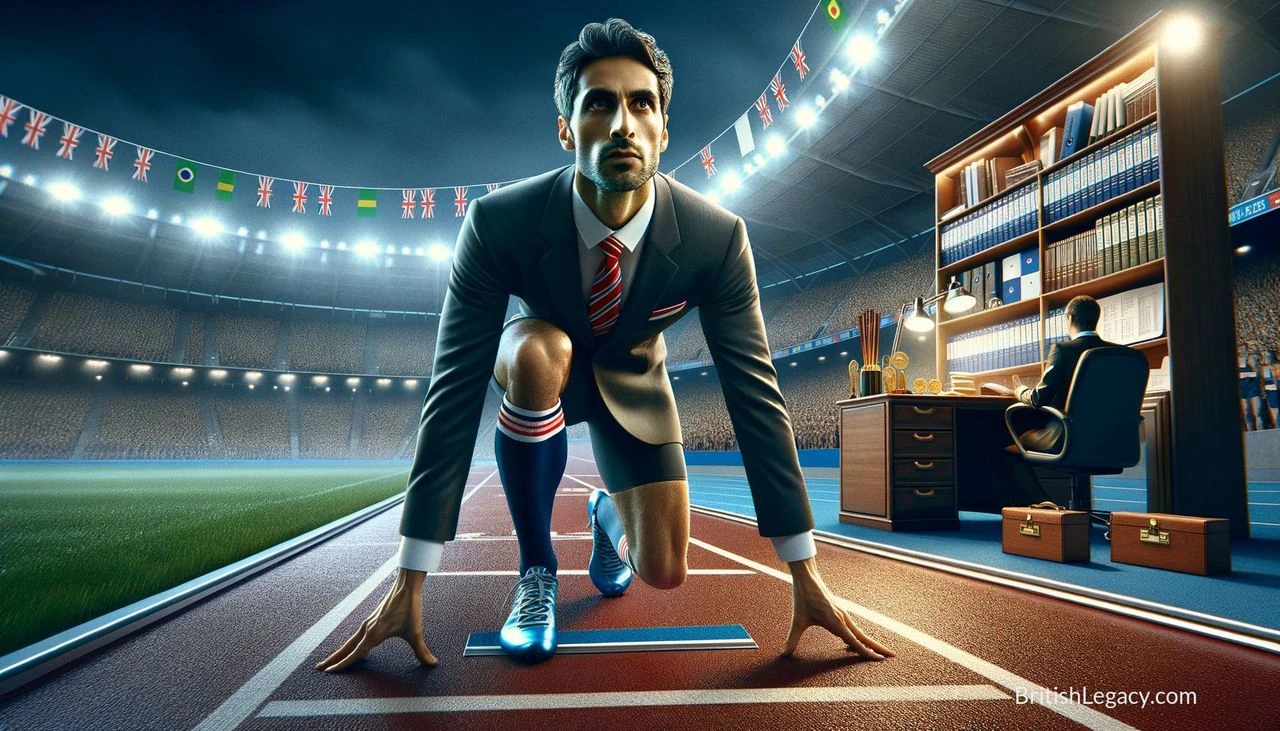
Sebastian Coe’s career has been shaped by two kinds of competition: the close, measured contest of middle-distance racing and the prolonged work of winning support for major sporting events. As a runner, he won four Olympic medals, including two successive 1500-metre golds, and set world records across several distances. Later, he led London’s successful campaign to host the 2012 Olympic Games and chaired the organising committee. The achievements are connected by a capacity to perform under pressure, but they belong to distinct chapters of a life spent in British and international sport.
From Sheffield club runner to British record-holder
Sebastian Newbold Coe was born in Hammersmith, London, on 29 September 1956. His father, Peter Coe, was an athletics coach. The family moved to Warwickshire when Sebastian was less than a year old, and later settled in Sheffield. He attended schools in Stratford-upon-Avon and Sheffield, then joined Hallamshire Harriers at the age of 12. A geography teacher and cross-country runner, David Jackson, helped inspire his interest in middle-distance running. His father became his coach.
Coe studied economics and social history at Loughborough University. There he also worked with strength and conditioning coach George Gandy. His first major international title came at the 1977 European Indoor Championships in San Sebastián, where he won the 800 metres. Later that year, he set his first British outdoor record in the distance, running 1:44.95 at Crystal Palace. His early progress was interrupted by a serious ankle injury in 1978, but he returned to competition and improved the national record.
His rivalry with fellow Britons Steve Ovett and Steve Cram became a defining feature of middle-distance athletics in the years that followed. Coe and Ovett first met in a major championship race at the 1978 European Championships, where Coe finished third in the 800 metres. The rivalry was compelling partly because neither runner could be reduced to a single contest or distance: both competed across the 800 metres, 1500 metres and mile, with results that repeatedly shifted the balance between them.
Records, rivalries and Olympic gold
In 1979, Coe set world records in the 800 metres, mile and 1500 metres over 41 days. The marks, set in Oslo and Zurich, made him the first athlete to hold all three records at the same time. He also won the 800 metres at the European Cup and was ranked number one in the world over both 800 and 1500 metres that year. In 1980, he briefly held the world records for four middle-distance events: the 800 metres, 1000 metres, 1500 metres and mile.
At the Moscow Olympics that year, Coe and Ovett each won the other’s favoured event: Ovett took the 800 metres and Coe the 1500 metres. Coe also earned silver in the 800 metres. The two medals established the pattern of his Olympic career: extraordinary range, but a particular distinction over 1500 metres.
Coe’s 800-metre world record of 1:41.73, set in Florence in June 1981, stood until 1997. He also broke the world 1000-metre record that year and lowered his mile record to 3:47.33. Illness interrupted his progress in 1982 and 1983. He was diagnosed with glandular fever after finishing second in the 800 metres at the 1982 European Championships, then spent much of 1983 dealing with toxoplasmosis and missed the first IAAF World Championships.
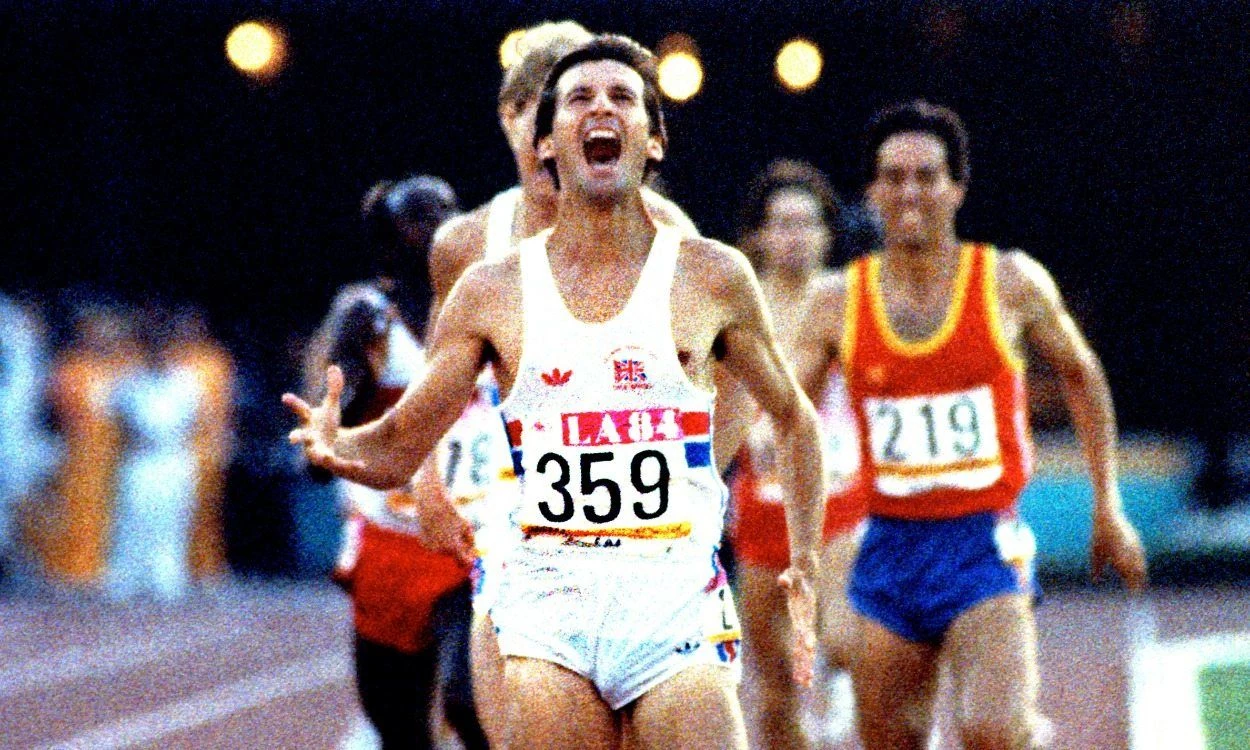
He returned for the 1984 Los Angeles Olympics, winning silver behind Brazil’s Joaquim Cruz in the 800 metres and gold in the 1500 metres. His winning time of 3:32.53 was an Olympic record. The title made him the only man to win successive Olympic 1500-metre gold medals. He added another major international title in 1986, taking 800-metre gold and 1500-metre silver at the European Championships in Stuttgart. Later that season, he ran his 1500-metre personal best of 3:29.77 in Rieti.
Injuries and illness then restricted his opportunities. He was not selected for the British team at the 1988 Olympics after failing to advance from the 1500-metre heats at the trials. He returned to strong form in 1989, winning the AAA 1500-metre title and taking silver over that distance at the World Cup. His last race was the 800 metres at the 1990 Commonwealth Games in Auckland; a chest infection prevented him from starting the 1500 metres.
Politics and the London 2012 bid
Coe moved from athletics into public life as well as sports administration. He was elected Conservative MP for Falmouth and Camborne in 1992, but lost his seat at the 1997 general election. He then served as chief of staff to Conservative opposition leader William Hague, from 1997 to 2001. In 2000, he became a life peer as Baron Coe of Ranmore. His parliamentary career and work for the opposition were a separate strand of his public service, alongside his continuing involvement in sport.
Coe joined London’s campaign to host the 2012 Olympic Games as an ambassador and board member. After Barbara Cassani resigned as chair in 2004, he led the final stage of the bid. London was selected by the International Olympic Committee in July 2005. Coe then chaired the London Organising Committee for the Olympic and Paralympic Games, serving through the event in 2012. He also chaired the British Olympic Association from 2012 to 2016.
The role extended beyond the bid presentation. Coe was involved in planning the Games and in the public-facing work surrounding them. One example was his role in bringing Queen Elizabeth II into the short film featuring James Bond that opened the 2012 Olympic ceremony. In 2012, he received the BBC Sports Personality of the Year Lifetime Achievement Award. The Games also brought him the Companion of Honour in the 2013 New Year Honours, for services to the London 2012 Olympic and Paralympic Games.
Leading athletics internationally
Coe’s administrative work continued at the international level. He became a vice-president of the International Association of Athletics Federations (IAAF) in 2007 and was re-elected in 2011. In 2015, he was elected its president. The organisation is now known as World Athletics. He was re-elected in 2023 for a third and final term, according to the supplied biographical account. He also became a member of the International Olympic Committee in 2020.
In 2012, Coe was appointed pro-chancellor of Loughborough University, where he had studied; he became its chancellor in 2017. His honours span athletics and public life. He received the MBE in 1982 and OBE in 1990, followed by a KBE in 2006 for services to sport. His sporting awards include the BBC Sports Personality of the Year individual award in 1979, a special gold award in 2005 and the lifetime achievement award in 2012. These distinctions reflect a career that moved from elite competition into the leadership of British and international sporting institutions.
Why Sebastian Coe deserves a place in British Legacy
Coe’s place in British sporting history rests first on performances that are unusually clear in their scale and sequence. He won Olympic 1500-metre gold in Moscow and Los Angeles, added silver medals at both Games, and set world records across the 800 metres, 1000 metres, 1500 metres and mile. His 800-metre record lasted from 1981 until 1997; his successive Olympic 1500-metre titles remain a singular achievement among men. The rivalry with Steve Ovett, and later Steve Cram, gave British middle-distance running sustained prominence while Coe’s own results demonstrated that the 800 metres and 1500 metres demanded different strengths and tactics.
His later work matters for a different reason. Coe chaired the final phase of London’s successful 2012 bid and led the organising committee that delivered the Olympic and Paralympic Games. He then took senior roles in the British Olympic Association, World Athletics and the International Olympic Committee. Those responsibilities put a British sports administrator in positions concerned with events and institutions that reach well beyond Britain. Together, his competitive record and public leadership give British Legacy a specific story: a British athlete who helped define an era on the track, then applied his experience to securing and organising a major international sporting event and to governing athletics globally.
Sources
Sebastian Coe — Wikipedia revision 1376871559 · Sebastian Coe
Adapted in part from Sebastian Coe by Wikipedia contributors, under CC BY-SA 4.0. Text has been edited and combined with the existing article; this adapted text is shared under the same licence. Contributor history.