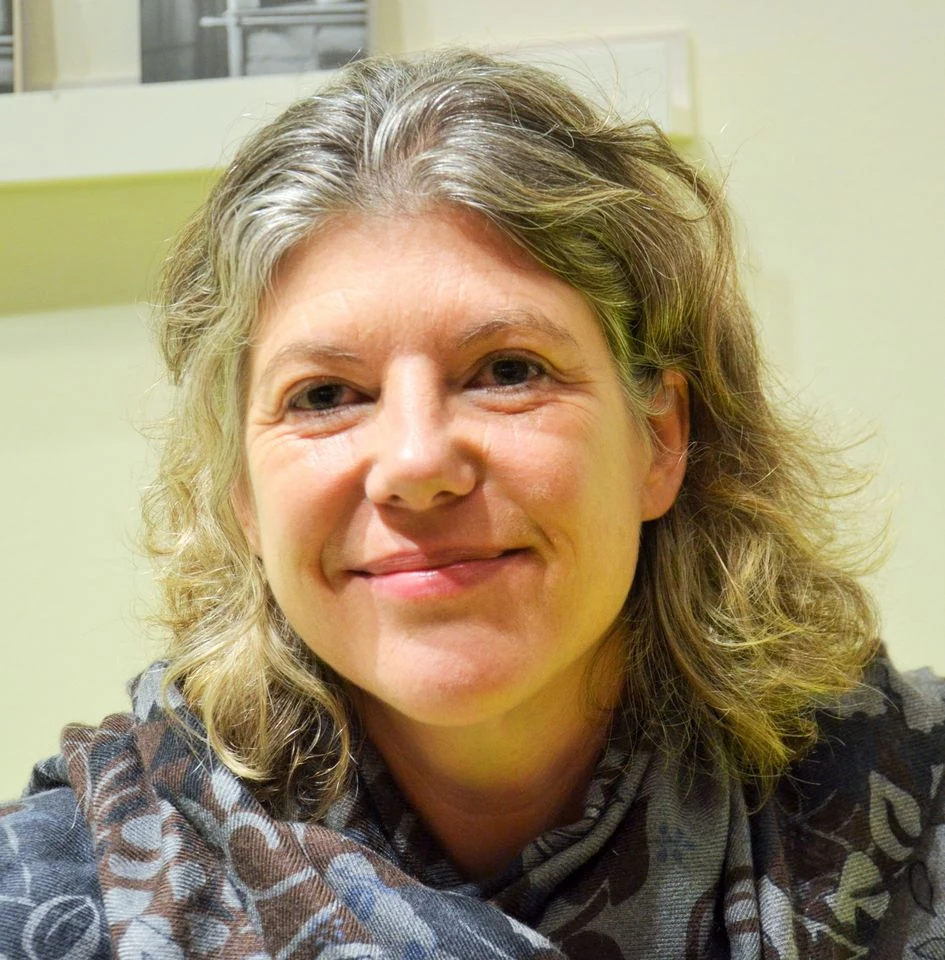
Sigrid and Lisbet Rausing are Swedish-born philanthropists whose foundations have supported work in Britain and internationally. Their family fortune has its origins in Tetra Pak, the packaging company co-founded by their grandfather, Ruben Rausing. The sisters’ own public legacies, however, are associated with distinct fields: Sigrid with human-rights grant-making and literary publishing, and Lisbet with environmental protection and cultural heritage.
A family inheritance, put to different uses
Sigrid Rausing grew up in Lund, Sweden, the daughter of Hans and Märit Rausing. She studied history at the University of York from 1983 to 1986, then completed an MSc in social anthropology at University College London in 1987. Her doctoral research took her to a collective farm in Estonia in 1993–94, where she studied the remnants of the Estonian Swedish community. She received her PhD from UCL in 1997.
That research became both academic work and a continuing literary interest. Her monograph, History, Memory, and Identity in Post-Soviet Estonia: The End of a Collective Farm, was published by Oxford University Press in 2004. She later wrote Everything Is Wonderful, a memoir of her year in Estonia, and Mayhem: A Memoir. The first was shortlisted for the Royal Society of Literature’s Ondaatje Prize; the second was shortlisted for the Wellcome Book Prize in 2018.
Lisbet Rausing’s public work has taken a different direction. She co-founded the Arcadia Fund with her husband, Peter Baldwin, in 2001. The fund supports the preservation of cultural heritage, endangered ecosystems and open access to knowledge. Those priorities connect conservation with the keeping and sharing of records, languages and historical materials.
Building a human-rights trust
Sigrid Rausing’s grant-making organisation began as the Sea Foundation in 1988. In 1996, its funds were transferred to the Ruben and Elisabeth Rausing Trust, named for her grandparents; in 2003, that trust took the name Sigrid Rausing Trust. The foundation supports human-rights organisations internationally and has distributed more than £591 million, according to the cited account.
Its grant-making has included work on civil liberties, women’s rights and the rights of LGBTI people. The scale and continuity of that funding are significant: the trust’s role is not simply to make a public statement about rights, but to provide resources to organisations working on them. In the United Kingdom, its support has included grants to the campaigning group Hope Not Hate. A grant of £450,000 over three years began in December 2018; by then, the group had received £615,000 from the trust in total.
Rausing’s engagement has also extended to organisations and forums concerned with rights and public accountability. She has served as an emeritus member of the international board of Human Rights Watch and of the advisory board of the Coalition for the International Criminal Court. She has judged the Per Anger Prize for human-rights defenders, the Amnesty International Media Awards and the Index on Censorship Media Awards. These roles place her philanthropy alongside participation in institutions that recognise advocacy, investigate abuses or defend expression.
Publishing, scholarship and public life
In 2005, Rausing, her husband Eric Abraham and publisher Philip Gwyn-Jones founded Portobello Books. That autumn, she acquired the literary journal Granta and its book-publishing arm. She became publisher of Granta magazine and Granta Books, which includes the Portobello Books imprint, and edited the magazine from 2013 until 2023. The acquisition gave her a direct role in the life of a British literary institution, while her own writing drew on anthropological fieldwork, memory and political change.
Her publishing work has not been confined to the magazine. In 2022, she co-wrote and translated Johanna Ekström’s Swedish novel into English as And the World Became the World All Around, published by Granta Books in 2024. The translation won the Warwick Prize for Women in Translation in 2025. Rausing has also written occasional columns for the New Statesman and articles on human rights for The Guardian and The Sunday Times.
Her connection to British cultural and educational life is reflected in several appointments and honours. She became an Honorary Fellow of the London School of Economics in 2010, received an honorary doctorate from the University of York in 2014, and was elected an Honorary Fellow of St Antony’s College, Oxford, that year. The University of Kent awarded her an honorary degree in 2016; in 2020 she became a Fellow of the Royal Society of Literature, followed by an honorary doctorate from UCL in 2021. She was also a member of the Council of the Royal College of Art and has served the Charleston Trust, becoming its vice-president in 2024.
Arcadia: landscape, archives and access
Lisbet Rausing’s Arcadia Fund brings together causes that are sometimes treated separately. Its remit includes the protection of endangered ecosystems, the preservation of cultural heritage and open access to knowledge. The earlier account of the sisters’ work describes support for landscapes including Brazilian rainforest and African savannah, alongside funding to document disappearing languages and oral histories. Those examples point to a broad conception of preservation: safeguarding habitats, while also making human histories and knowledge less vulnerable to loss.
Claims about the number of hectares preserved, species safeguarded or archives digitised are not quantified here. The available account describes these as outcomes of Arcadia’s work, but does not provide figures that would allow their scale to be assessed. The grounded significance of the fund lies in its stated priorities and in the range of preservation work it supports. Together, its environmental and cultural aims recognise that the future depends both on the condition of living landscapes and on whether knowledge about people and places remains accessible.
Why Sigrid and Lisbet Rausing deserve a place in British Legacy
The sisters’ British legacy is not a claim that their work is exclusively British. It lies in the institutions and causes to which they have contributed here, and in the way they have used philanthropy to sustain activity beyond their own lifetimes. Sigrid Rausing’s support for human-rights organisations has channelled substantial funding to groups working on civil liberties and equality. Her involvement with Hope Not Hate, Human Rights Watch and the Coalition for the International Criminal Court gives that grant-making a connection to British campaigning and international rights institutions.
Her publishing work has a similarly concrete British dimension. Acquiring Granta and its book arm, publishing writers through Granta Books and Portobello Books, and editing the magazine for a decade helped support a continuing platform for literary work. Lisbet Rausing’s Arcadia Fund adds a complementary strand: protecting endangered ecosystems while preserving cultural records and widening access to knowledge. These are not interchangeable projects, and their value is clearest when described in their particular terms. Taken together, the sisters’ work connects British publishing, rights advocacy and charitable support with international causes. That combination—long-term funding, stewardship of cultural institutions and attention to both natural and human heritage—makes their contribution relevant to a British legacy of philanthropy with practical reach.
Sources
Adapted in part from Sigrid Rausing by Wikipedia contributors, under CC BY-SA 4.0. Text has been edited and combined with the existing article; this adapted text is shared under the same licence. Contributor history.