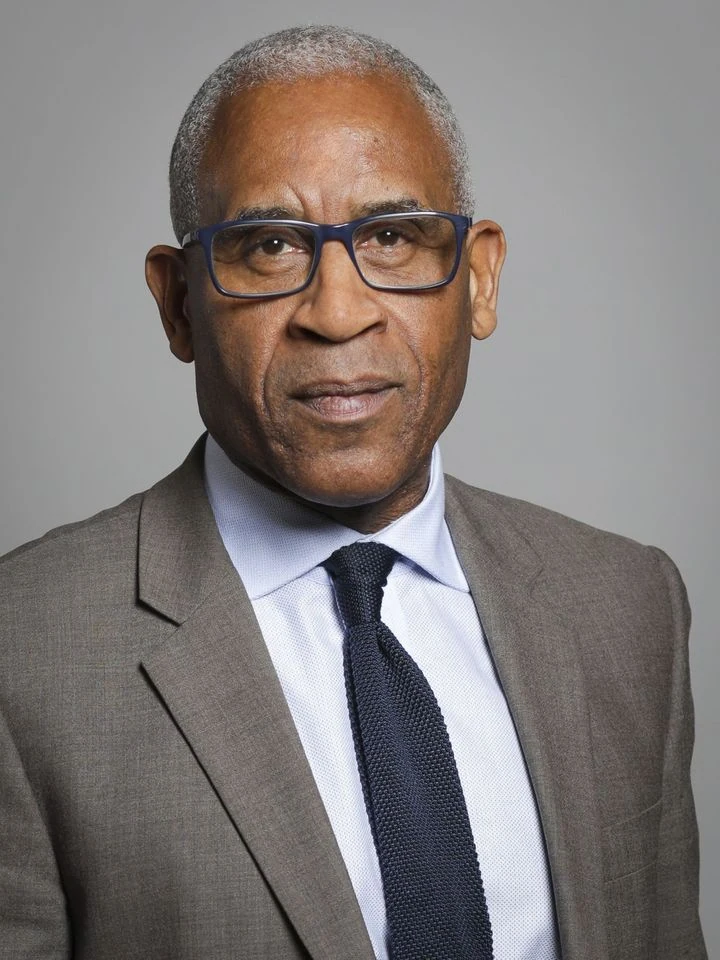
British democracy has always liked the language of representation, yet for long stretches of the late twentieth century many Black and Asian citizens could look at Westminster, town halls and public bodies and see how narrow that promise remained. Simon Woolley’s great achievement was to treat that gap not as a matter of wounded symbolism, but as a practical political problem. If people were missing from the rooms where decisions were made, then they needed routes in: routes through registration, political education, mentoring, public pressure and the hard, patient work of organisation. That conviction lay behind Operation Black Vote, the campaign he founded in 1996 and which, thirty years on, is still describing itself as part of the unfinished business of democratic renewal in Britain.[2] [10]
What makes Woolley worth serious attention is that he did not stop at protest or commentary. He built mechanisms. He helped create pathways into politics for people who had been excluded from it, chaired work around government race-disparity data, entered the House of Lords as a Crossbench peer, and in 2021 became Principal of Homerton College, Cambridge, the first Black man to lead an Oxbridge college. The pattern is striking: he has spent his career challenging British institutions, then entering them without surrendering the argument that they must become broader, fairer and more honest about who they serve.[1] [4] [5] [6] [7]
From Leicester to a politics of possibility
Woolley’s authority did not come from a smooth passage through the usual ladders of British influence. Born in Leicester on 24 December 1961, he was the son of Lolita, a Windrush-generation nurse. As a small child he was sent to a Catholic orphanage, then fostered and adopted, and he grew up on the St Matthew’s estate in Leicester. He has spoken of that upbringing not as a melodrama but as an education in precariousness, class and resilience. He left school without A-levels, worked first as an apprentice mechanic and then in marketing for the Rank Organisation, before returning to study through an access route and eventually taking a BA at Middlesex University and an MA at Queen Mary University of London.[1] [9]
That biography matters because it explains the cast of his politics. Woolley did not arrive in public life as someone merely asking established institutions to be kinder. He arrived as someone who knew, from experience, how talent is lost when systems recognise only the already polished and already connected. During and after university he became involved with Charter 88, the constitutional reform movement, and began thinking seriously about the electoral power of Britain’s minority communities. His insight was simple, but it had consequences: votes that are scattered, unregistered or politically ignored do not count for much; votes that are organised in marginal constituencies can alter calculations at the highest level. It was a strategist’s thought, not only an activist’s.[2] [9]
Turning exclusion into organisation: the making of Operation Black Vote
Operation Black Vote emerged from a specific British atmosphere in the mid-1990s. OBV’s own history traces its origins to December 1995, after a series of controversial Black deaths in police custody in Lambeth. It was founded through collaboration with Charter 88 and the 1990 Trust, and publicly launched on 16 July 1996. That origin is important. The organisation was shaped by anger at injustice, certainly, but it was not conceived simply as a protest vehicle. It was built to convert grievance into leverage within democratic life: registration, turnout, candidate development, policy influence and a louder, more coherent presence in the national argument.[2] [10]
From the start, OBV combined practical campaigning with a larger theory about belonging. It ran voter-registration drives, launched Britain’s first Black political and policy manifesto, developed leadership programmes and later used new tools such as a voter-registration app. What united these efforts was the refusal to let citizenship shrink to complaint from the sidelines. Woolley’s argument, again and again, was that people shut out of power should not be expected to wait for benevolence. They needed information, confidence, networks and public visibility. Politics, in this view, was not a distant theatre performed by others; it was a set of structures that could be entered, studied and altered.[2] [3] [10]
That helps explain why Operation Black Vote has endured. Plenty of campaigns can identify a problem. Fewer build an infrastructure around it. OBV’s history is full of programmes rather than slogans: schemes, training, shadowing, candidate support, convening power. Even its thirtieth-anniversary material in 2026 looks backwards and forwards at once, presenting three decades of work not as a finished triumph but as the base from which to ask what a genuinely multiracial democracy should still become in Britain.[10]
Changing who gets to enter public life
The clearest example of Woolley’s method is OBV’s MP Shadowing Scheme. Launched in 1999, it was designed to increase the number of minority-ethnic MPs by giving participants direct experience of parliamentary work. The scheme pairs “parliamentary shadows” with members of the Commons or Lords for six months, exposing them to both Westminster and constituency politics. The brilliance of the idea lies in its realism. Exclusion is not only about prejudice at the point of selection; it is also about unfamiliarity with how institutions work, who to speak to, what the rhythms are, how influence is exercised, and how public service looks from the inside. Woolley’s scheme tackled that deficit in institutional knowledge head-on.[3]
Its record gives the scheme weight. OBV describes it as the country’s most successful mentoring scheme of its kind and points to alumni including Helen Grant, Clive Lewis, Marsha de Cordova, Tan Dhesi, Baroness Sayeeda Warsi and former Bristol mayor Marvin Rees. Whether one agrees with all their politics is beside the point. The point is that a route existed where previously there had often been only opacity. Woolley’s work helped make it easier for talented people from communities long underrepresented in British politics to imagine themselves not merely as petitioners to power, but as legislators, ministers, mayors and national figures in their own right.[3]
This is where Woolley’s contribution rises above the language of awareness-raising. Awareness matters, but pipelines matter more. British public life changes when candidate lists change, when appointments change, when committee rooms contain different experiences, and when young people can see a plausible route from school or estate or community campaign into office. Homerton College’s own biography of Woolley states that his cross-party and cross-sector work with Operation Black Vote has been associated with a dramatic increase in minority representation among MPs over the past two decades. Even without pinning everything to a single statistic, the broad change is unmistakable, and Woolley was one of the organisers who helped bring it about.[1] [3]
From campaigning to the machinery of the state
Woolley’s later career shows another side of his importance: he did not treat the British state as a monolith to be shouted at from outside forever. He worked to make it produce better evidence about itself. He served as chair of the advisory group to the government’s Race Disparity Unit from January 2018 to July 2020. The unit’s purpose, as described by government, is to collect, analyse and publish data on the experiences of people from different ethnic backgrounds across fields such as crime, education and health. That may sound dry, but it is politically powerful. Once disparities are measured and published, they are harder to dismiss as anecdotal, accidental or exaggerated. Woolley’s public work helped push race inequality in Britain from the realm of denial and rhetoric into the realm of visible administrative fact.[4] [8]
He also served as an Equality and Human Rights Commissioner, another sign that his career cannot be reduced to campaigning at the margins. What runs through these roles is a refusal to separate moral argument from institutional design. Woolley has spent years insisting that representation is not just about a few celebrated appointments; it is about whether the procedures, data, assumptions and habits of public life allow a country to see itself properly. That is one reason his influence has reached beyond OBV itself and into wider debates about education, public appointments, social mobility and race equality.[1] [9]
Official recognition followed. Woolley was knighted in the 2019 Queen’s Birthday Honours for services to race equality, and he was created Baron Woolley of Woodford that October. He sits in the House of Lords as a Crossbench peer, which fits his career rather well. He has worked with and challenged figures across party lines, but his core project has never been a conventional party ascent. It has been to widen the terms on which Britain decides who counts, who leads and who is heard. To carry that argument into Parliament itself gives his story a particularly British resonance: reform here is often cumulative, negotiated and institutional, even when its origins lie in exclusion and protest.[6] [5]
Homerton College and a broader idea of merit
In March 2021 Homerton College announced Woolley as its next Principal, and he took office on 1 October that year. The college marked his installation as the moment the first Black man became head of a Cambridge or Oxford college. It was, of course, a milestone in representation, but reducing it to symbolism would miss the substance. Oxbridge colleges are not only old buildings and ceremonies. They are gatekeepers of opportunity, reputation and intellectual confidence. For someone who had left school without A-levels and found his way back into higher education by a non-traditional route to end up leading one of them was an argument in action about where ability comes from and how institutions should recognise it.[11] [7] [1]
Homerton’s own profile of Woolley emphasises his commitment to educational access and to recognising “marginalised potential”. That phrase is worth dwelling on. It suggests a philosophy larger than personal success. Woolley’s career has repeatedly returned to people whose ability is real but whose welcome into elite systems is uncertain. At Homerton, that concern sits naturally within a British tradition that is at its best when it enlarges the nation’s definition of merit instead of guarding it as inherited property. In that sense, his appointment was not merely a reward for distinguished service elsewhere. It was consistent with the central theme of his life’s work: opening serious institutions to people they might once have overlooked.[1] [7]
Why Simon Woolley deserves a place in British Legacy
Simon Woolley deserves a place in British Legacy because he did something more enduring than win honours or occupy office: he helped alter the routes by which British democracy replenishes itself. Operation Black Vote was not founded as a memorial society or a pressure group content with issuing statements. It was built to move people from frustration into participation, and from participation into leadership. Its voter-registration work, its shadowing schemes and its long insistence that underrepresented communities should be present where decisions are made have all contributed to a Britain in which public life is less narrowly owned than it once was.[2] [3] [10]
His legacy also has a distinctly British institutional shape. Woolley pushed for change not only through protest but through Parliament, public appointments, official data and higher education. The Race Disparity Unit mattered because it forced the state to show its workings. His peerage mattered because it carried the argument about representation into the legislature itself. His leadership at Homerton matters because it tells future students that intellectual authority in Britain is not the birthright of one class, one colour or one route through school. Future generations may know Simon Woolley not simply as a campaigner against exclusion, but as a builder of civic ladders: someone who widened the entrance to politics, public service and educational leadership, and in doing so made British institutions more truthful about the country they claim to represent.[8] [5] [7]
Sources
Lord Woolley of Woodford · About - OBV · Schemes - OBV · Operation Black Vote marks 30 years since its public launch and announces year-long programme for democratic renewal · Lord Woolley CBE - GOV.UK · About us - Race Disparity Unit - GOV.UK · Parliamentary career for Lord Woolley of Woodford - UK Parliament · The Queen's Birthday Honours List 2019 · Lord Simon Woolley elected Principal · Lord Woolley installed as Principal of Homerton · Simon Woolley, Baron Woolley of Woodford - Wikipedia revision 1372463708