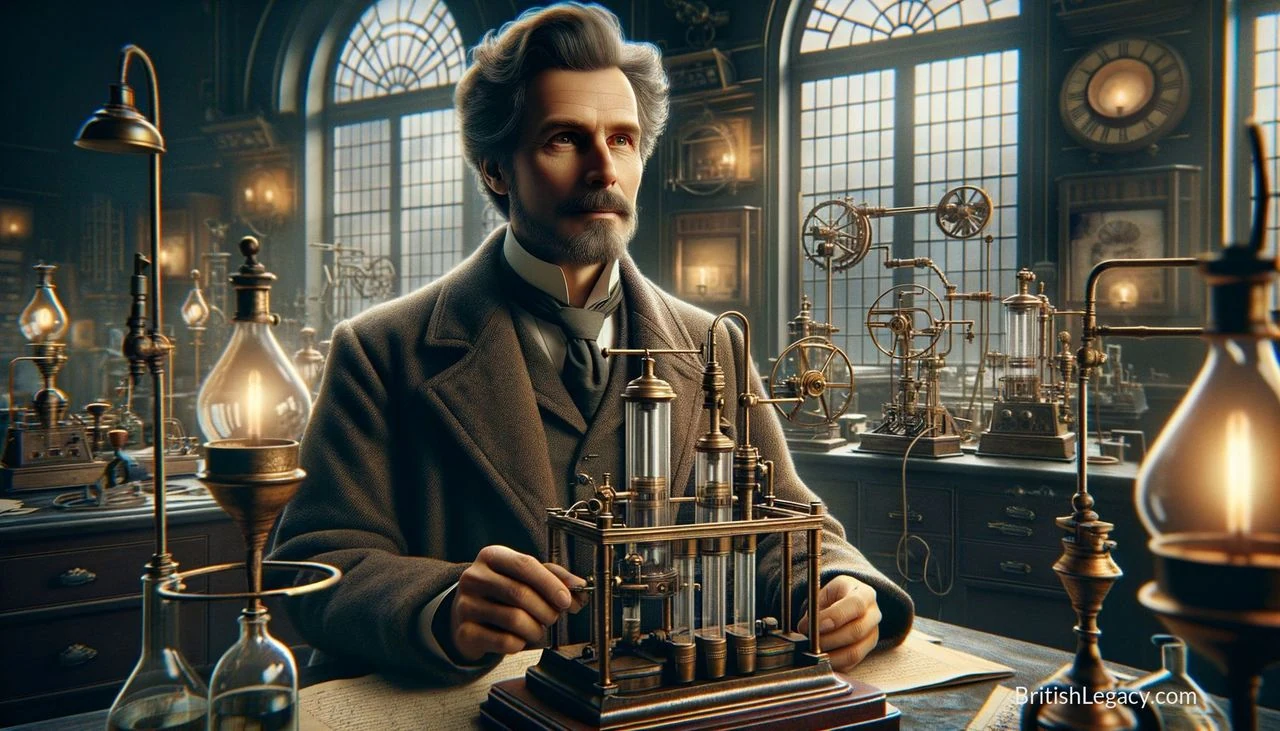
Sir Humphrey Davy: The Luminary of British Chemistry and Invention
In the annals of British heritage, few names shine as brightly as that of Sir Humphrey Davy, an illustrious chemist and inventor whose pioneering work in the fields of gases and electrochemistry has left an indelible mark on both the scientific community and the broader tapestry of British innovation. Born in 1778 in the quaint market town of Penzance, Cornwall, Davy's journey from a local son to a monumental figure in science is a tale of curiosity, perseverance, and profound legacy.
The Early Spark: Childhood and Education
Davy's formative years were spent amidst the rugged landscapes of southwest England, where his innate curiosity about the natural world began to take shape. It was during these early years that Davy's fascination with chemistry and electricity first flickered. Remarkably self-taught in many respects, Davy's thirst for knowledge led him to the Bristol-based Dr Thomas Beddoes at the Pneumatic Institution, a research facility dedicated to the study of gases and their effects on the human body.
The Discovery of Laughing Gas
During his tenure at the Pneumatic Institution, Davy's keen intellect and innovative spirit truly began to blossom. One of his most famous experiments involved the study of nitrous oxide, commonly known as laughing gas. Through meticulous experimentation, Davy discovered its anaesthetic properties, paving the way for its eventual use in surgery—a revelation that revolutionised medical practice and pain management.
Pioneering Electrochemistry
However, Davy's contributions to science extend far beyond anaesthesia. His tireless work with electrochemistry marked another monumental leap forward. By passing an electric current through compounds, Davy successfully isolated several previously unknown elements, including potassium, sodium, calcium, barium, strontium, and magnesium. This groundbreaking work not only expanded the periodic table but also laid the foundations for modern chemical science, propelling Britain to the forefront of global scientific advancement.
The Safety Lamp and Industrial Impact
Davy's creative genius was not confined to the laboratory. He also demonstrated a profound concern for humanitarian issues, most notably through his invention of the Davy Lamp in 1815. This safety lamp was designed to be used in coal mines, where explosive methane gases posed a constant, lethal threat to miners. Davy's lamp, with its innovative design that prevented the ignition of these gases, significantly reduced the risk of explosions and saved countless lives, underscoring the profound societal impact of his work.
Honours and Legacy
Throughout his illustrious career, Davy's contributions earned him numerous accolades. He was elected a Fellow of the Royal Society at the young age of 29 and later served as its president from 1820 to 1827. In recognition of his monumental contributions, he was knighted in 1812, cementing his status as one of Britain's most esteemed scientists.
A Lasting Influence
Sir Humphrey Davy's legacy is woven deeply into the very fabric of British scientific heritage. His innovative spirit and relentless pursuit of knowledge not only catalysed significant advancements in chemistry and medicine but also inspired future generations of scientists. His work on gases and electrochemistry has perpetuated through time, aiding in countless scientific innovations and enriching our understanding of the natural world.
Wrap-Up
As we reflect on the contributions of Sir Humphrey Davy, it becomes clear that his impact transcends the bounds of his immediate discoveries. He was a beacon of curiosity, a guardian of human life, and a pillar of scientific inquiry. His endeavours continue to resonate, leaving an everlasting imprint on the great British legacy and shaping our world in incalculable ways. In Davy, we find the quintessence of British ingenuity and the unquenchable human spirit, maintaining a cherished place in the history of global scientific progress.