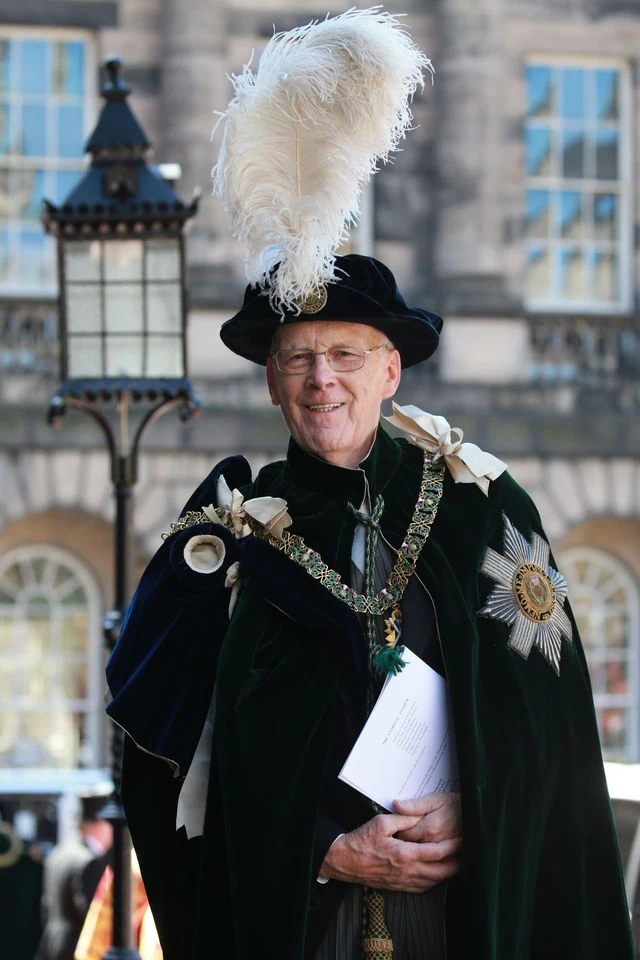
Sir Ian Wood built his career around two connected ambitions: growing a family business into a major international energy-services company, and using private wealth and expertise to support economic and social development. His leadership helped shape Wood Group during the expansion of the North Sea oil industry. Later, through The Wood Foundation, he directed philanthropic work towards markets in sub-Saharan Africa and the prospects of young people in Scotland.
From Aberdeen to the family business
Ian Clark Wood was born in Aberdeen on 21 July 1942. He attended Robert Gordon’s College before studying psychology at the University of Aberdeen, graduating in 1964. He then joined the family business. Its origins lay in a modest local enterprise founded by his grandfather; Wood’s own career would take it far beyond that scale.
Wood became managing director in 1967, the same year he began a long period as the company’s chief executive. He led Wood Group for nearly four decades, remaining chief executive until 2006. Under his leadership, the business developed from a company serving mainly a local market into a large corporation with operations in more than 50 countries. Its work included engineering, operations and consulting for the oil and gas industry.
The company’s growth was closely associated with the development of the North Sea oil industry and with Aberdeen’s role as an energy centre. Wood’s leadership put a family-founded Scottish business into an international sector, while its services connected engineering and operational expertise with the needs of energy producers. He continued as chairman after stepping down as chief executive, announcing his retirement from that role in July 2012.
A philanthropic approach to development
In 2007, Wood and his immediate family established The Wood Foundation as a venture-philanthropy organisation. Its work brought together financial investment and practical expertise, with a focus on two areas: making markets work for poorer communities in sub-Saharan Africa and developing young people in Scotland. The approach was intended to address the conditions that shape opportunity, rather than treat charitable giving as an end in itself.
In Africa, the foundation’s work has focused on economic development and the role of markets in improving livelihoods. The earlier account of Wood’s philanthropy describes support for smallholder farmers, including efforts to improve farming practice and access to markets. Those aims sit within the foundation’s stated emphasis on making markets work for the poor. The value of this model lies in linking local economic activity with resources and expertise intended to help it grow.
In Scotland, the foundation has concentrated on young people. Its programmes seek to develop skills and widen educational and career opportunities. The earlier account describes support for educational institutions and youth-leadership initiatives. These activities give the foundation a distinctly local strand alongside its international work: investment in young people at home, combined with attention to economic development in communities overseas.
Aberdeen, public roles and recognition
Wood’s connection to Aberdeen extended beyond the family company. In 2010, the city council accepted his conditional offer of up to £85 million towards a £140 million proposal to redesign Union Terrace Gardens. The offer comprised £50 million confirmed and a further £35 million if the project exceeded its budget. Local opinion was divided: the proposal had support from some businesses and opposition from many residents. It received support in a referendum, but the council later rejected it.
Wood also became a prominent figure in higher education. He served as chancellor of Robert Gordon University from 2004 and held the post for 16 years, stepping down in 2021. The university’s decision in 2010 to award Donald Trump an honorary degree prompted opposition. After Dr David Kennedy returned his own degree in protest, and a petition opposing the award attracted about 80,000 signatures, the university removed the degree.
His honours reflected both business and civic recognition. He was appointed a Commander of the Order of the British Empire in 1982 and knighted in 1994. In 2016 he was made a Knight Grand Cross of the Order of the British Empire for services to the oil and gas industry; in 2018 he was appointed a Knight of the Order of the Thistle. He also received honorary degrees from the University of Aberdeen, Robert Gordon University, Glasgow Caledonian University and Heriot-Watt University.
Wood was involved in plans for Aberdeen’s Energy Transition Zone, intended to support renewable energy production around the city’s south harbour. ETZ Ltd was established in 2021 to oversee the project. Proposals affecting St Fittick’s Park drew a legal challenge from local people; the Inner House of the Court of Session refused the petition in May 2025. The dispute illustrates the competing priorities involved in local development: investment and energy transition on one side, and the protection of a valued green space on the other.
Why Sir Ian Wood deserves a place in British Legacy
Ian Wood’s place in British Legacy rests on more than the scale of a company or the honours he received. He led Wood Group through a period in which it grew from a mainly local business into an international provider of engineering, operations and consulting services. That transformation connects an Aberdeen family enterprise to the wider history of the North Sea oil industry and to the development of Scotland as a centre for energy expertise. His long service as chief executive and chairman gave him a sustained role in that change.
His philanthropy also joined global and local concerns. The Wood Foundation’s venture-philanthropy model applied money and expertise to economic development in sub-Saharan Africa, while its Scottish work focused on developing young people. These priorities offer a specific account of how business resources can be directed towards opportunity: supporting markets and livelihoods overseas, and skills, education and prospects at home. His involvement in Aberdeen’s civic and university life adds another dimension, including projects that attracted genuine disagreement. Remembering Wood means recognising both the reach of his business and the debates and responsibilities that accompany major private investment in public life.
Sources
Ian Wood (businessman), revision 1369420805
Adapted in part from Ian Wood (businessman) by Wikipedia contributors, under CC BY-SA 4.0. Text has been edited and combined with the existing article; this adapted text is shared under the same licence. Contributor history.