
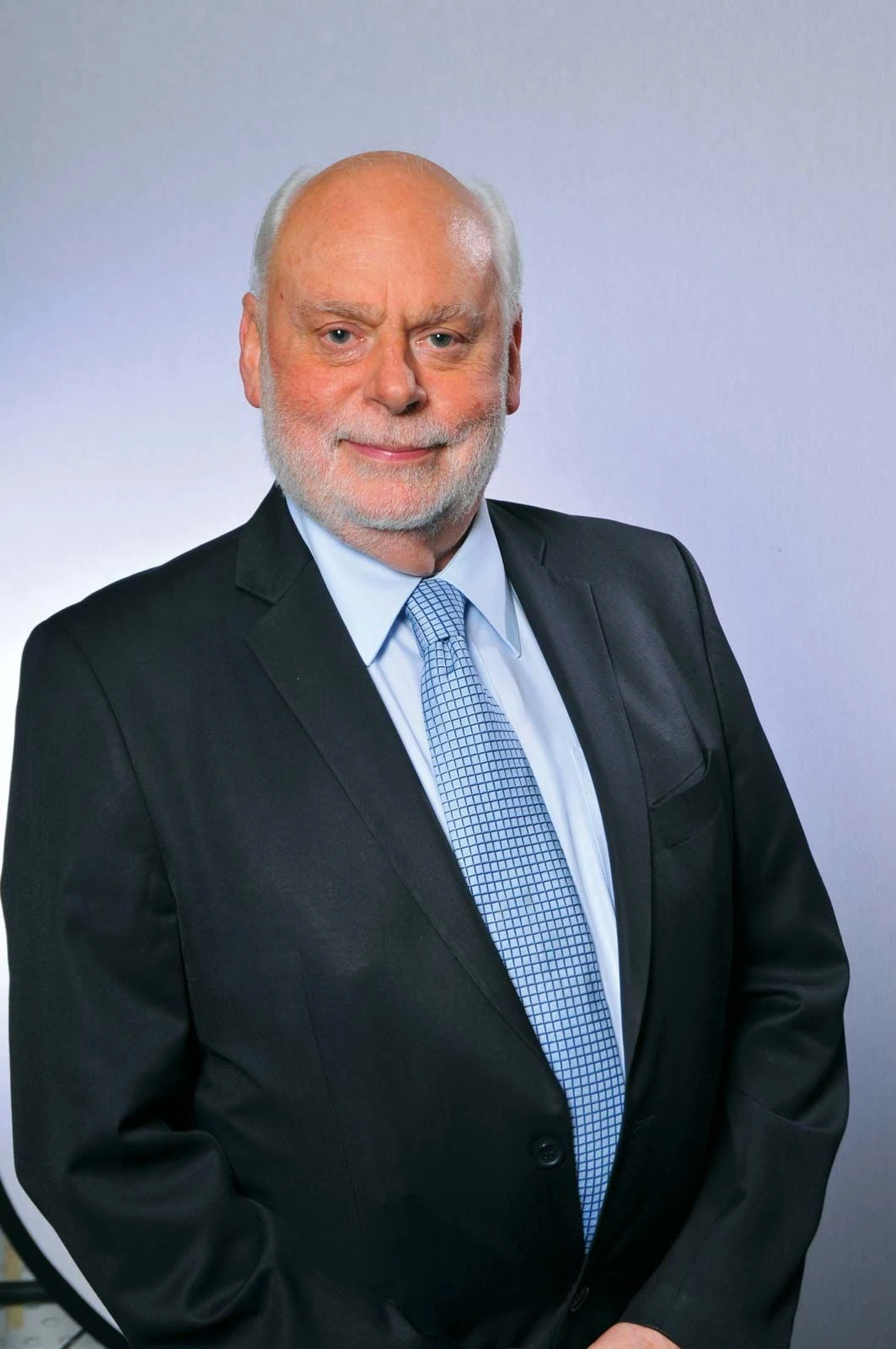
Sir James Fraser Stoddart began his career studying natural gums. He went on to help establish a field in which molecules could be linked by mechanical bonds and made to move in controlled ways. The work brought new ways to think about molecular switches and machines, and earned him a share of the 2016 Nobel Prize in Chemistry. Its roots lay in a Scottish childhood, a University of Edinburgh education and research posts in Britain before his career became increasingly international.
From Edgelaw Farm to Edinburgh
Stoddart was born in Edinburgh on 24 May 1942, the only child of Tom and Jean Stoddart. He grew up on Edgelaw Farm, in a small tenant-farming community of three families. His early schooling was at the local village school in Carrington, Midlothian, followed by Melville College in Edinburgh. Stoddart later connected his interest in molecular construction with childhood enthusiasms for jigsaw puzzles and construction toys.
He entered the University of Edinburgh in 1960, initially studying chemistry, physics and mathematics. He graduated with a BSc in Chemistry in 1964 and completed a PhD in 1966. His doctoral research concerned natural gums from Acacia plants, supervised by Edmund Langley Hirst and D M W Anderson. In 1980, Edinburgh awarded him a DSc for research into stereochemistry beyond the molecule.
Building a career in Britain
After a postdoctoral fellowship at Queen’s University in Canada, Stoddart moved to the University of Sheffield in 1970 as an Imperial Chemical Industries (ICI) research fellow, later joining its academic staff as a lecturer in chemistry. A visiting fellowship took him to the University of California, Los Angeles (UCLA), in early 1978. Later that year, he transferred to ICI’s corporate laboratory in Runcorn, Cheshire. It was there that he began investigating mechanically interlocked molecules that would become central to his work on molecular machines.
After the three-year secondment, Stoddart returned to Sheffield and was promoted to a readership in 1982. In 1990 he became Professor of Organic Chemistry at the University of Birmingham, where he also headed the School of Chemistry from 1993 to 1997. That sequence—from university research in Sheffield to an industrial laboratory in Runcorn and a senior academic post in Birmingham—placed a substantial part of his scientific development in Britain.
Stoddart moved to UCLA in 1997, later holding leadership roles at its California NanoSystems Institute. In 2008 he joined Northwestern University, where he established the Mechanostereochemistry Group and became Board of Trustees Professor of Chemistry. His later appointments included work with the University of New South Wales and, from 2023, a Chair Professorship at the University of Hong Kong. The international reach of his career followed work first developed in a British research setting.
Mechanical bonds, switches and machines
Much of Stoddart’s research concerned supramolecular chemistry: the interactions and organisation of molecules beyond the bonds within an individual molecule. His distinctive contribution was to develop efficient ways to make mechanically interlocked structures, including rotaxanes and catenanes. In such structures, components are linked through their arrangement and movement rather than simply joined by an ordinary chemical bond.
Stoddart’s methods used molecular recognition—the attraction between complementary molecular components—and self-assembly. One approach relied on binding a cyclobis(paraquat-p-phenylene) component with electron-rich aromatic guests. He also reported molecular Borromean rings, using dynamic covalent chemistry to construct an intricate interlocked architecture. These synthetic methods helped make such structures more accessible for further investigation.
The significance was not limited to making unusual molecular shapes. Stoddart showed how interlocked components could move relative to one another and serve as molecular switches. The structures could be controlled chemically, electrically or optically. His group explored their potential as sensors, actuators and amplifiers, and in the fabrication of nanoelectronic devices and nanoelectromechanical systems. The research connected molecular chemistry with engineering problems at the nanoscale, combining bottom-up molecular self-assembly with top-down techniques such as lithography and microfabrication.
His papers and presentations also became recognisable for their colourful, cartoon-like representations of molecular structures. The scheme used colour to distinguish components and convey their properties; the cyclophane component cyclobis(paraquat-p-phenylene) became known as the “little blue box”. This consistent visual language made complex molecular relationships easier to follow and was adopted by other researchers working on related interlocked molecules.
The Nobel Prize and a research community
In 2016, Stoddart shared the Nobel Prize in Chemistry with Jean-Pierre Sauvage and Ben Feringa. The award recognised their work on the design and synthesis of molecular machines. For Stoddart, the prize acknowledged a body of research that had helped establish mechanically interlocked molecules as platforms for controlled movement and nanoscale devices.
Recognition had accumulated over decades. Stoddart was elected a Fellow of the Royal Society in 1994 and appointed a Knight Bachelor for services to chemistry and molecular nanotechnology. Among his other honours were the Royal Society’s Davy Medal in 2008 and the Royal Medal of the Royal Society of Edinburgh in 2010. At Northwestern, his laboratories trained nearly 300 PhD students and postdoctoral researchers over 35 years, extending the field through the work of a large research community.
Why Sir Fraser Stoddart deserves a place in British Legacy
Stoddart’s place in British Legacy rests not simply on his Nobel Prize, but on the route by which he helped change what chemists could build. Born in Edinburgh and educated at its university, he developed key work in British institutions: at Sheffield, during a research secondment at ICI’s Runcorn laboratory, and later at Birmingham. The Runcorn period was especially consequential: it was there that he began investigating the mechanically interlocked molecules that became the basis of his molecular-machine research. This is a specific British contribution to an international scientific story, rather than a claim that his whole career remained within the UK.
The benefit of that work lies in the new possibilities it opened for research. By devising effective ways to make interlocked molecules and showing that their components could act as switches, Stoddart helped connect molecular recognition and self-assembly with nanotechnology. His group’s work on sensors, actuators, nanoelectronics and nanoelectromechanical systems showed how chemistry could contribute to engineering at very small scales. These are research foundations and potential uses, not proof that every proposed application has become a practical technology. His training of generations of researchers also carried the work beyond his own laboratory. Together, British-based discovery, internationally influential methods and the development of a research community make his contribution a substantive part of Britain’s scientific legacy.
Sources
Fraser Stoddart — Wikipedia, revision 1371995405 · Fraser Stoddart — Wikipedia
Adapted in part from Fraser Stoddart by Wikipedia contributors, under CC BY-SA 4.0. Text has been edited and combined with the existing article; this adapted text is shared under the same licence. Contributor history.
.jpg)