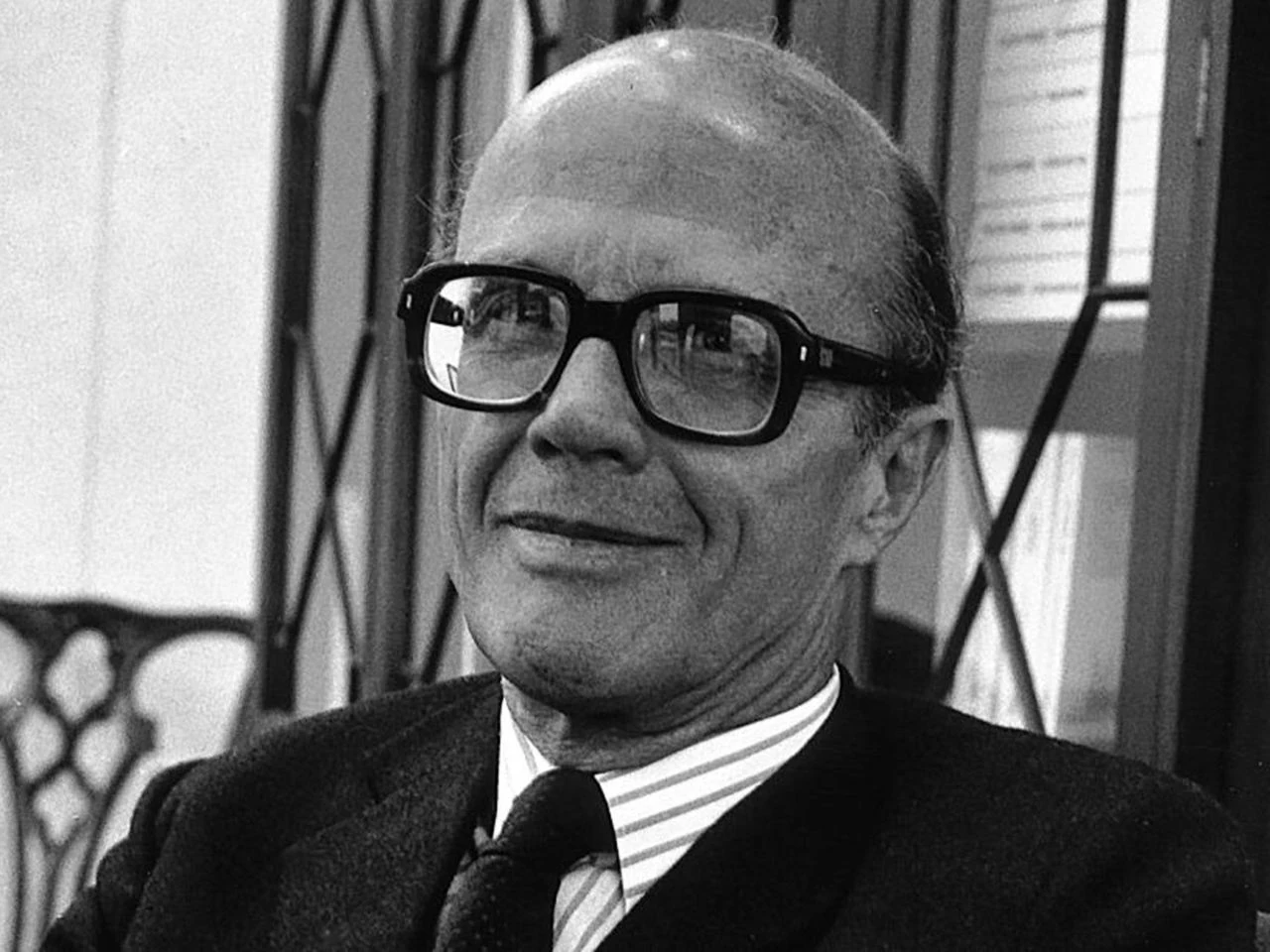
Sir Michael Butler’s career joined two distinctive pursuits: British diplomacy in Europe and the study of Chinese porcelain. He entered the Foreign Service in 1950, held senior posts concerned with European Community affairs and became ambassador and permanent representative to the European Communities in Brussels. He later served cultural institutions and assembled a collection of seventeenth-century Chinese ceramics that became the subject of a family book and a museum display.
A career in the Foreign Service
Michael Dacres Butler was born on 27 February 1927. He was educated at Winchester College and Trinity College, Oxford, before joining the Foreign Service in 1950. His postings took him to New York, Baghdad, Paris and Geneva. In 1970–71 he was a Fellow at the Harvard Center for International Affairs, then served as Counsellor in Washington, DC, from 1971 to 1972.
Butler’s subsequent appointments brought him into the centre of British work on European integration. He headed the European Integration Department at the Foreign and Commonwealth Office from 1972 to 1974, became assistant Under-Secretary responsible for European Community affairs from 1974 to 1976, and served as deputy Under-Secretary from 1976 to 1979. These roles preceded his appointment as ambassador and permanent representative to the European Communities in Brussels, where he served from 1979 to 1985.
That chronology matters. Britain’s negotiations to join the European Community took place before Butler’s Brussels appointment. His documented senior responsibilities in European affairs spanned the period before and after he became permanent representative, but the available account does not establish that he personally secured particular terms on the Common Agricultural Policy or the British budget rebate. His career is more accurately described through the offices he held than through claims that he alone shaped the country’s European settlement.
Work beyond Brussels
Butler left the Foreign Office in 1985 and moved into banking, joining Hambros Bank as a director in 1986. He continued as a non-executive director from 1994 to 1997 and as a consultant from 1997 to 1998. The change of setting did not end his involvement in public and cultural institutions.
From 1985 to 1997, he was deputy chairman of the board of trustees of the Victoria and Albert Museum. He chaired the council of the Royal College of Art from 1991 to 1996 and was also a Senior Fellow. Those responsibilities placed him in prominent roles at two British institutions devoted to art, design and collections, a fitting counterpart to his own sustained interest in ceramics.
His publications also reflect the range of his work. Europe: More than a Continent, published in 1986, followed his diplomatic career. That year he also co-authored a study of transitional-period Chinese porcelain with Barbara Harrisson. Later books included a 2006 volume on seventeenth-century Jingdezhen porcelain from the Shanghai Museum and the Butler collections, written with Wang Qingzheng, and Late Ming: Chinese porcelain from the Butler Collections, published in 2008.
A collection of Chinese porcelain
Alongside diplomacy and public service, Butler became a collector of seventeenth-century Chinese porcelain. His collection was described as exceptionally important in its field. The interest was not confined to private ownership: the collection was housed in a museum built to display it, and its objects also appeared in publications that placed Butler’s holdings alongside those of museums.
After Butler’s death, the collection became the subject of a lengthy legal dispute involving his four children. A High Court ruling determined that each child was entitled to a quarter share. Following the ruling, 250 of the 850 pieces collected by Butler were removed from the museum. The collection’s story therefore includes both the scale of his achievement as a collector and the difficult question of how a substantial family collection should be divided and displayed.
His daughter Katharine Butler addressed the family collection in Leaping The Dragon Gate, published in 2021. The museum later reopened with more than 650 pieces on display. The book and the continuing display offer different ways of encountering the collection: one through a family account, the other through objects gathered over many years and presented to visitors.
Honours and publications
Butler’s honours included appointment as a Companion of the Order of St Michael and St George in the 1975 New Year Honours. He was knighted as a Knight Commander of the Order of St Michael and St George in the 1980 New Year Honours and elevated to Knight Grand Cross in the Queen’s Birthday Honours of 1984. In 1998, Portugal made him a Knight Grand Cross of its Order of Merit.
The publications associated with Butler connect his professional and collecting interests. His 1986 book on Europe appeared after his departure from the Foreign Office, while his work on porcelain continued across two decades and involved collaboration with museum specialists and scholars. Together with his roles at the Victoria and Albert Museum and the Royal College of Art, these books show a public life extending beyond his diplomatic appointments.
Why Sir Michael Butler deserves a place in British Legacy
Butler’s place in British history rests first on a substantial diplomatic career. He joined the Foreign Service in 1950 and progressed through posts in several cities before taking senior responsibility for European Community affairs at the Foreign and Commonwealth Office. His appointment in Brussels from 1979 to 1985 capped that sequence of work. The careful distinction between his documented roles and broader claims about Britain’s European negotiations makes his career more meaningful, not less: it shows how policy depends on sustained service across departments and postings rather than on a single celebrated moment.
His legacy also reaches into British cultural life. As deputy chairman of the Victoria and Albert Museum’s board of trustees and chairman of the Royal College of Art council, he contributed to institutions concerned with art, design and public collections. His own porcelain collection, the subject of books and a museum display, brought an important body of Chinese ceramics into a wider cultural setting. Its later division after a High Court ruling is part of that history too, illustrating the practical and personal challenges of preserving and presenting a family collection. Butler’s career thus connects British diplomacy with the stewardship of culture: two forms of public engagement that shaped his life after the Foreign Service as well as during it.
Sources
Michael Butler (diplomat), revision 1313335104 · Michael Butler (diplomat)
Adapted in part from Michael Butler (diplomat) by Wikipedia contributors, under CC BY-SA 4.0. Text has been edited and combined with the existing article; this adapted text is shared under the same licence. Contributor history.