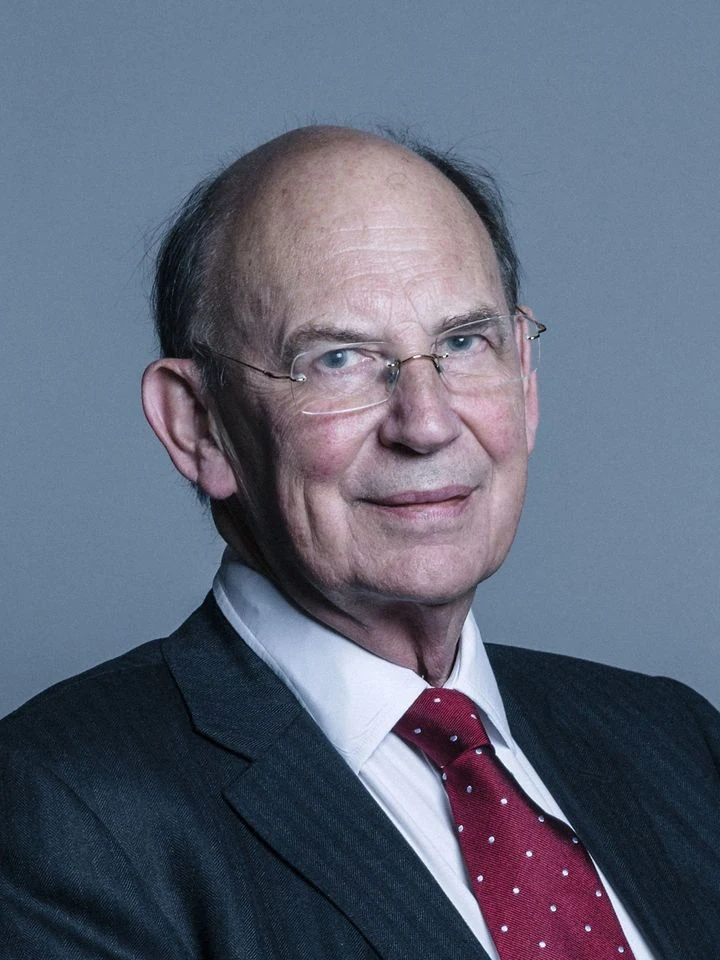
Michael Jay’s diplomatic career took him from development work in Washington and New Delhi to the British embassy in Paris and the senior civil service post at the head of the Diplomatic Service. His work ranged across international development, European affairs and the conduct of British diplomacy. After retiring from the service, he continued in public roles, including chairing the House of Lords Appointments Commission.
Education and early public service
Born in Hampshire on 19 June 1946, Jay was educated at Winchester College and Magdalen College, Oxford, where he read Philosophy, Politics and Economics. He later studied at the University of London’s School of Oriental and African Studies. He also served as a volunteer teacher in Zambia, an early experience of work beyond Britain that preceded his career in government.
Jay joined the Ministry of Overseas Development in 1969. His early career included work in London and, from 1973, in Washington at the World Bank. In 1978 he became First Secretary (Development) at the British High Commission in New Delhi. These roles placed him in government work concerned with development as well as diplomacy, and gave him experience in both an international financial institution and a British overseas mission.
In 1981 he transferred to the Foreign and Commonwealth Office (FCO), serving as private secretary to the Permanent Under-Secretary of State. He then worked in the Cabinet Office’s European Secretariat as a counsellor from 1985 to 1987. Posted to the British embassy in Paris as a counsellor from 1987 to 1990, he returned to the FCO as Director for European Affairs, a post he held until 1994. From 1994 to 1996 he was Director General for European and Economic Affairs. Before becoming ambassador, he was a Senior Associate Member of St Antony’s College, Oxford.
Ambassador to France
Jay served as British Ambassador to France from July 1996 to September 2001. The posting placed him at the centre of the United Kingdom’s official relationship with a neighbouring country and a major European partner. His earlier work in the Paris embassy and in European affairs formed part of a career that had already brought him into contact with the political and administrative business of relations across Europe.
His ambassadorship also brought him into a prominent public role during a moment of national mourning. In August 1997, following the death of Diana, Princess of Wales, Jay became the first British official to speak publicly about her death. The episode illustrates how an ambassador’s work can extend beyond formal negotiations: the role may also require representing Britain in public at a sensitive moment.
In July 2001, Jay was appointed Permanent Under-Secretary of State for Foreign Affairs. He took up the post on 14 January 2002, becoming head of the Diplomatic Service. The distinction between appointment and taking office matters: the appointment was announced in 2001, while his period in the role ran from 2002 to 2006.
Leading the Diplomatic Service
As Permanent Under-Secretary, Jay was the senior civil servant in the FCO and head of the Diplomatic Service. His tenure coincided with major international events, including the period after the 11 September 2001 attacks and the lead-up to the Iraq War. The office placed him at the centre of the department responsible for Britain’s diplomatic network and foreign affairs work, although the available record does not support attributing particular policy decisions or outcomes to him personally.
In 2005 and 2006, while continuing in the post, Jay also served as the Prime Minister’s Personal Representative, or Sherpa, for the G8 summits at Gleneagles and St Petersburg. The additional responsibility connected his department’s work with preparations for meetings of the leaders of the G8 countries. It also extended his contribution beyond the day-to-day leadership of the Foreign Office, into the coordination of Britain’s role in those international summits.
Jay’s honours reflected the length and seniority of his public service. He was appointed a Companion of the Order of St Michael and St George in the 1992 Birthday Honours, promoted to Knight Commander in the 1997 New Year Honours, and made a Knight Grand Cross in the 2006 Birthday Honours. These distinctions preceded his retirement from HM Diplomatic Service on 27 July 2006.
Public service after retirement
On retirement, Jay was recommended for a life peerage. On 18 September 2006, he became Baron Jay of Ewelme, of Ewelme in the County of Oxfordshire, and entered the House of Lords as a life peer. He sits as a Crossbench member, not as a representative of a political party.
His later work included positions in public, charitable and commercial organisations. From 2007 to 2013 he chaired Merlin, a British health and medical aid agency. He was chairman of the House of Lords Appointments Commission from 2008 to 2013, a role concerned with the appointments process for the upper chamber. He also served on sub-committees of the House of Lords Select Committee on European Union affairs.
Jay’s other listed roles included non-executive directorships at Associated British Foods, Credit Agricole, EDF, Candover and Valeo, as well as trusteeship of the Thomson Reuters Founders Share Company. He became chairman of the British Library’s Advisory Council in 2011. Taken together, these appointments show a post-diplomatic career that continued to span public institutions, business and cultural life, rather than ending with his retirement from the Foreign Office.
Why Michael Jay deserves a place in British Legacy
Michael Jay’s place in British Legacy rests on a sustained contribution to the institutions through which Britain conducts diplomacy. His career began in the Ministry of Overseas Development and included work at the World Bank, the British High Commission in New Delhi, the Cabinet Office and the FCO. He served as ambassador in Paris, then became head of the Diplomatic Service. That progression matters because it connects practical overseas work with senior responsibility for the service representing Britain abroad. His simultaneous role as the Prime Minister’s G8 Sherpa in 2005 and 2006 further demonstrates the range of his responsibilities during his time as Permanent Under-Secretary.
His public service did not end when he left the diplomatic service. As a life peer, Jay chaired the House of Lords Appointments Commission for five years and contributed to parliamentary scrutiny of European Union affairs. His later chairmanship of Merlin and the British Library’s Advisory Council extended that work into health and medical aid and a major national cultural institution. These specific roles provide a firmer measure of his legacy than broad claims about national standing: they show a diplomat continuing to serve across public institutions after retirement. His career offers a record of long-term service in British government, international representation and civic life.
Sources
Michael Jay, Baron Jay of Ewelme
Adapted in part from Michael Jay, Baron Jay of Ewelme by Wikipedia contributors, under CC BY-SA 4.0. Text has been edited and combined with the existing article; this adapted text is shared under the same licence. Contributor history.