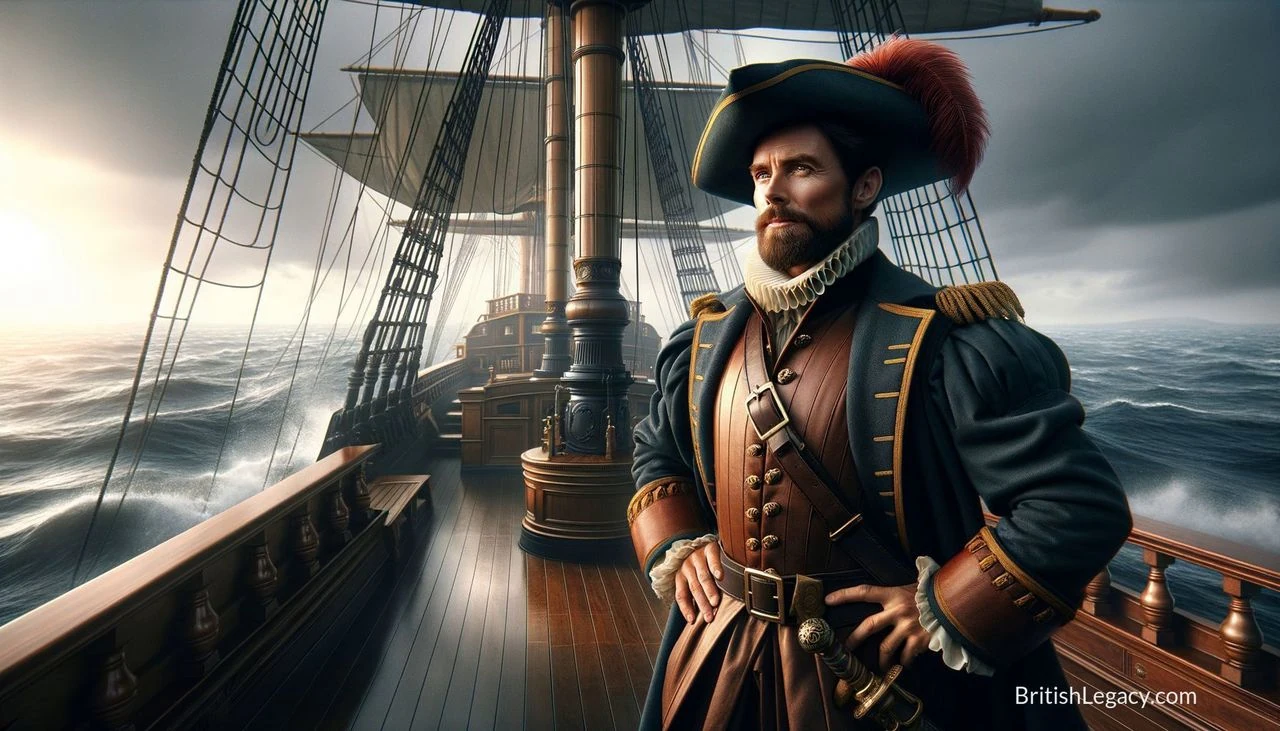
Sir Richard Grenville: The Intrepid Navigator of the Elizabethan Seas
Few figures from the Elizabethan era can be as compellingly depicted as the gallant Sir Richard Grenville, a renowned naval commander and explorer whose adventures and exploits have left an indelible mark on British history. Born in 1542 into a prominent Cornish family, Grenville’s legacy is intricately interwoven with the fabric of Elizabethan exploration and naval warfare, epitomising the resilient spirit of an age defined by sea-faring bravery and ambitious expansion.
Early Life and Rise
Sir Richard Grenville’s formative years coincided with the burgeoning renaissance of maritime exploration under Queen Elizabeth I's reign. He was educated at the Inner Temple, where he trained as a lawyer, but the call of the sea soon captivated his heart. Grenville's early military service saw him fighting against the Ottoman Turks in Hungary, which bolstered his reputation as a formidable warrior.
The Quest for the New World
Grenville’s name is synonymous with the Elizabethan exploration of the Americas. In 1585, under the auspices of Sir Walter Raleigh, Grenville was appointed to lead an expedition to establish a colony in the New World. His leadership was integral in founding the ill-fated Roanoke Colony, often labelled the "Lost Colony," which remains a subject of mystery and historical intrigue.
The Fateful Voyage of the Revenge
Perhaps the most vivid chapter of Grenville’s storied life was his extraordinary naval engagement aboard HMS Revenge. In 1591, Grenville and his crew faced an overwhelming Spanish fleet off the Azores, commanded by the experienced Alonso de Bazán. Outnumbered forty-nine to one, Grenville’s resolve did not waver. His courageous stand and the ensuing clash became legendary, symbolising the indomitable spirit of British naval warriors. Despite eventual capture and his subsequent death, Grenville’s heroic resistance was immortalised in Alfred, Lord Tennyson’s poem "The Revenge: A Ballad of the Fleet."
Literary and Cultural Legacy
Sir Richard Grenville's exploits transcended maritime history to inspire a wealth of literary and cultural works. He is memorialised not only through Tennyson’s rousing verses but also in various ballads, plays, and narratives that romanticise his daring nature. His life dovetailed seamlessly with the ideals of honour and heroism revered in the Elizabethan age.
Contribution to the British Naval Tradition
Grenville’s contributions significantly bolstered Britain’s burgeoning naval heritage, laying down principles of tenacity and valour that would come to define the Royal Navy. His legacy imparts a beacon of inspiration to generations of naval officers who followed. His actions under perilous conditions encapsulated the courage and fortitude synonymous with British maritime activity.
Impact and Influence
Analyzing Grenville’s impact is to peer into the larger canvas of British exploration and colonisation efforts. His endeavours in the New World, although marred by challenges, laid a foundational stone for subsequent English claims in America. This inexorably linked Grenville’s name with the early expansionist ambitions that burgeoned into the British Empire.
Moreover, his last stand aboard the Revenge serves as a testament to the undying spirit and determination championed as quintessentially British virtues. Grenville’s endeavours echo through time, informing the global legacy of British naval supremacy and the relentless pursuit of discovery.
A Legacy Unforgotten
Sir Richard Grenville's storied career as a naval commander and explorer richly contributes to the great British legacy. His dedication, unmatched bravery, and indomitable spirit have carved him a distinct place in the annals of history, leaving a lasting heritage that continues to inspire awe and reverence worldwide. As we delve into the annals of British history, Grenville stands as a beacon of maritime heroism, his legacy a testament to the undying virtues of the age of exploration and the ceaseless quest for knowledge and conquest.