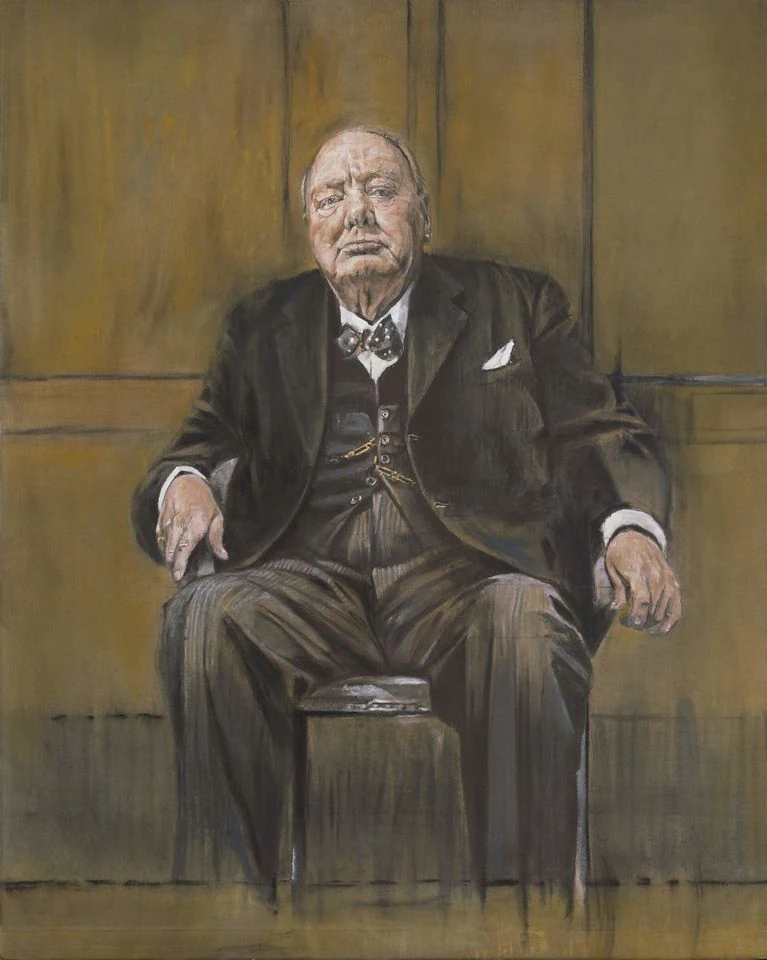
Winston Churchill’s wartime speeches are among the most familiar words in British political history. They accompanied a premiership that began in May 1940, as German forces invaded western Europe, and continued through Britain’s struggle against the Axis powers. But the story of Churchill is larger and more complicated than those speeches: a career spanning more than six decades in Parliament, two changes of political party, high office in two world wars, literary distinction and decisions that remain contested.
An early career in the army and the press
Churchill was born at Blenheim Palace, Oxfordshire, on 30 November 1874. His father, Lord Randolph Churchill, was a Conservative politician; his mother, Jennie Jerome, was American. After attending Harrow, Winston entered the Royal Military College at Sandhurst and was commissioned into the army in 1895. He served in India and Sudan and went to Cuba and South Africa as a journalist as well as an officer. Reports from these campaigns helped establish his public profile, while books about his experiences began a writing career that would continue alongside politics.
In 1900, Churchill was elected Conservative MP for Oldham. He crossed the floor to join the Liberal Party in 1904, in part amid disagreement over protectionism. In Liberal governments he held several senior posts, including president of the Board of Trade and home secretary. His work in these offices included support for measures concerning working conditions, minimum wages and unemployment assistance. His politics did not fit neatly into a single label: he could support social reform while remaining committed to free trade and opposed to socialism.
As First Lord of the Admiralty from 1911, Churchill oversaw naval preparations before and during the First World War. He backed the Dardanelles campaign, whose failure and association with the Gallipoli disaster damaged his standing. He resigned from government in 1915 and served for a period on the Western Front. He returned to ministerial office in 1917, later serving as minister of munitions and as secretary of state for war and air. In the early 1920s, as colonial secretary, he was involved in negotiations leading to the Anglo-Irish Treaty and in British policy in the Middle East.
Party changes and the years out of office
Churchill lost his Dundee seat in 1922 and spent two years outside Parliament. He returned as MP for Epping in 1924 and rejoined the Conservative Party, becoming chancellor of the exchequer in Stanley Baldwin’s government. His decision to restore sterling to the gold standard in 1925 was controversial; the Wikipedia account describes its deflationary effects and the damage to the coal industry. He remained chancellor until 1929.
During much of the 1930s, Churchill held no ministerial office. He wrote and spoke against the reduction of British air defences and warned of the danger posed by Nazi Germany. He opposed the Munich Agreement of 1938, which allowed Germany to annex the Sudetenland, arguing instead for collective action to deter further aggression. These warnings did not make him a central figure in government at the time, but the outbreak of war brought him back to office: Neville Chamberlain appointed him First Lord of the Admiralty in September 1939.
Prime minister during the Second World War
Churchill became prime minister on 10 May 1940, the day German forces invaded Belgium, Luxembourg and the Netherlands. He formed a coalition government that included Labour figures such as Clement Attlee. In the weeks that followed, as France faced defeat and the British Expeditionary Force was evacuated from Dunkirk, Churchill resisted proposals to seek terms through mediation. His resolve was tested within government as well as by events on the battlefield.
His speeches gave public expression to the decision to continue the war. In the Commons in May, he described the policy as a struggle to be waged “by sea, land and air”. After the Dunkirk evacuation, his “we shall fight on the beaches” speech made clear that the evacuation was not, in his view, the end of the campaign. In June, he spoke of the Battle of Britain as a test of whether the country could resist invasion. These addresses became part of his public legacy, but they sat alongside the less visible work of managing a coalition, directing government and sustaining a war effort.
Churchill worked to secure American support and, after Germany invaded the Soviet Union in June 1941, to bring the Soviet Union into the alliance against Hitler. In August 1941, he met President Franklin D. Roosevelt in Newfoundland; their joint statement, the Atlantic Charter, set out aims for the post-war world and is described in the supplied Wikipedia account as an inspiration for the 1942 Declaration by United Nations. Churchill also took part in wartime meetings with Roosevelt and Soviet leader Joseph Stalin as the allies discussed military strategy and the shape of the post-war settlement.
The war did not consist of uninterrupted successes. The fall of Singapore to Japan in February 1942 dealt a severe blow to British military prestige. In 1943, famine in Bengal took millions of lives. The supplied account describes the famine’s causes as a combination of disrupted rice imports, poor administration, inflation and natural disasters; it also records criticism of the government’s response and notes that the impact of British policy on the death toll remains controversial. The episode, along with the conduct of area bombing, complicates any simple account of wartime leadership. Churchill later questioned the destruction of Dresden, but historians have differed over how to interpret his response.
Allied advances followed victories in North Africa and at Stalingrad. Churchill’s government took part in the planning and conduct of the campaigns in Italy and the invasion of Normandy in June 1944. Germany surrendered in May 1945. Churchill shared the public celebrations, but his wartime premiership ended after the Conservatives lost the July general election. The Labour victory reflected, among other factors, popular demand for post-war reform. Churchill became leader of the opposition.
Literature, a second premiership and public memory
Churchill’s writing ran parallel to his political life. He produced journalism, biographies, memoirs and histories, including the multi-volume The Second World War. In 1953, he received the Nobel Prize in Literature. His wartime writing helped shape how the conflict was remembered, while his paintings and other interests formed a less prominent part of his public life.
After the Conservatives returned to power in 1951, Churchill became prime minister for a second time. The government faced the early Cold War and the changing position of Britain overseas. A major domestic concern was housebuilding: Churchill’s government set a target of 300,000 new homes a year, which the supplied account says it achieved. He resigned in April 1955 and remained a member of Parliament until 1964.
Churchill’s record also includes enduring disputes over empire, race and the use of force. The supplied account describes him as a committed imperialist who opposed colonial self-rule. It notes criticism of his comments on race and of wartime decisions such as area bombing. Those matters belong in an account of his legacy alongside his leadership and writing; recognition of his wartime role does not erase them.
Churchill died at his London home on 24 January 1965, aged 90, and was given a state funeral. His memorials include a statue in Parliament Square and the Churchill War Rooms. His reputation has also been carried by biographies, films and television portrayals, which have renewed public attention to both his achievements and his controversies.
Why Sir Winston Churchill deserves a place in British Legacy
Churchill deserves a place in British Legacy because his career illuminates both the power and the limits of political leadership. As prime minister from 1940 to 1945, he led a coalition government through a period in which Britain faced invasion and the defeat of its allies in Europe. His speeches helped articulate the decision to continue fighting, while his dealings with the United States and the Soviet Union formed part of the diplomatic work of building the wartime alliance. These achievements are specific and consequential: they connect parliamentary leadership, public communication and international statecraft at a moment of exceptional danger.
His wider record makes that legacy more useful, not less. Churchill’s earlier work in government included support for labour and social measures, while his later premiership took place amid post-war rebuilding and the beginnings of the Cold War. His historical writing, recognised by the Nobel Prize in Literature, helped shape public understanding of the events he had experienced. At the same time, his imperial commitments, racial views and decisions made during the war require clear-eyed scrutiny. Remembering Churchill in British Legacy should therefore mean more than repeating a heroic image: it should preserve the evidence of what he did, the effects of those actions and the disputes they continue to provoke. That fuller account offers readers a way to understand both the making of a national figure and the responsibilities of judging one.
Sources
Winston Churchill — Wikipedia, revision 1378790280
Adapted in part from Winston Churchill by Wikipedia contributors, under CC BY-SA 4.0. Text has been edited and combined with the existing article; this adapted text is shared under the same licence. Contributor history.