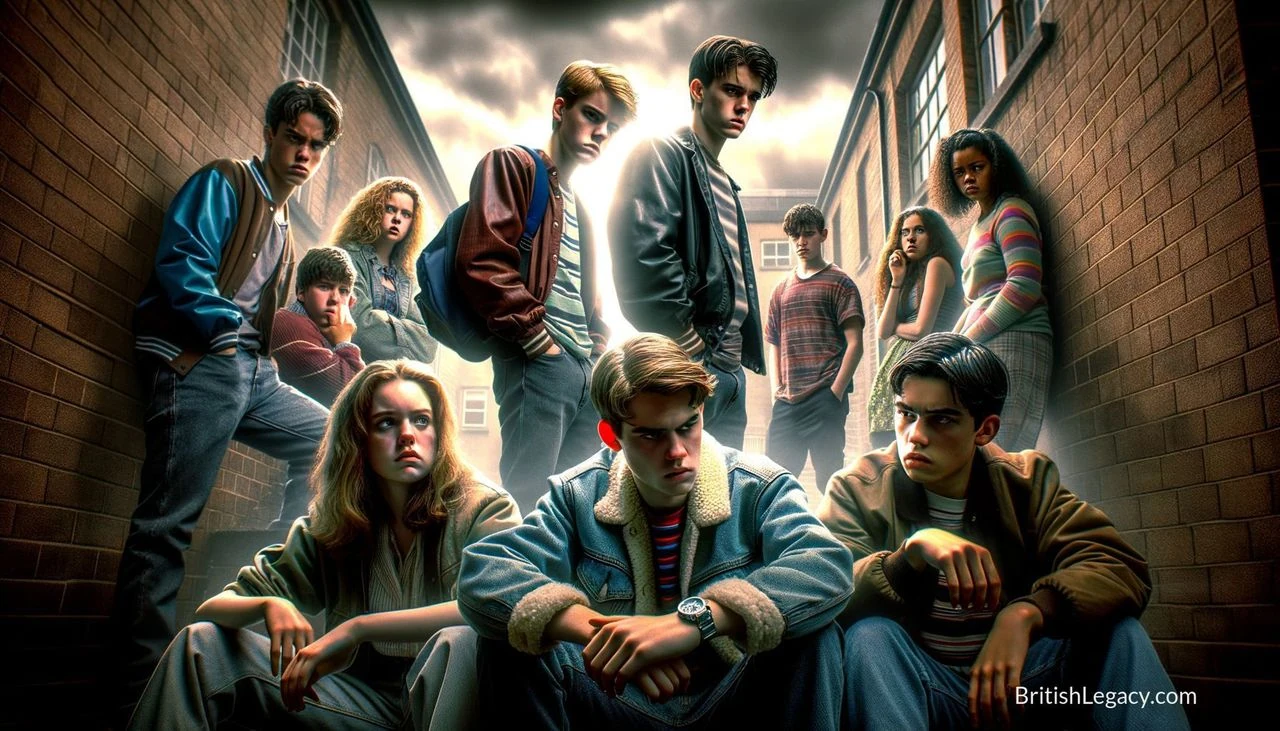
When Skins arrived in 2007, it put a group of Bristol teenagers on screen without smoothing away the turmoil of adolescence. Created by Bryan Elsley and his son Jamie Brittain, the British drama followed young people negotiating relationships, family life and difficult personal choices. Its direct treatment of subjects often handled cautiously in teen television brought attention as well as controversy.
A different way to tell a teenage story
Skins used an ensemble cast, with many episodes concentrating on one character. That structure gave the series room to shift perspective rather than treating its teenagers as a single, uniform group. Across the characters’ lives, it addressed mental health, substance use, sexuality and family dynamics, alongside the broader uncertainties of growing up.
The show’s writing also helped define its voice. The original account describes most episodes as written by young writers, including some who were teenagers. That approach was intended to bring youthful language and experience into the scripts. Rather than present adolescence as neat or reassuring, Skins made awkwardness, conflict and risk part of its central subject.
Attention, argument and controversy
The drama’s explicit depictions of sex, drugs and rebellious behaviour provoked criticism. Some viewers and commentators accused it of glorifying conduct they considered inappropriate. The controversy became part of the programme’s public profile, while also raising questions about how television should portray young people and the pressures they face.
Its frankness was not the same as a simple endorsement of the behaviour it depicted. The series put difficult subjects, including mental health and sexual orientation, into the lives of its characters and into discussion around the programme. Claims that it transformed public attitudes or destigmatised those subjects are harder to establish from the account alone; what is clear is that its approach was less sanitised than that of many conventional teen dramas.
Actors and international versions
The cast included Nicholas Hoult as Tony Stonem and Dev Patel as Anwar Kharral. Both later built careers in film and television, and the programme became an early credit for actors who went on to wider recognition. Its attention was not limited to Britain: the success of the UK series led to an American adaptation and versions in other countries.
The American version did not receive the same acclaim as the original, according to the existing account. Adaptations nonetheless carried the series’ central territory—young people dealing with identity, relationships and risk—into other television markets. The original remained rooted in Bristol, giving its particular setting a place within a format that could travel.
Why Skins deserves a place in British Legacy
Skins merits a place in British Legacy as a British television drama that made the unsettled experiences of teenagers its main subject. Its Bristol setting, ensemble cast and character-focused episodes gave it a recognisable structure, while its attention to mental health, sexuality, substance use and family life brought difficult material into a popular drama. Its significance lies not in proving that it changed every viewer’s outlook, but in showing how a series could place such subjects at the centre of a teen narrative.
The programme also connected British television talent with a wider audience. It featured Nicholas Hoult and Dev Patel before their later film and television careers, and its international adaptations show that the themes and format travelled beyond the UK. The arguments around its depictions are part of that legacy too: Skins invited debate about whether frank portrayals of teenage behaviour could reflect experience without appearing to endorse it. That tension makes the series a useful record of early twenty-first-century British popular culture, not simply a drama remembered for controversy.