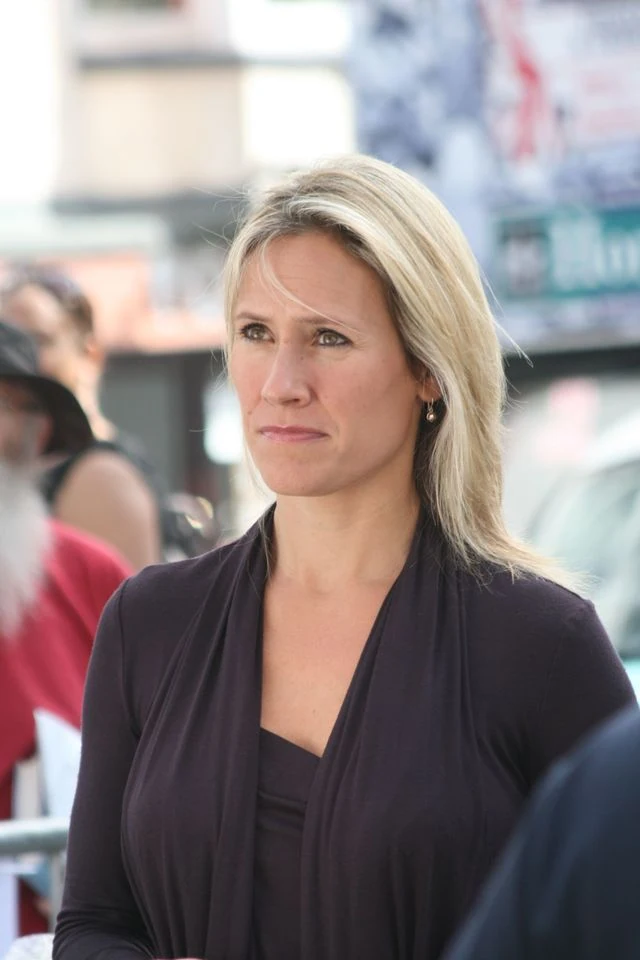
Sophie Raworth’s career at the BBC began in regional radio, not in the national television studio. After joining the corporation as a reporter in 1992, she worked in Manchester, Brussels and Leeds before moving to national television. She went on to present breakfast programmes and major news bulletins, and to take on consumer affairs, crime and coverage of public occasions. That progression, across distinct roles and programmes, gives a clear account of a broadcaster whose work has been part of British television and radio for more than three decades.
Education and early BBC work
Sophie Jane Raworth was born in Redhill, Surrey, on 15 May 1968. She attended Bute House Preparatory School for Girls, Putney High School and St Paul’s Girls’ School. At the University of Manchester she studied French and German, graduating with an upper second-class honours degree in 1991. She spent the following year teaching English to teenagers in Toulouse, then completed a postgraduate diploma in broadcast journalism at City, University of London.
Raworth joined the BBC in 1992 as a news reporter, first working for Greater Manchester Radio. In April 1994 she became the BBC Regions correspondent in Brussels. The next year she moved to Leeds as joint presenter of Look North. The early sequence of radio, regional reporting and presenting established a practical foundation for her later work on national television. It also shows that her route to the main bulletins passed through a range of reporting environments rather than beginning with a single high-profile presenting appointment.
Moving to national television
In 1997 Raworth became a co-presenter of BBC One’s Breakfast News. She joined the BBC breakfast programme Breakfast when it launched in 2000, presenting alongside Jeremy Bowen and later Dermot Murnaghan. In January 2003 she moved to the BBC Six O’Clock News, where she presented alongside George Alagiah. She remained with the bulletin until October 2005, when she went on maternity leave.
In March 2006 the BBC named Raworth as the main presenter of the BBC News at One, a role she took up that June after returning from maternity leave. She presented the programme from Monday to Thursday. From 2009 she was a main relief presenter on the BBC News at Six and a regular relief presenter on the BBC News at Ten, as well as appearing in place of Andrew Marr on The Andrew Marr Show. These appointments placed her across the corporation’s daytime, evening and weekend output, while her presenting work continued to extend beyond the daily bulletins.
Raworth also presented BBC specials, including coverage of the Queen’s Golden Jubilee and Our Monarchy – The Next 50 Years, both alongside David Dimbleby. Other television work included Tomorrow’s World and the quiz programme Judgemental. In 2013 City University London awarded her an honorary Doctor of Arts degree.
Consumer programmes and national occasions
Her BBC work has included consumer and crime programming as well as news. Raworth presented Crimewatch Roadshow in 2009, Watchdog Daily in 2012 and Watchdog Test House in 2014 and 2015. In September 2015 she became the main presenter of Watchdog. The following year she replaced Kirsty Young as the programme’s main anchor on Crimewatch, having previously guest-presented it.
Raworth has also presented election coverage and reported on ceremonies of national significance. In 2022 she temporarily replaced Andrew Marr as presenter of Sunday Morning, staying in the role until July. Later that year she presented coverage of the proclamation of King Charles III; in 2023 she reported on the coronation. Her assignments have included the BBC’s coverage of the 2024 general-election results. These roles put her in front of audiences for events beyond the daily news schedule, where the task is to guide coverage of a shared public occasion as it unfolds.
In 2018 she presented RAF 100: Into the Blue, a documentary marking the Royal Air Force’s centenary. In it, she discussed her grandfather, Captain Edwin Raworth, a pilot in the First World War. It is a personal connection included within a programme about the service’s history, rather than a departure from her work as a presenter and reporter.
Running alongside broadcasting
Running has become a substantial part of Raworth’s life outside the studio. She completed the London Marathon in 2011, despite collapsing two miles from the finish. By 2017 she had completed all six World Marathon Majors. In April 2018 she finished the Marathon des Sables, a six-day, 251-kilometre ultramarathon in the Sahara. She completed her tenth London Marathon in 2022 and ran it again in 2023.
At the 2024 London Marathon, Raworth fractured her ankle. The injury was diagnosed after the race and led her to withdraw from a general-election debate she had been due to present. She returned to the London Marathon in April 2026 and completed her thirteenth. In the same year she published Running on Air: From BBC Headlines to Life-Changing Finish Lines, a book about her BBC career and how she took up running in her early forties, including her experience of demanding races. The running record adds a distinct personal strand to her public career, without confusing sporting achievements with her broadcasting work.
Why Sophie Raworth deserves a place in British Legacy
Sophie Raworth’s place in British Legacy is grounded in a documented career that connects regional reporting with national broadcasting. She began at Greater Manchester Radio, worked as a BBC Regions correspondent in Brussels and presented Look North in Leeds before moving to national television. Her subsequent roles on Breakfast News, Breakfast, the BBC Six O’Clock News and the BBC News at One chart a working life across different parts of a major British public broadcaster. Those details make her story more specific than a general description of her as a familiar face: they show the sequence of jobs through which she built that position.
Her contribution also spans different forms of public-service broadcasting. Alongside news bulletins, she has presented consumer and crime programmes, election coverage and programmes about national events, from the Queen’s Golden Jubilee to the proclamation and coronation of King Charles III. Such assignments put a presenter in contact with audiences during both everyday reporting and moments of wider public attention. The earlier article described Raworth as a “beacon of reliability and excellence” and as embodying a “gold standard” of journalism; those are its evaluative words, not conclusions established by the supplied career record. A more durable account of her British legacy rests on the work itself: a long BBC career across regional and national news, varied programmes and significant public occasions.
Sources
Adapted in part from Sophie Raworth by Wikipedia contributors, under CC BY-SA 4.0. Text has been edited and combined with the existing article; this adapted text is shared under the same licence. Contributor history.