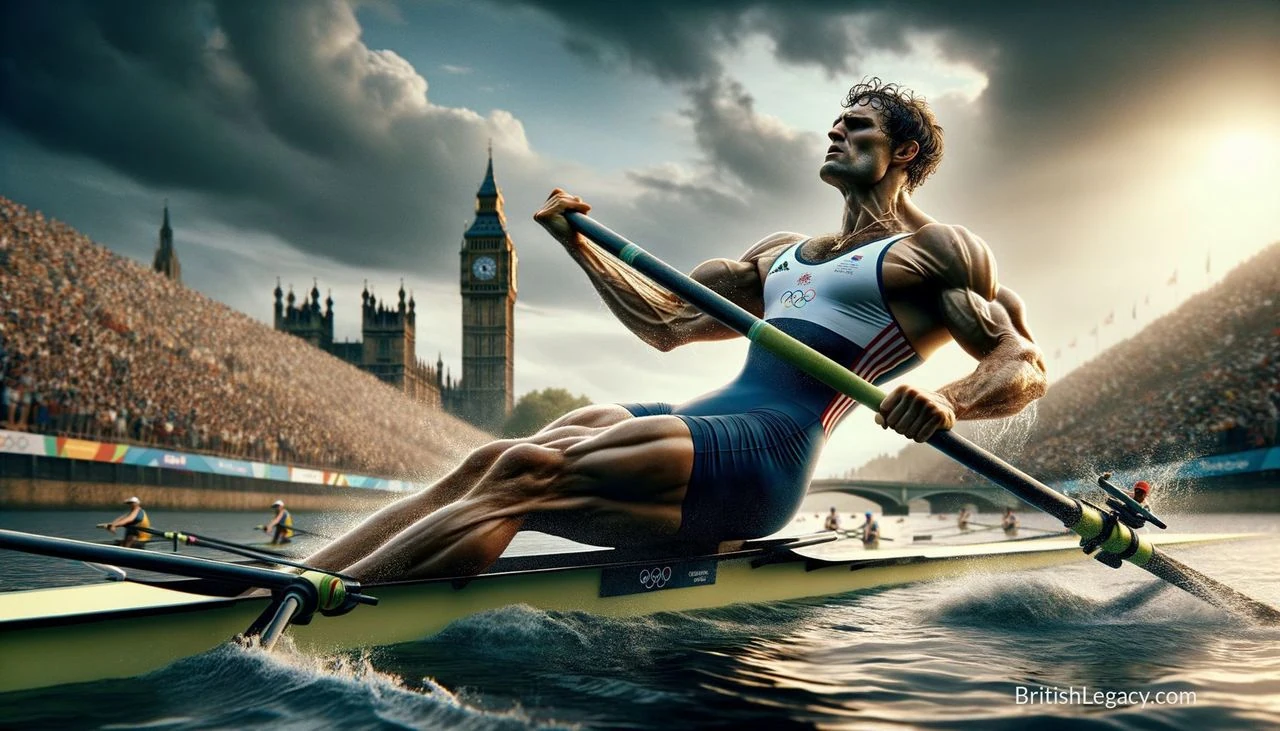
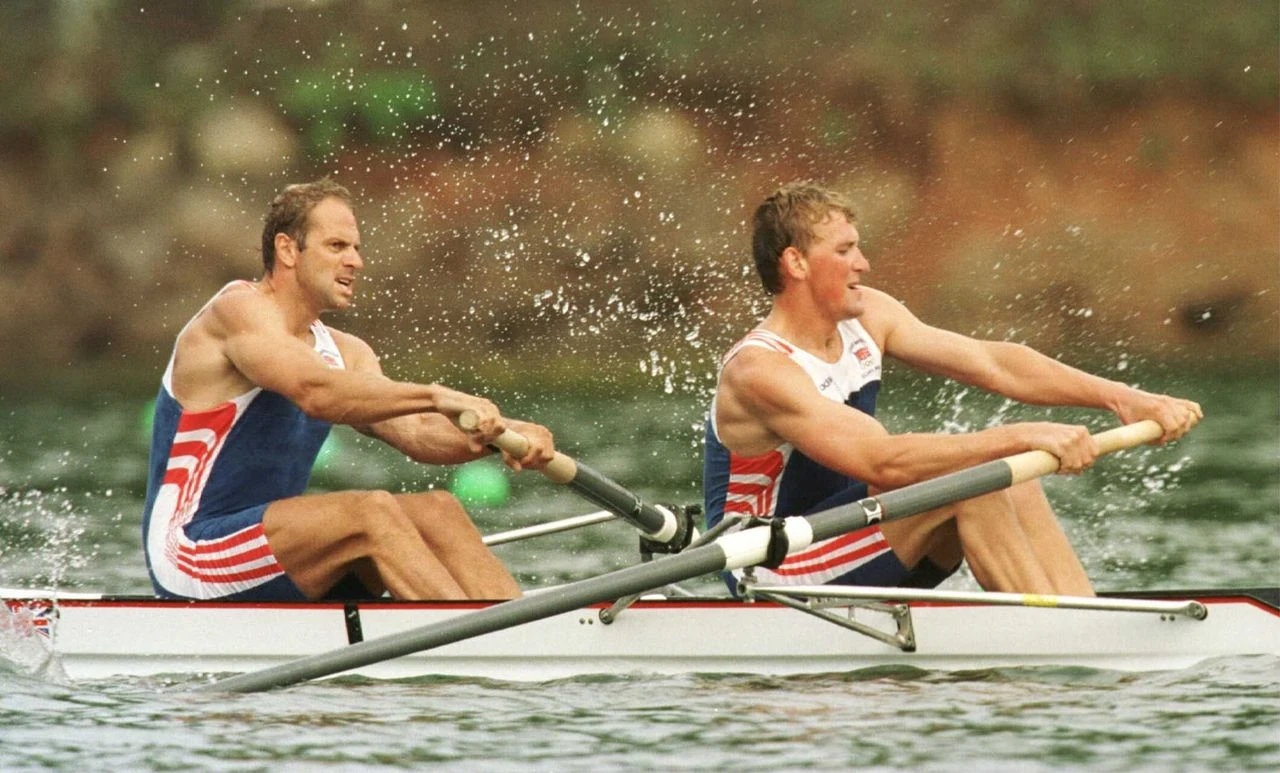
Steve Redgrave’s Olympic record spans sixteen years and five Games: from the coxed four at Los Angeles in 1984 to the coxless four at Sydney in 2000. Along the way he won gold in different crews, raced with Andy Holmes and Matthew Pinsent, and returned to training after saying in 1996 that anyone who saw him near a boat again had permission to shoot him. The remark was memorable; so was the decision to carry on.
From Marlow to the international stage
Steven Geoffrey Redgrave was born in Marlow, Buckinghamshire, on 23 March 1962. His father, Geoffrey, had served in submarines during the Second World War and later became a builder; his mother was Sheila Marion. Redgrave was educated at Great Marlow School and rowed for Marlow Rowing Club before joining Leander Club. Sweep rowing, in which a rower handles one oar, became his principal discipline. He won Olympic gold rowing on both the bowside and strokeside.
Redgrave first competed at the Olympic Games in Los Angeles in 1984. He won gold in the coxed four, rowing with Martin Cross, Adrian Ellison, Andy Holmes and Richard Budgett. At Seoul in 1988 he took gold in the coxless pair with Holmes, and also won bronze in the coxed pair with Holmes and Patrick Sweeney. The results show both the range of his work in crews and the fact that his Olympic record included more than gold medals.
At Barcelona in 1992, Redgrave and Matthew Pinsent won the coxless pair. They repeated the result at Atlanta in 1996, where their event supplied the only gold medal won by the entire British Olympic team across all sports. Redgrave stepped away from training for four months after that victory, then changed his mind about retirement. His widely reported remark about being shot if found near a boat had been made immediately after the race; it did not mark the end of his rowing career.
The fifth title and a wider record
For Sydney in 2000, Redgrave moved into the coxless four. He, Pinsent, Tim Foster and James Cracknell won gold, giving Redgrave a title at five consecutive Olympic Games. He retired after the Games. The feat was built across changing crews and events, not by repeating one fixed combination: he won in a coxed four, two coxless pairs and a coxless four.
His achievements also extended well beyond the Olympics. Redgrave won nine gold medals at the World Rowing Championships, along with two silver medals and a bronze. His world titles came in pairs and fours, with Pinsent a particularly frequent partner in the later years. He also won the World Championship for indoor rowing in 1991. At Henley Royal Regatta, where he competed for more than two decades, his victories included seven in the Silver Goblets and Nickalls’ Challenge Cup for coxless pairs and five in the Stewards’ Challenge Cup for coxless fours. He won the Wingfield Sculls, the race for single scullers, five times between 1985 and 1989.
Redgrave’s career was not free of illness. He was diagnosed with ulcerative colitis in 1992 and with type 2 diabetes in 1997. He continued competing after the diabetes diagnosis and went on to win his fifth Olympic gold in 2000. His experience is part of the record of his later career, but does not need to be turned into a simple story of illness overcome: the achievement was made within a demanding sporting life that included serious health conditions.
After competition: public roles and recognition
Retirement from rowing did not end Redgrave’s connection with sport or public life. In April 2006 he completed his third London Marathon, raising a reported £1.8 million for charity. He took part in the Olympic torch relay for Beijing in 2008 and, at the London 2012 opening ceremony, carried the torch into the stadium. Seven young athletes shared the task of lighting the cauldron. Redgrave also rowed on the Gloriana during the Thames pageant for Elizabeth II’s Diamond Jubilee.
His work connected with rowing internationally as well as at home. In 2018 he took a high-level performance director role with the Chinese Rowing Association, helping its team prepare for the Tokyo 2020 and Paris 2024 Games. Earlier, he had been involved in starting a rowing academy in India. These roles extended his experience beyond his own competitive career, into the development and preparation of other athletes.
Redgrave received the MBE in 1987 and was made a CBE in 1997. In the 2001 New Year Honours he was appointed a Knight Bachelor for services to rowing. He was named BBC Sports Personality of the Year in 2000 and received the BBC’s Lifetime Achievement Award in 2011. Universities also recognised his sporting work, including Heriot-Watt, Loughborough and Edinburgh. In 2006 he and Pinsent opened the Redgrave Pinsent Rowing Lake, a training facility with medical and scientific provision for the GB rowing squad.
Why Steve Redgrave deserves a place in British Legacy
Redgrave’s place in British sporting history rests first on a rare and clearly defined achievement: five Olympic rowing golds at five successive Games. The sequence began in 1984 and ended in 2000, across three different boat classes and with different crew arrangements. It demanded sustained performance through a long career, not a single peak. His Olympic bronze at Seoul, nine world championship titles and record at Henley add depth to that account, showing a competitor whose accomplishments extended across events and over decades.
His legacy also has a practical connection to British rowing beyond the medals. Redgrave’s results made him a prominent figure in the sport, while his later roles included helping develop rowing programmes abroad and contributing to elite performance work. The Redgrave Pinsent Rowing Lake provides training, medical and scientific facilities for the GB rowing squad, linking his name and partnership with a resource for athletes who followed. His Olympic torch appearances and honours mark the public recognition of that career, but the strongest reason to remember him is more concrete: he repeatedly delivered at the highest level for Great Britain, and his work continued to touch the institutions and athletes that sustain the sport.
Sources
Steve Redgrave — Wikipedia revision 1377949349
Adapted in part from Steve Redgrave by Wikipedia contributors, under CC BY-SA 4.0. Text has been edited and combined with the existing article; this adapted text is shared under the same licence. Contributor history.