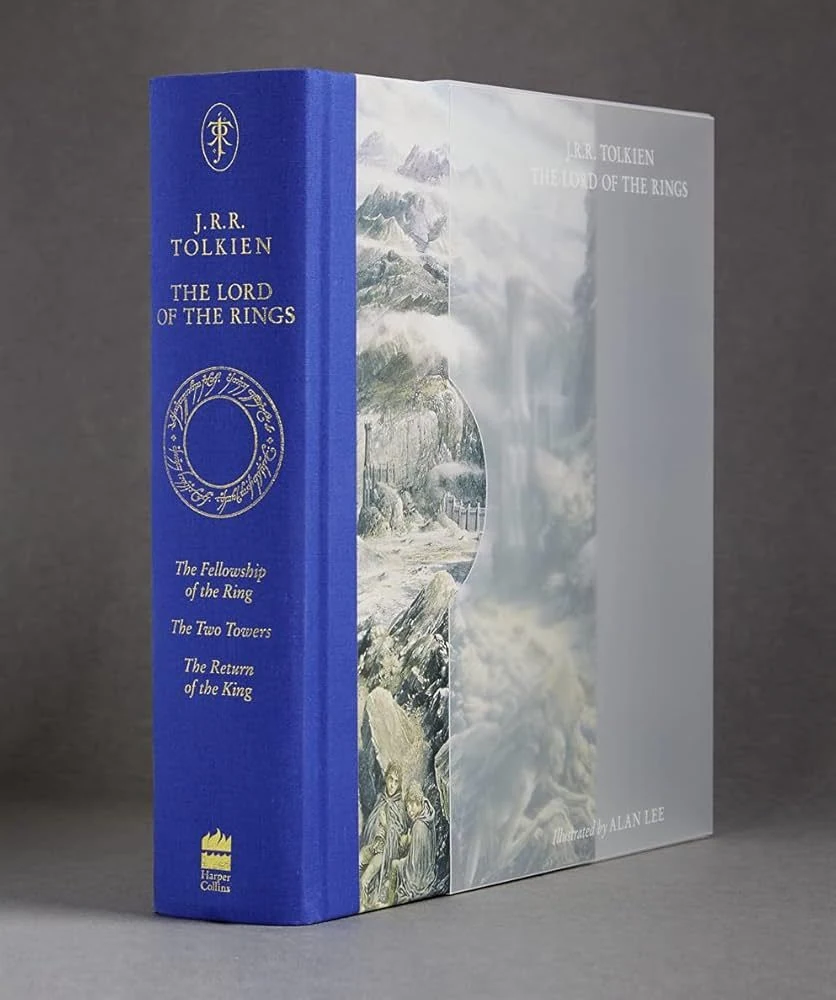
In The Lord of the Rings, the fate of Middle-earth turns on a journey to destroy the One Ring. Frodo Baggins inherits it from his uncle Bilbo and, guided by Gandalf the Grey, sets out with companions who must contend with dangerous landscapes, formidable enemies and the Ring’s corrupting power. The quest supplies a clear narrative purpose; Tolkien’s languages, histories and cultures give its world a sense of depth beyond the journey itself.
The scholar behind Middle-earth
John Ronald Reuel Tolkien (1892–1973) was an English writer, poet, philologist and academic. At the University of Oxford, he served as Professor of Anglo-Saxon and later as Professor of English Language and Literature. His interests in mythology, language and ancient lore informed his literary work, and the supplied account identifies his academic background as one influence on The Lord of the Rings.
Tolkien also drew on his experiences in the First World War and on a desire to create a mythology for England. The work’s invented languages, histories and cultures are central to how Middle-earth is presented: the story is not merely set against a backdrop, but unfolds in a world with its own lore. That combination of scholarship and imaginative construction helps explain why the book has remained a touchstone for modern fantasy, according to the supplied article.
The Ring and the Fellowship
The One Ring was created by the Dark Lord Sauron to control the other Rings of Power and dominate Middle-earth. Frodo’s task is to destroy it. The Ring’s corrupting influence makes the quest an inward test as well as a dangerous expedition: its power threatens those who carry it, while Sauron’s reach gives the journey consequences for the wider world.
Frodo forms the Fellowship with Gandalf, his friends Samwise Gamgee, Meriadoc Brandybuck and Peregrin Took, the ranger Aragorn, the elf Legolas, the dwarf Gimli and the man Boromir. The company brings together characters from different peoples and backgrounds. They face treacherous terrain and enemies, but also the pressure of the Ring and the demands of staying together. Friendship and sacrifice, alongside the struggle between good and evil and the possibility of hope, are among the themes identified in the supplied account.
Three volumes, a wide readership
The story was published in three volumes: The Fellowship of the Ring, The Two Towers and The Return of the King. Together, they follow the quest to destroy the Ring, allowing the narrative to range across Middle-earth while keeping that purpose in view. The supplied article describes the work as receiving immediate acclaim for its originality, scope and complexity when it appeared between 1954 and 1955.
The same article reports worldwide sales of more than 150 million copies and translations into numerous languages. It also describes the work’s reach beyond books, into academic analysis, literary criticism and popular culture. Peter Jackson’s film adaptations, it says, brought Tolkien’s vision to a new generation and achieved critical and commercial success. These are claims reported by the supplied article, rather than independently verified figures or assessments.
The imported article lists the book for purchase on Amazon UK: view the listing.
Why The Lord of the Rings deserves a place in British Legacy
The Lord of the Rings merits a place in British Legacy because its imaginative world is connected to the work of an English writer and Oxford academic. Tolkien’s professorships in Anglo-Saxon and English Language and Literature, together with his interests in language, mythology and ancient lore, provide a specific context for the creation of Middle-earth. The supplied account also links the work to his experiences in the First World War and his desire to create a mythology for England. Its British connection is therefore not simply a matter of the book’s later reputation: it lies in the scholarship and literary ambition associated with its author.
The book’s lasting appeal also comes from the way those interests serve a compelling story. The One Ring turns questions of power and corruption into a danger the characters must confront, while the Fellowship’s journey gives friendship, sacrifice and hope a place in the action. The reported translations, readership and film adaptations show how a work shaped by this English literary context has travelled beyond it. Remembering the book in British Legacy means recognising both its origins and its contribution to fantasy storytelling and popular culture.