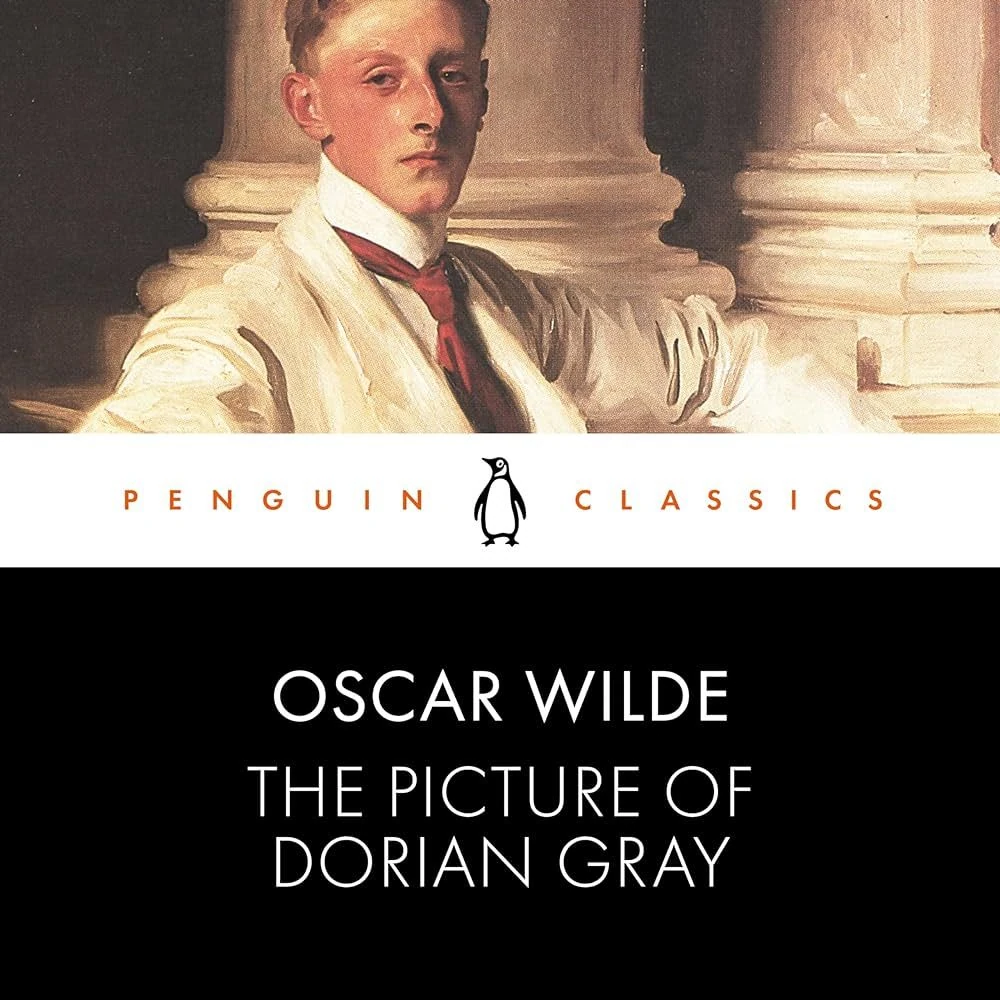
In Oscar Wilde’s The Picture of Dorian Gray, a young man keeps his youthful appearance while a portrait bears the marks of his choices. First published in 1890 and expanded and revised for book publication in 1891, the novel uses that unsettling contrast to examine vanity, morality and the risks of living for pleasure without regard for its consequences.
The bargain and the portrait
Dorian Gray is handsome, and he becomes increasingly absorbed by his own appearance and the pleasures of the senses. Under the influence of Lord Henry Wotton, he pursues a life of indulgence. In the novel’s Faustian bargain, Dorian retains his youth and beauty, while his portrait ages and registers his moral decline. The arrangement gives the story its central tension: the image Dorian presents to the world remains unchanged, but the painting records what that image conceals.
The portrait is both a device of the plot and a symbol of inward corruption. It makes visible the consequences that Dorian’s unaltered face appears to escape. Wilde’s story thus challenges the idea that outward beauty can stand as evidence of character. Dorian may seem untouched by time, but the changing portrait gives the reader a different account of his life.
Beauty, morality and society
Vanity, the superficiality of social values and the dual nature of human beings are among the novel’s central concerns. The portrait concentrates them in a single image: a charming exterior on one side, and the signs of moral decay on the other. Wilde’s treatment of beauty is therefore not simply celebratory. It asks what happens when appearance and sensation become more important than ethical responsibility.
The novel also turns its attention to Victorian society. Its account of hypocrisy and decadence places Dorian’s private conduct against the values and judgements of the world around him. That contrast makes the story a critique of social respectability as well as an individual cautionary tale. Wilde’s prose, described in the supplied account as lyrical and biting, carries both the imaginative force of the premise and its social criticism.
Publication and reception
Wilde, born in Dublin in 1854, was a playwright, poet and aesthete. The Picture of Dorian Gray was his only novel. It first appeared in Lippincott’s Monthly Magazine in 1890; Wilde later expanded and revised it for publication as a book in 1891. Those two stages belong to the work’s history: the magazine appearance was followed by a longer, revised book form.
The novel’s reception was divided. Victorian critics objected to what they regarded as its immorality and decadence, while others praised its wit and originality. The disagreement reflected the book’s challenging treatment of pleasure, morality and social values. Its controversy was part of its early history, alongside the imaginative premise that gave those arguments their focus.
Adaptations and afterlife
The novel has been adapted for films, plays and operas. Its central conceit—a man’s appearance remaining intact while a portrait registers a hidden history—offers a striking image that can be reinterpreted across forms. The story’s themes of beauty, ethics and the nature of the soul also leave room for different readings.
Its continuing appeal lies in the questions raised by the divide between Dorian’s face and his portrait. The novel asks readers to consider the cost of vanity and whether outward appearances can be trusted. Those concerns connect its supernatural bargain to a wider examination of social judgement and private conduct.
Why The Picture of Dorian Gray deserves a place in British Legacy
The Picture of Dorian Gray belongs in British Legacy as a work associated with Victorian literary culture and one whose publication and reception make that connection specific. It appeared in a magazine in 1890, then in an expanded and revised book edition in 1891. Its divided reception—condemnation from critics who saw immorality and decadence, alongside praise for its wit and originality—shows how fiction could become a point of argument about contemporary values. The supplied account places the novel within British literary heritage; Wilde himself was born in Dublin, a distinction worth preserving rather than obscuring.
The novel’s contribution is also in the clarity of its central image. The portrait makes the consequences of Dorian’s conduct visible while his youthful appearance hides them, giving the story a memorable way to explore vanity, ethics and the gap between public image and private character. Its adaptations for film, plays and opera attest to the continued life of that premise in other forms. Remembering the novel means recognising both its imaginative design and its sustained challenge to the idea that a pleasing exterior is a reliable measure of a person’s actions.