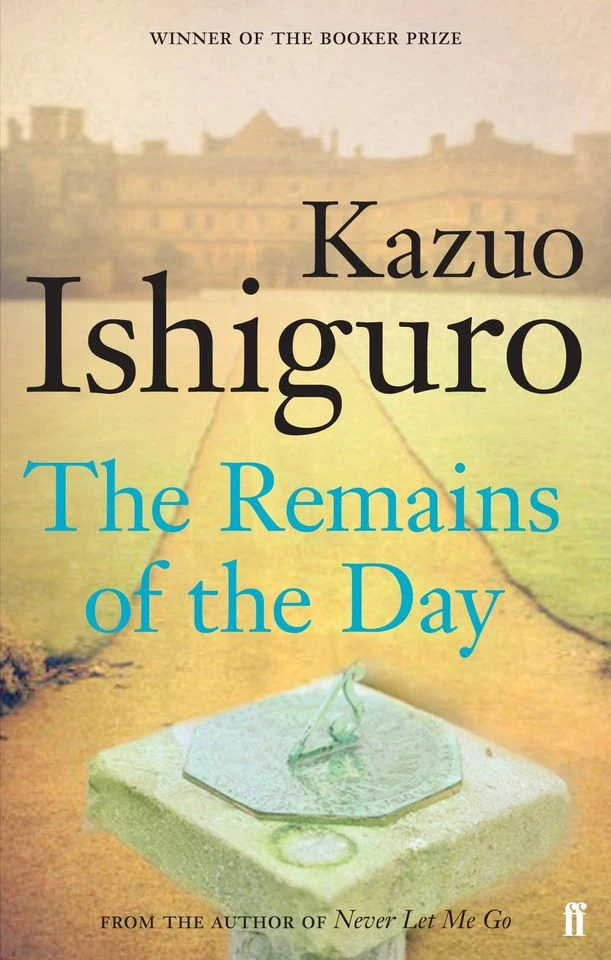
In Kazuo Ishiguro’s The Remains of the Day, a butler’s journey through the West Country becomes an examination of the life he has spent serving others. Stevens sets out from Darlington Hall in 1956, but the six days of travel also prompt him to revisit his years in a great English house, the choices made in the name of duty and the feelings he has kept out of view. Published in 1989, the novel brings an intimate personal story into contact with England’s class system and post-war past.
A journey through memory
The novel is set in post-Second World War England and follows Stevens, an ageing butler who has devoted his working life to Lord Darlington. Its first-person narrative unfolds over six days in 1956, as Stevens travels from Darlington Hall towards the West Country. The outward journey gives him a frame for remembering his service and considering the principles by which he has judged himself.
Stevens understands his role through professionalism and dignity. In his account, service is not simply a job but a standard against which a life can be measured. That conviction lends his reflections their restraint: he looks back through the language of duty even as the journey brings suppressed emotions and personal sacrifices into view. The tension between what he can say and what he has felt gives the narrative much of its poignancy.
The movement between present journey and remembered years makes private recollection carry historical weight. Stevens’s life is closely bound to Darlington Hall and to his employer, while his later reflections take place in a changed, post-war England. Ishiguro uses that perspective to consider how a person’s decisions can be shaped by position and obligation, and how difficult it may be to reassess them afterwards. The novel does not need to leave Stevens’s point of view to make those questions felt.
Service, dignity and what is left unsaid
Stevens’s devotion to his work gives the story its central measure of dignity, but also exposes the cost of defining oneself almost wholly through professional conduct. His commitment to service has demanded personal sacrifices; his reserved manner makes those sacrifices harder to acknowledge. The resulting conflict is not presented as a simple choice between a respectable public role and a private life. Rather, the novel follows a man trying to understand what his chosen standards have allowed him to do, and what they have kept him from expressing.
That focus makes the butler’s perspective especially suited to a story about class and the boundaries of a great household. Stevens serves within an English social world in which role and rank matter, yet the narrative remains close to his individual understanding of events. Readers encounter the past as he remembers it, alongside his efforts to give meaning to his conduct. This creates room to consider the limits of his judgement as well as his sincerity.
Professionalism, emotional restraint and the passage of time are therefore connected rather than separate themes. Stevens’s account looks back on earlier service from the vantage point of 1956, when the years cannot be recovered and decisions must be considered in retrospect. His journey becomes an occasion for self-examination, but not an easy resolution: the novel’s force lies in the distance between his disciplined account of himself and the feelings that account struggles to contain.
Kazuo Ishiguro and the British setting
Ishiguro was born in Nagasaki, Japan, and raised in the United Kingdom. The supplied account describes his writing as drawing on classic English literature as well as American and Japanese authors, and identifies his understanding of the British class system and human behaviour as important to the novel. The book’s English setting is not merely a backdrop: Darlington Hall, Stevens’s occupation and the journey through post-war England shape the story’s concerns with service, hierarchy and personal choice.
The novel was published in 1989 and won the Man Booker Prize that year, according to the supplied article. Its recognition placed a story rooted in an English household and social order before a wide readership. Its reach extended beyond the book: a film adaptation appeared in 1993, starring Anthony Hopkins and Emma Thompson. The adaptation brought Stevens’s story to another audience and carried its central themes of duty, identity and unspoken emotion into a different form.
The novel’s connection to Britain is specific rather than a claim that its author’s birthplace determines its identity. Ishiguro’s life in the United Kingdom, the English setting and the social structures examined in the book all contribute to its place in British literary culture. At the same time, the story’s questions about responsibility, purpose and the demands people make of themselves are not confined to that setting.
Reading and reaching an audience
The supplied article notes that readers can buy the novel through Amazon or find it at major bookshops. That practical invitation sits alongside the article’s account of the book’s wider reach through its 1993 film adaptation. Neither route changes the novel’s focus: the story remains anchored in Stevens’s reflections, the English house in which he served and the journey that prompts him to look back.
The novel’s subjects—duty, identity, purpose and unspoken emotion—give its particular setting room to speak beyond itself. Ishiguro’s portrayal of Stevens places questions about personal desire and social expectation within the habits of service and the limits of a first-person account. Rather than offering a detached survey of class, the book makes the reader attend to one man’s understanding of his place and to the sacrifices bound up with it.
Why The Remains of the Day deserves a place in British Legacy
The Remains of the Day deserves a place in British Legacy because it makes the English country house more than a setting for period atmosphere. Through Stevens, the novel shows how a household’s divisions of labour and rank can shape a person’s sense of identity. His life of service gives the reader a close view of professionalism as both a source of dignity and a possible constraint. By placing that private reckoning in post-war England, Ishiguro links an individual’s memories to a wider social landscape without turning the book into a simple account of national history.
The novel’s achievement also lies in its form. A six-day journey through the West Country gives structure to a first-person narrative that moves between present reflection and remembered service. Stevens’s controlled voice makes emotional restraint part of the reading experience: what remains unsaid matters because the story has shown the commitments and sacrifices behind it. The book’s 1989 Man Booker Prize, as reported in the supplied article, and its 1993 film adaptation mark its reach beyond its original publication. Its value for a British literary collection is more specific than acclaim alone: it offers readers a nuanced way to consider class, duty and the personal consequences of living by a chosen idea of dignity. The supplied article also points readers towards ways of finding the book, connecting its literary discussion with the continuing possibility of reading the work itself.