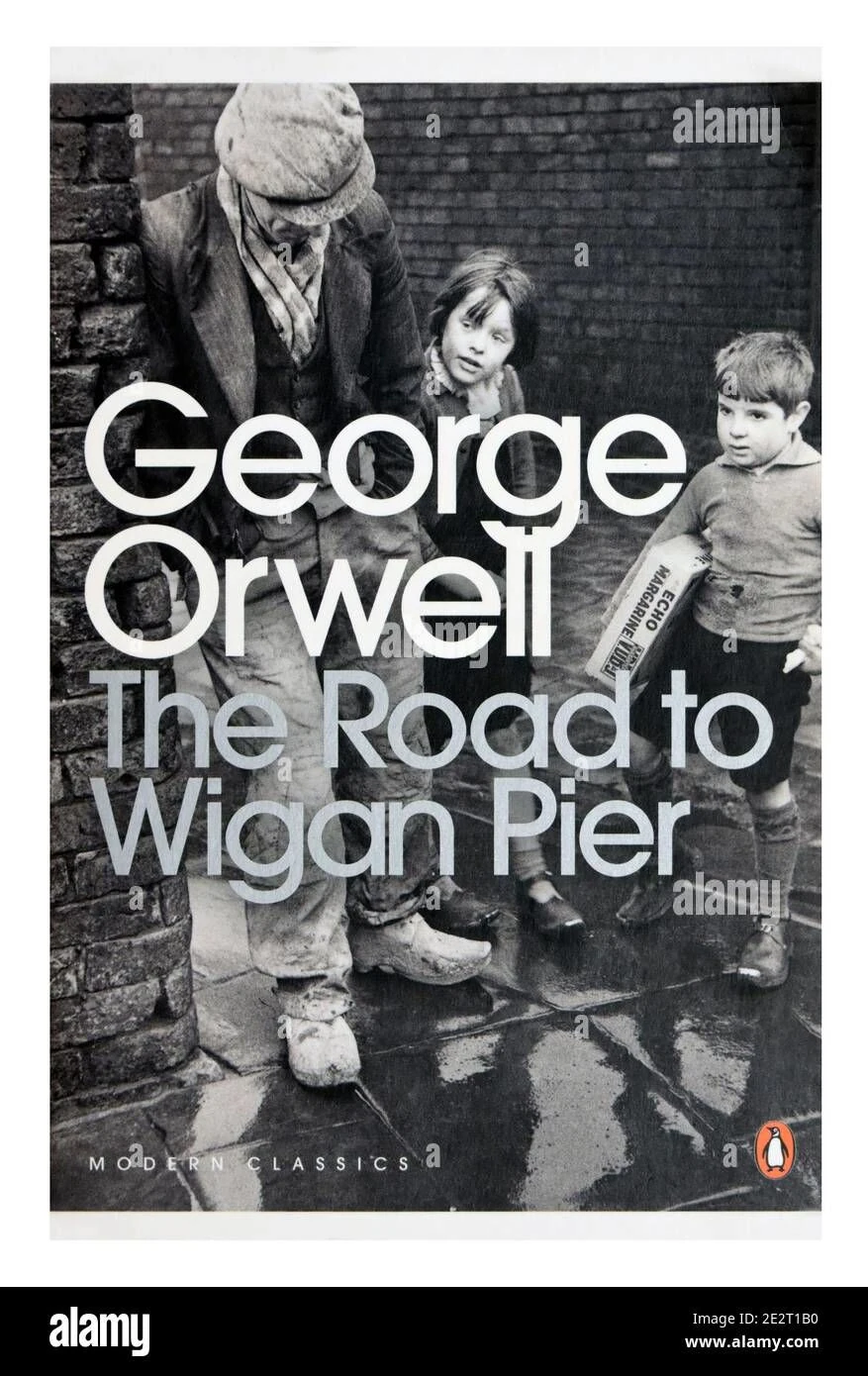
The Road to Wigan Pier by George Orwell
Introduction
The Road to Wigan Pier by George Orwell stands as a seminal piece of British literature that delves into the stark reality of poverty and the flaws within socialist policies of the 1930s. Published in 1937, this work is both a compelling sociological investigation and a provocative personal account, solidifying Orwell's reputation as a formidable critic of social injustices.
Synopsis and Overview
The book is structurally divided into two distinct parts. The first half chronicles Orwell's journey through the industrial towns of northern England, vividly documenting the harrowing living conditions of coal miners and their families. He immerses himself in their world, providing a raw, unfiltered perspective on the struggles they face daily.
The second half transitions into a more introspective and theoretical discourse on socialism and society. Here, Orwell reflects on the failures and inadequacies of the socialist movement, expressing his apprehensions about its future. By juxtaposing harsh realities with ideological musings, Orwell crafts a multifaceted and thought-provoking narrative.
Origins and Purpose
George Orwell, born Eric Arthur Blair, was a committed social critic and writer who sought to expose societal inequalities and injustices. Commissioned by the Left Book Club to provide an account of the hardships experienced by the working class in northern England, Orwell embarked on an exploratory journey that would profoundly shape his views on socialism.
Through The Road to Wigan Pier, Orwell aimed not only to reveal the grim conditions endured by the British working class but also to challenge the complacency and detachment of middle-class socialists. His candid approach and incisive analysis spurred readers to question their preconceptions and engage more deeply with social issues.
Cultural Impact and Legacy
Upon its release, The Road to Wigan Pier elicited mixed reactions. Some admired Orwell's unflinching portrayal of poverty, while others found his criticism of socialism disconcerting. Nonetheless, the book significantly impacted British society by stimulating discussions on class disparity and the efficacy of socialist policies.
Orwell's work transcended its immediate historical context to become a timeless critique of social systems. It has since been regarded as an essential read for anyone interested in understanding the complexities of British society during the interwar period. The book's influence resonates in contemporary discourses on economic inequality and social justice, underlining its enduring relevance.
Wrap-Up
The Road to Wigan Pier remains a cornerstone of British literary heritage, exemplifying George Orwell's prowess in merging reportage and personal reflection. Its profound insights into poverty, class, and socialism have left an indelible mark on British society and continue to inspire critical thought worldwide.
For those interested in exploring this pivotal work, The Road to Wigan Pier can be conveniently purchased through Amazon.
By delving into Orwell’s poignant examination, readers are invited to ponder the persistent challenges of social inequality and the role of ideology in shaping our world.
This informative piece should provide a comprehensive yet accessible overview of George Orwell's The Road to Wigan Pier, making it clear why the book is a significant part of the British literary legacy.