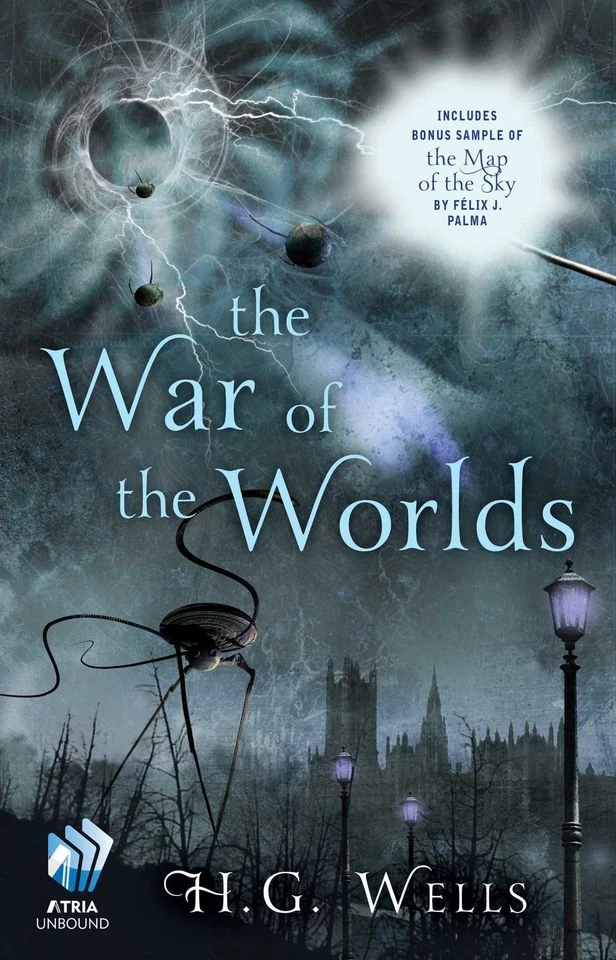
"The War of the Worlds" by H.G. Wells: A Timeless British Classic
H.G. Wells' "The War of the Worlds" stands as a monumental pillar in both British literature and the science fiction genre. First published in 1898, this riveting novel recounts the gripping tale of Earth under siege by a malevolent Martian invasion. It is a text deeply imbued with far-reaching ideas, imaginative storytelling, and predictive wisdom, establishing itself as a key contribution to the British literary heritage.
A Synopsis of Interplanetary Conflict
"The War of the Worlds" chronicles the chilling events that unfold when Martians, desperate to escape their dying planet, invade Earth. Told through the eyes of an unnamed narrator, the novel takes the reader on a harrowing journey from the initial nightmarish descent of the Martian cylinders in Surrey to the devastation and chaos as the Martians sweep across the English countryside with their advanced technology. The story explores themes of survival, human vulnerability, and the sheer unpredictability of the universe, embedding a sense of realism and urgency that has captivated readers for over a century.
The Mind Behind the Masterpiece
Herbert George Wells, more fondly known as H.G. Wells, was a prolific writer and futurist, whose works include groundbreaking ideas and narratives that have shaped modern science fiction. Written at the tail end of the 19th century, "The War of the Worlds" came to life during an era of significant scientific discoveries and societal changes. Wells, with his keen interest in science and his skill for speculative fiction, tapped into contemporary Martian theories and public anxieties about future threats, crafting a story that was both visionary and reflective of its time.
Impact and Legacy
"The War of the Worlds" achieved immediate success upon its release and has maintained its status as a seminal work in both British literature and the global canon of science fiction. This remarkable book has inspired countless adaptations, including the infamous 1938 radio broadcast by Orson Welles, which incited widespread panic among listeners who believed the events were real. The novel has also influenced myriad films, television series, and even modern literature, embedding itself deeply in pop culture.
Wells' visionary approach paved the way for the genre of science fiction to explore the unknown and question humanity's place in the cosmos. The themes of interplanetary conflict and technological disparity in "The War of the Worlds" remain ever-relevant, prompting readers to reflect on the ethical dimensions of scientific advancement and the perennial fear of the "other."
Contribution to British Legacy
H.G. Wells’ ingenious narrative and his pioneering in the realm of speculative fiction undeniably position "The War of the Worlds" as a cornerstone of British literary heritage. The book's profound influence on subsequent generations of writers, filmmakers, and thinkers underscores its timeless significance and the inventive spirit encapsulated within British literary tradition.
For those who wish to delve into the imaginative and eerily compelling world crafted by H.G. Wells, "The War of the Worlds" remains a must-read. It is more than just a tale of Martian invasion; it is a profound reflection on humanity's resilience, curiosity, and the ever-expanding horizons of possibility.
Purchase Your Copy Here: Amazon Link: The War of the Worlds
Engage with one of the great classics of British literature and discover the enthralling narrative that has inspired creators and thinkers for generations.