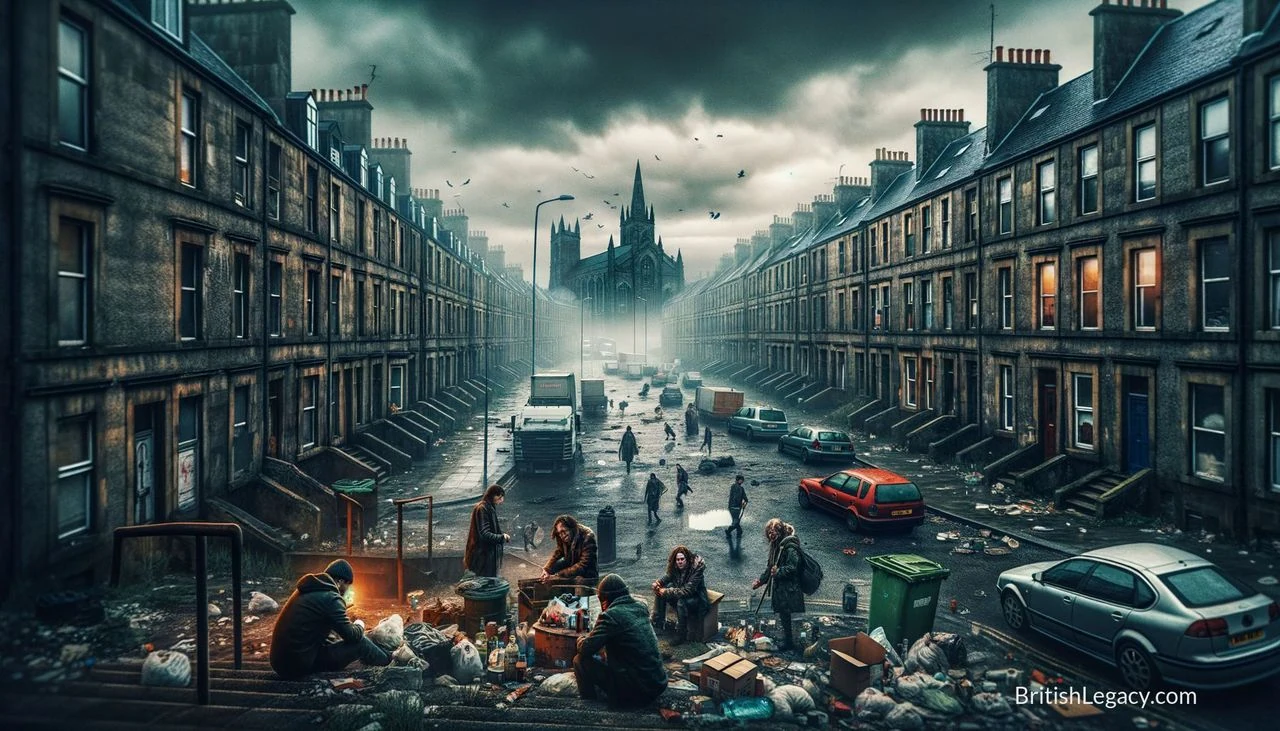
Released in 1996, Danny Boyle’s Trainspotting brought Irvine Welsh’s novel to the screen with a visual energy that sits uneasily beside its bleak subject. Set among a group of heroin users in Edinburgh, the film combines humour and horror with a portrait of addiction, poverty and urban hardship. Its vivid style, ensemble cast and soundtrack made it a distinctive work of British cinema. The characters’ lives are difficult to watch, but the film’s particular force comes from setting that material against an energetic, sometimes comic presentation.
From novel to screen
Boyle directed the film from a screenplay by John Hodge, translating Welsh’s gritty prose into a fast-moving visual narrative. Surreal sequences, rapid cuts and vibrant colours contribute to the contrast between the film’s restless appearance and the bleak circumstances of its characters. Its tone moves between humour, horror and tragedy rather than settling into a single register.
The film was made on a modest budget. Its visual choices helped establish a recognisable style, while its focus remained on a group of people navigating addiction and the grim realities of life in Edinburgh. That combination of formal invention and difficult subject matter is central to its place in British independent cinema: the energy of the filmmaking does not make the characters’ experiences less serious.
Characters and the realities of addiction
Ewan McGregor plays Mark Renton, presented as both charming and self-destructive. The ensemble also includes Robert Carlyle, Ewen Bremner, Jonny Lee Miller and Kelly Macdonald. Their characters are caught up in addiction, but the film’s attention to individual lives gives its subject a human dimension. It depicts heroin as a numbing escape from bleak circumstances while showing the squalor and harm that surround the characters’ choices.
Addiction, poverty and urban hardship shape the story. The phrase “Choose Life” provides an ironic counterpoint: the language of ordinary aspiration sits against characters grappling with despair and self-destruction. The film raises questions about the conditions in which they live, without offering a simple answer or a reassuring resolution. Its brashness is part of that approach, as is the uneasy balance between comic moments and the damage at the story’s centre.
Soundtrack, cultural presence and sequel
The soundtrack includes music by Iggy Pop, Underworld and Blur. Alongside the film’s direct dialogue, rapid editing and vivid images, those choices give it a strong connection to the 1990s. The music is not separate from the story’s impact: it is part of the energetic presentation that makes the contrast with the characters’ difficult lives so pronounced.
Boyle returned to the characters in T2 Trainspotting, released in 2017. The sequel revisits them roughly two decades later, taking up middle age, regret and the possibility of redemption. Returning to the same group at a later point in their lives allows the story to consider the passage of time and the consequences of earlier choices from a different perspective.
Why Trainspotting deserves a place in British Legacy
Trainspotting deserves a place in British Legacy because it brought a story rooted in Edinburgh and a difficult subject into a distinctive British screen adaptation. Boyle’s direction and Hodge’s screenplay shaped Welsh’s novel through surreal imagery, rapid cuts, bold colour and shifts between humour, horror and tragedy. The film’s presentation is energetic, but it does not erase the addiction, poverty and urban hardship at its centre. Its portrayal of a group of heroin users gives those themes human focus, while the irony of “Choose Life” captures the tension between familiar aspirations and the characters’ circumstances.
The soundtrack, including music by Iggy Pop, Underworld and Blur, forms part of the film’s recognisable 1990s character. Its story also continued with T2 Trainspotting, which returned to the characters in 2017 and considered them at a later stage of life. These specific elements—not an unsupported claim that one film transformed society—make its cultural significance clear. Trainspotting remains worth remembering as a British film that joined an Edinburgh setting, inventive filmmaking and an unsparing account of addiction, and whose characters could be revisited as time changed their perspective.