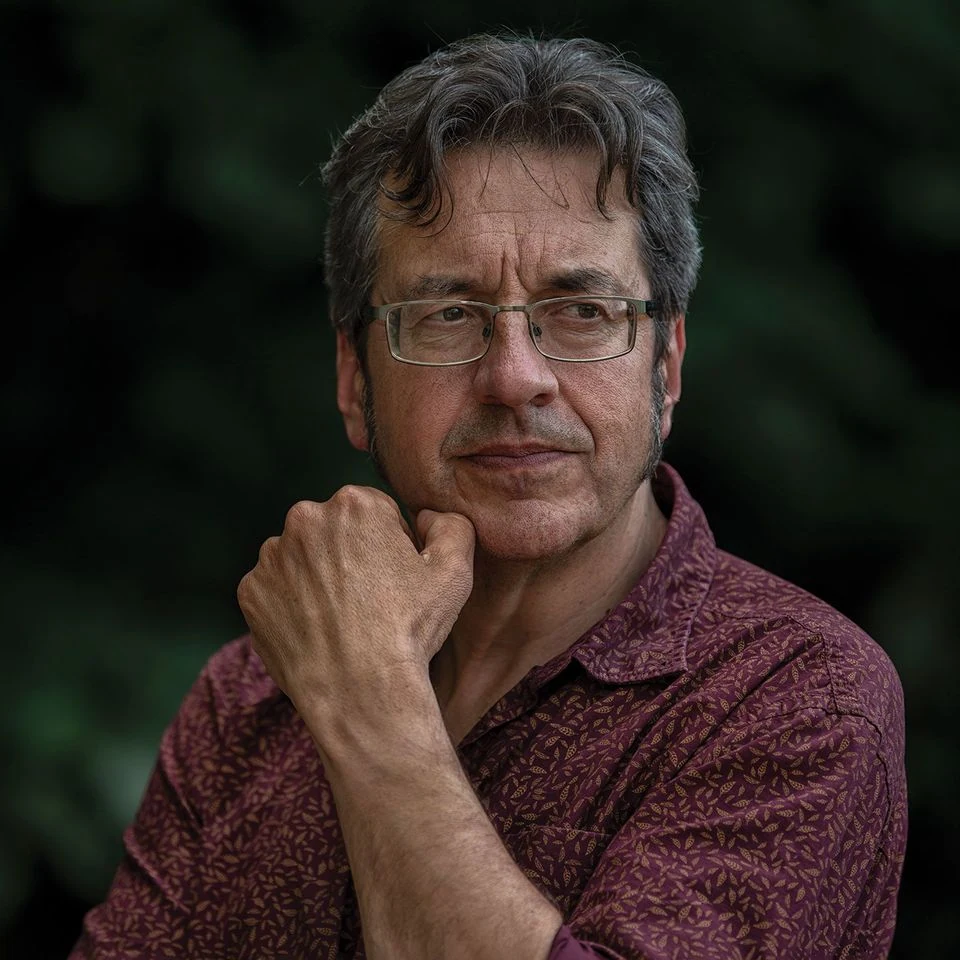
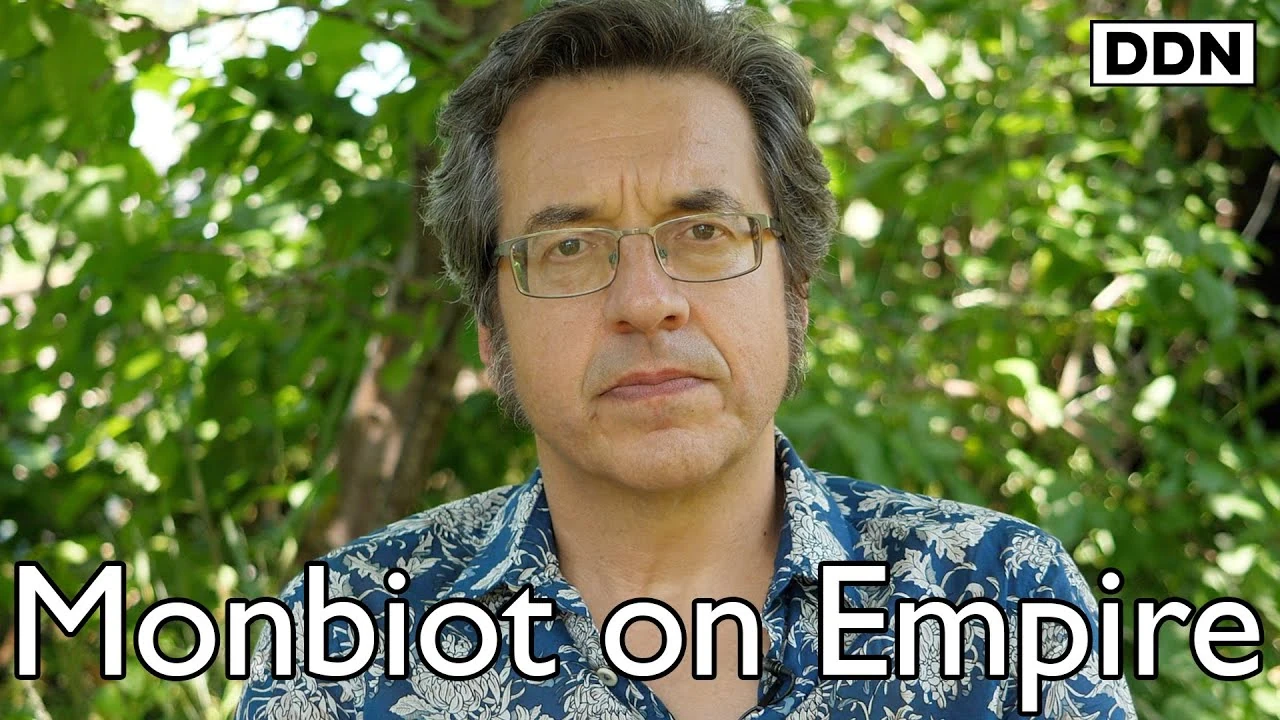
George Monbiot’s work has moved between investigative reporting, campaigning and argument about how societies use land, energy and political power. A journalist and author, he writes a regular column for The Guardian and has used books, films and public advocacy to bring environmental issues into wider debate. His career began in broadcasting, but his early reporting took him far beyond Britain; later work brought him into disputes about roads, political parties, nuclear power and the future of the countryside.
From broadcasting to investigative reporting
Monbiot was born in Kensington, London, on 27 January 1963, and grew up in Rotherfield Peppard, Oxfordshire. He attended Elstree School and Stowe School before winning an open scholarship to Brasenose College, Oxford, where he studied zoology. The scientific training provided one foundation for a career that would repeatedly examine the relationship between people and the natural world.
After graduating, he joined the BBC Natural History Unit as a radio producer, making natural history and environmental programmes. He then moved to the BBC World Service, working briefly as a current-affairs producer and presenter. He left broadcasting to research and write Poisoned Arrows, published in 1989, about human rights issues in West Papua. The book marked the start of a sequence of investigations into land, power and the treatment of communities.
His reporting took him to Indonesia, Brazil and East Africa. The supplied Wikipedia account describes a career involving serious physical danger, including being shot at, beaten and arrested, and contracting cerebral malaria in Kenya. It also says Indonesian authorities sentenced him to life imprisonment in absentia after he criticised government policies in Western New Guinea. These episodes belong to the record of the work’s risks, but the lasting subject of the reporting was the human cost of political and economic control.
His early books extended that scrutiny. Amazon Watershed (1991) examined the expulsion of Brazilian peasant farmers from their land. No Man’s Land: An Investigative Journey Through Kenya and Tanzania (1994) documented the seizure of land and cattle from nomadic people. Together with Poisoned Arrows, they established a pattern of reporting on people whose lives were affected by decisions made by governments and powerful institutions.
Campaigning and the politics of land
Monbiot also became involved in Britain’s roads protest movement. His public visibility brought criticism from some activists, while he later described being attacked by security guards at a protest and sustaining a serious foot injury. Sir Crispin Tickell, then Warden of Green College, Oxford, made him a visiting fellow. The episode placed him in a contested role: a journalist who reported on protest and power, but who also took part in campaigning.
Access to land became a sustained concern. Monbiot founded The Land is Ours, a campaign for the right of access to the countryside and its resources in the United Kingdom. His writing connected questions of ownership and public access with the condition of landscapes and the interests that shape their use.
In Captive State: The Corporate Takeover of Britain (2000), he argued that corporate power posed a serious threat to democracy. The book gave a more defined form to an argument already present in his reporting: that decisions affecting the public can be shaped by interests with greater influence than the people who live with their consequences. His later political work included co-founding Respect – The Unity Coalition with Salma Yaqoob in January 2004. He resigned the following month after the group failed to agree with the Green Party not to contest the same constituencies in the European Parliament election.
Climate, energy and the case for rewilding
Climate change has been a recurring subject in Monbiot’s journalism and books. Heat: How to Stop the Planet Burning (2006) focused on the climate crisis, while his columns have also addressed environmental destruction and the decisions made by governments and industry. In 2013, he gave a TED talk on ecosystem restoration and rewilding, an approach he has argued for as a way to restore ecological processes and landscapes.
His book Feral: Searching for Enchantment on the Frontiers of Rewilding (2013) developed that case. It also criticised sheep farming. The Society of Biology gave the book its general biology award in 2014. Monbiot’s advocacy has extended into film: he narrated How Wolves Change Rivers, based on his TED talk, and in 2019 co-presented Nature Now, a video about natural climate solutions, with Greta Thunberg.
His positions on energy have not been static. He once expressed strong opposition to the nuclear industry, but in 2011 moved to support nuclear power, saying that evidence about the effects of the Japanese tsunami on reactors had changed his view of its relative safety. He has since criticised anti-nuclear campaigners and their claims about radiation. In 2013, however, he objected to the cost and consequences of the reactor design selected for Hinkley Point C, and argued that alternative reactor concepts could make use of nuclear waste. These changes and distinctions matter: they show an argument developing rather than a single fixed position.
Other projects have taken his work beyond the newspaper column. After writing about loneliness in 2014, he collaborated with musician Ewan McLennan on the album Breaking the Spell of Loneliness, released in 2016, followed by a UK tour. In 2021, he created Rivercide, a live documentary about the state of the UK’s rivers, with particular attention to the River Wye. His 2022 book Regenesis examined agriculture’s environmental impact and sustainable approaches to food production.
Books, public argument and recognition
Monbiot’s books have ranged from investigations of land and corporate influence to proposals for political and environmental change. After Captive State came The Age of Consent (2003), an attempt to set out a positive manifesto for the global justice movement. Heat followed in 2006; later titles include Out of the Wreckage (2017) and Regenesis (2022). In 2024, he and Peter Hutchison published The Invisible Doctrine: The Secret History of Neoliberalism (& How It Came to Control Your Life), developed from a film.
His work has also entered debates through television and documentary. He appeared in Seaspiracy (2021), a film about human impacts on marine life and fishing, and defended it from critics. In 2024, he appeared in the British documentary I Could Never Go Vegan. Such projects reflect the breadth of his public role: not only writing about ecological questions, but also presenting and debating them across different forms.
Recognition has included the United Nations Global 500 Award for outstanding environmental achievement, presented by Nelson Mandela in 1995. He received the Society of Biology Book Award for Feral in 2014 and the Orwell Prize for Journalism in 2022. In 2007, Heat won Italy’s Premio Mazzotti; Monbiot declined the prize money because collecting it in Venice would have required a flight he did not consider justified. The decision connected a personal choice about travel to the climate argument at the centre of his work.
Why George Monbiot deserves a place in British Legacy
George Monbiot deserves a place in British Legacy because his career has repeatedly brought ecological questions into the country’s public and political conversation. His early books reported on the consequences of land seizures and displacement in West Papua, Brazil, Kenya and Tanzania. Later, Captive State examined corporate influence on British democracy, while Heat addressed climate change and Feral made rewilding a central subject of popular environmental argument. The work is not confined to commentary: he founded The Land is Ours, a campaign for access to the countryside and its resources, and created Rivercide to draw attention to the condition of UK rivers.
His record also offers a useful example of public argument that includes revision. His position on nuclear power changed, and his criticism of a particular reactor design did not simply repeat his earlier opposition to the industry. He has taken environmental questions into books, journalism, campaigning, film and music, addressing subjects from food production and biodiversity to loneliness and access to land. The significance of that range lies in the connections it makes visible: environmental decisions affect democratic accountability, rural access, communities and everyday choices. In British journalism and activism, Monbiot’s contribution is therefore both specific and continuing: he has supplied arguments, investigations and platforms through which those connections can be examined.
Sources
George Monbiot — Wikipedia, revision 1372517392
Adapted in part from George Monbiot by Wikipedia contributors, under CC BY-SA 4.0. Text has been edited and combined with the existing article; this adapted text is shared under the same licence. Contributor history.