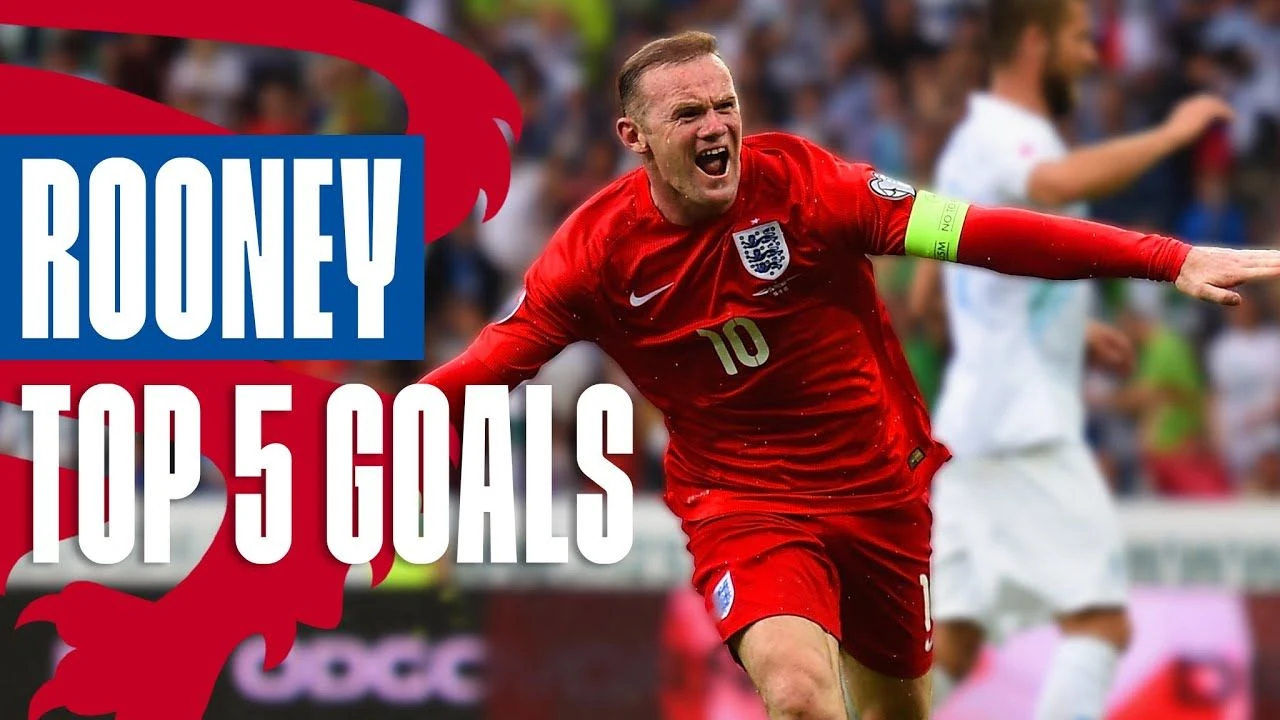
Wayne Rooney announced himself with a goal that made him, briefly, the youngest scorer in Premier League history. He was 16, playing for Everton, and his late winner against Arsenal in October 2002 ended the visitors’ 30-match unbeaten run. The record has since been surpassed, but the moment captured the force and precocity of a career that would take him from Liverpool to Manchester United, the England captaincy and, later, management.
A young Evertonian in the first team
Rooney was born in Croxteth, Liverpool, on 24 October 1985. He joined Everton’s youth set-up at nine and progressed rapidly: as a teenager he played for the under-19s, and he made his first-team debut against Tottenham Hotspur in August 2002, aged 16. His first senior goals came in the League Cup against Wrexham. Then, five days before his 17th birthday, he scored the late winner against Arsenal that brought him national attention.
He spent two seasons in Everton’s first team, making 77 appearances and scoring 17 goals in all competitions, according to the career totals in the club record. The move to Manchester United in 2004 was a major step for a player still only 18. The reported fee was £25.6 million, including contingent payments, making him the most expensive player under 20 at the time. At Old Trafford he was given the number eight shirt and made an immediate impression: on his debut, against Fenerbahçe in the Champions League, he scored a hat-trick and supplied an assist.
Goals, trophies and a changing role
Rooney’s United career lasted from 2004 to 2017. He was not only a striker: he played across the forward line and, as his pace changed with age, took on deeper roles in midfield. His strength, work rate, passing and willingness to press made him valuable in more than one position. He was part of a side that won five Premier League titles, the 2008 Champions League, the FA Cup, three League Cups, the Europa League and the 2008 FIFA Club World Cup.
Some of his best-known moments came in very different kinds of matches. In the 2008 Club World Cup final, he scored the only goal against LDU Quito and received the tournament’s Golden Ball. In February 2011, his overhead kick against Manchester City won the Premier League’s 20 Seasons Awards Best Goal. Rooney was named PFA Players’ Player of the Year for 2009–10 and later became the club’s captain.
His most enduring United record came in January 2017, when a free-kick against Stoke City brought his 250th goal for the club and took him past Bobby Charlton. Rooney finished his United career with 253 goals, the club’s all-time record. He also became the first player to reach 200 Premier League goals and 100 assists. His total of 208 Premier League goals placed him third in the competition’s all-time scoring list in the article’s account; his 183 league goals for United remain a measure of his sustained output for one club.
England: a record-setting international career
Rooney made his England debut in February 2003, aged 17, and became the country’s youngest goalscorer later that year. At Euro 2004 he scored four times in four matches and was selected for the tournament’s Team of the Tournament. England went out in the quarter-final, but Rooney’s performances made him one of the most prominent young players in the competition.
He went on to play at the 2006, 2010 and 2014 World Cups, as well as Euro 2012 and Euro 2016. England did not win a major tournament during his international career. He became captain after the 2014 World Cup and, in September 2015, scored his 50th England goal to pass Bobby Charlton’s long-standing record. Rooney ended his international career with 120 appearances and 53 goals. He is now second in England’s all-time goalscoring list, and is the country’s most-capped outfield player; only goalkeeper Peter Shilton has more appearances.
Rooney announced his retirement from international football in 2017. He returned for one final appearance against the United States at Wembley in November 2018, a match associated with the launch of the Wayne Rooney Foundation. His international record therefore spans a period in which he moved from teenage prospect to captain and record goalscorer, before later being overtaken in the goalscoring rankings.
Beyond Old Trafford: player, coach and manager
After leaving United, Rooney returned to Everton for the 2017–18 season. He scored ten league goals, including a hat-trick against West Ham in which his third goal came from inside his own half. He then moved to Major League Soccer’s D.C. United. In the United States he scored 23 goals in 48 regular-season appearances and helped the team reach the 2018 play-offs.
Rooney returned to England in January 2020 as a player-coach at Derby County. He scored seven goals in 35 appearances in all competitions before retiring from playing in January 2021, when he became the club’s permanent manager. Derby faced financial and competitive difficulties during his tenure and were relegated to League One in 2022. Rooney resigned that June.
He subsequently managed D.C. United, Birmingham City and Plymouth Argyle. His time at Birmingham lasted from October 2023 to January 2024; he left after the team had won twice in 15 matches. At Plymouth, appointed in May 2024, he departed by mutual agreement at the end of the year with the club bottom of the Championship. These later roles form a different chapter from his playing achievements: a record-setting career on the pitch did not make the move into management an uncomplicated success.
Why Wayne Rooney deserves a place in British Legacy
Rooney’s place in British football history rests on a combination of achievement and range. At Everton he became a first-team player as a teenager and turned a defining Premier League moment into the start of a senior career. At Manchester United he scored 253 goals, won five league titles and contributed to victories in English, European and world club competitions. His overhead kick against Manchester City and his winning goal in the Club World Cup final offer contrasting examples of a player capable of decisive contributions in different settings.
His England record gives that club career a national dimension. Rooney earned 120 caps, scored 53 international goals and captained his country. His totals placed him at the top of England’s goalscoring list for a time, and he remains its most-capped outfield player. His ability to work as a striker, supporting forward or midfielder also helps explain why he remained central to teams across changing stages of his career. The story is not one of uninterrupted triumph: England did not win a major tournament with him, and his management career brought difficult spells. But the records, trophies and adaptability are concrete contributions to the history of English football, and make his career a substantial part of the country’s sporting legacy.
Sources
Wayne Rooney — revision 1378024013 · Wayne Rooney
Adapted in part from Wayne Rooney by Wikipedia contributors, under CC BY-SA 4.0. Text has been edited and combined with the existing article; this adapted text is shared under the same licence. Contributor history.