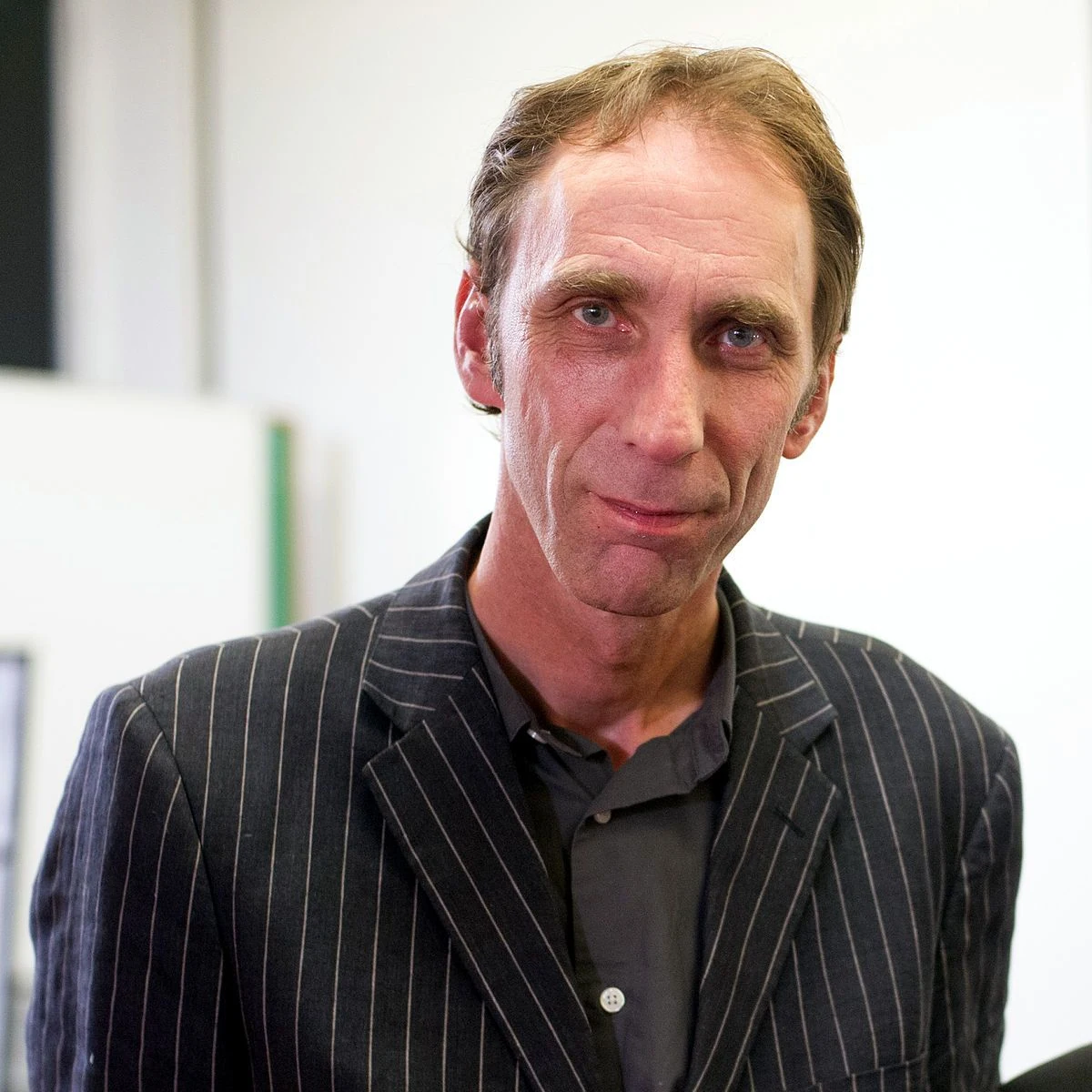
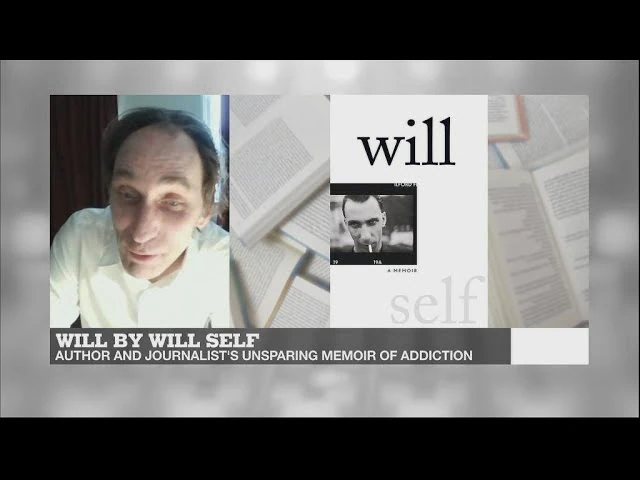
Will Self’s writing does not make the world more comfortable to recognise. His fiction turns familiar settings and assumptions strange; his journalism has repeatedly examined the politics of urban life and the ways people inhabit places. Across novels, short stories, columns and broadcasting, he has built a body of work that joins satire and grotesque invention to a sustained interest in London and contemporary society.
North London beginnings and Oxford
William Woodard Self was born in London on 26 September 1961 and grew up in north London, between East Finchley and Hampstead Garden Suburb. He attended University College School and Christ’s College, Finchley, before going to Exeter College, Oxford, where he studied philosophy, politics and economics. He graduated with a third-class degree and edited and contributed to an underground student newspaper, Red Herring/Oxford Strumpet.
After Oxford, Self worked for the Greater London Council, including as a road sweeper, while living in Brixton. He pursued several kinds of writing and performance, including cartooning for The New Statesman and other publications, and stand-up comedy. In 1989, he found a route into publishing by running a small publishing company. His first major public notice came not from a novel but from short fiction: The Quantity Theory of Insanity, published in 1991, was welcomed as the work of an original new talent. It won the Geoffrey Faber Memorial Prize that year.
Fiction that makes the familiar strange
Self’s novels and stories are marked by satire, grotesque transformations and fantastical premises. Their settings often draw on London, while their subjects include mental illness, drug use and psychiatry. The effect is less a straightforward portrait of ordinary life than a disruption of the categories through which readers might expect to understand it.
His early novels include Cock and Bull (1992), My Idea of Fun (1993) and Great Apes (1997). The last belongs to a substantial line of fiction in which recognisable human arrangements are made unfamiliar. Another important example is The Book of Dave (2006), a dystopian novel that imagines a future society shaped by the writings of a London taxi driver. Self’s recurring psychiatrist Zack Busner appears across several books, including Great Apes, The Book of Dave, Umbrella and Shark.
Umbrella (2012), which turns to the history of a woman with encephalitis lethargica and the psychiatrist treating her, was shortlisted for the Booker Prize. The novel’s recognition sat alongside a career that did not follow conventional expectations of narrative clarity or reader identification. Self has described his aim as astonishing readers and unsettling assumptions. His fiction’s difficulty is therefore not just a matter of elaborate vocabulary: its forms and transformations are part of how it asks readers to reconsider what seems stable.
His books extend beyond novels. Short-story collections include Grey Area (1994), Tough, Tough Toys for Tough, Tough Boys (1998) and Dr Mukti and Other Tales of Woe (2004). His nonfiction includes collections of journalism and writing on place, among them Junk Mail (1996), Psychogeography (2007) and Why Read: Selected Writings 2001–2021 (2022). He received the Aga Khan Prize for Fiction in 1998 and the Bollinger Everyman Wodehouse Prize for Comic Fiction in 2008 for The Butt.
Columns, places and public broadcasting
Self’s journalism has moved between newspapers and magazines. He joined The Observer as a columnist in 1995, then wrote for The Times, The Independent on Sunday and the Evening Standard. Since 2009, he has written alternating fortnightly columns for the New Statesman, including The Madness of Crowds, on social phenomena and group behaviour, and Real Meals, reviewing high-street food outlets. He has also contributed to publications including The Guardian, Harper’s Magazine, The New York Times and the London Review of Books.
Questions of place have been central to some of this work. Columns on the built environment and the psychology of place helped establish him as a writer concerned with the politics of urbanism. Self has also described himself as a psychogeographer and modern flâneur, and has written about long walks. His interest in the city is not confined to the page: London is both a setting in his fiction and a subject through which he considers how people move through, interpret and organise their surroundings.
Broadcasting brought him to a wider audience in a different register. He appeared on British television as a guest on comedy panel programmes, including Have I Got News for You, and was a regular on Shooting Stars, replacing Mark Lamarr in 2002 for two series. He also appeared on current-affairs programmes including Newsnight and Question Time, and contributed to the BBC Two series Grumpy Old Men. For BBC Radio 4, he presented programmes and contributed essays to A Point of View. In 2012 he became Professor of Contemporary Thought at Brunel University London, where his interests include psychogeography.
Recognition and a changing literary landscape
Self’s career has included both critical distinction and scepticism about the conditions in which literature is produced and read. Umbrella brought a Booker shortlist in 2012; in 2014, he wrote that the literary novel was dying as a central cultural art form. In a subsequent article, he described a dramatic decline in his royalty income over the previous decade, in the context of a study of British authors’ earnings. Those comments connected an argument about literary culture to the practical economics of making a living as a writer.
In 2016, the British Library acquired his archive, comprising family papers, personal and literary papers, artwork, audio-visual material and a hard drive. Its collection of paper and born-digital records places drafts and other traces of his writing within a national research institution. The archive offers a different form of recognition from a prize: it preserves the working record of a contemporary writer whose career has crossed print, broadcasting and digital media.
Why Will Self deserves a place in British Legacy
Self belongs in a record of British literary and journalistic life because his work has made the country’s largest city more than a backdrop. London’s streets, institutions and patterns of movement provide material for fiction and a way into arguments about place, power and social behaviour. His columns on urbanism and the psychology of place connect literary attention to questions about the built environment; his walking writing extends that attention into the experience of moving through a city. Across these forms, he asks readers to examine how apparently ordinary surroundings shape what they think and do.
His contribution also lies in the range of ways he has pursued that examination. Self has published novels, short fiction, essays and newspaper columns, appeared on British television and radio, and taught contemporary thought at Brunel University London. The Booker-shortlisted Umbrella, the recurring figure of Zack Busner and the early recognition of The Quantity Theory of Insanity illustrate the reach and continuity of his literary work; his column writing and broadcasting made him a participant in public discussion beyond fiction. The British Library’s acquisition of his archive preserves evidence of that varied career. His place in British Legacy is not a claim that his style suits every reader, but recognition of a distinctive body of work that has challenged familiar ideas about fiction, cities and contemporary culture.
Sources
Will Self — Wikipedia revision 1378178192
Adapted in part from Will Self by Wikipedia contributors, under CC BY-SA 4.0. Text has been edited and combined with the existing article; this adapted text is shared under the same licence. Contributor history.