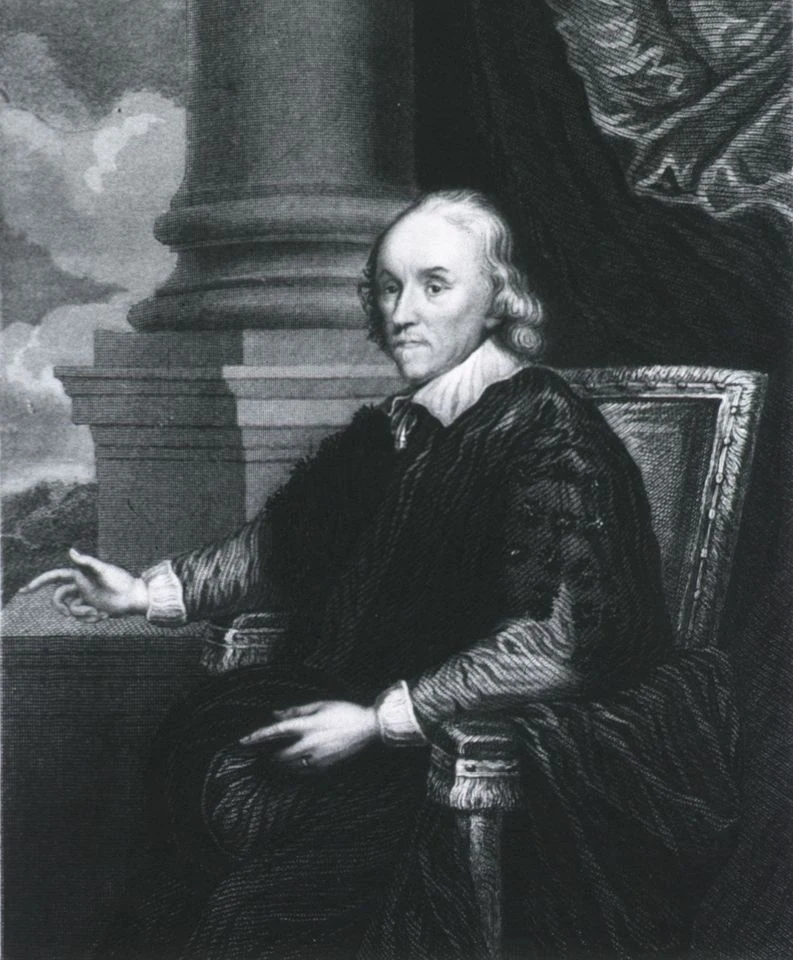
For centuries, European physicians had tried to explain the body through a system in which blood was made in the liver, travelled outwards and was used up by the tissues. William Harvey challenged that inheritance with a different account: the heart pumps blood, and the blood moves continuously around the body. His case rested not on a single striking observation but on a connected argument, built from anatomy, experiments on animals, demonstrations on the human arm and calculations about how much blood the heart moves. Published in 1628, it changed the study of physiology and made medical claims more answerable to what could be observed and tested.
Harvey’s work took shape across a life that joined Kent, Cambridge, Padua and London. He taught anatomy, treated patients at St Bartholomew’s Hospital and served two kings, while developing ideas that brought him into conflict with established medical teaching. His achievement was not that he saw every part of circulation directly: he inferred the tiny passages between arteries and veins, which were observed later. Rather, he showed how evidence from different sources could support a coherent account of the body, and left British medical institutions a lasting reminder to investigate nature by experiment.
From Folkestone to the medical schools of Europe
William Harvey was born in Folkestone, Kent, on 1 April 1578, the eldest son of Thomas Harvey. He attended the King’s School in Canterbury before entering Gonville and Caius College, Cambridge, in 1593. After taking his Bachelor of Arts degree in 1597, he travelled through France and Germany to Italy. In 1599 he began his studies at the University of Padua, one of Europe’s leading medical schools.
At Padua, Harvey studied under the anatomist Hieronymus Fabricius and encountered Fabricius’s work on the valves in veins. Harvey received his medical degree there in 1602. The training gave him a grounding in established medical learning as well as an education in anatomy. His later work would depend on close attention to bodily structures, but also on asking what those structures did while the body was alive.
Harvey returned to England and joined the Royal College of Physicians in 1604. He became a fellow in 1607 and, in 1609, took up a position at St Bartholomew’s Hospital in London. His hospital work brought him into sustained contact with patients. In 1615 he was appointed Lumleian lecturer, a role that involved public teaching in anatomy. The lectures gave him a setting in which to develop and refine the questions that would eventually appear in his book on the movement of the heart and blood.
In 1618 Harvey was appointed physician extraordinary to James I. He later served Charles I as physician in ordinary, accompanying the king on journeys and working within the royal household. These appointments placed him near the centre of public life, but did not displace his medical work. His career moved between practice, teaching, anatomical investigation and service to the crown.
Making circulation visible
Before Harvey’s account, Galen’s teaching had shaped medical thinking for centuries. In the model Harvey confronted, venous blood originated in the liver and the venous and arterial systems had distinct functions. Blood was understood to be consumed by the body, while invisible pores were supposed to allow passage between the heart’s sides. The model drew authority from long use and from explanations that seemed compatible with what could be seen without powerful instruments.
Harvey’s argument did not begin with the claim that nobody before him had questioned any part of this picture. Earlier writers had described aspects of pulmonary circulation. His contribution was to set out a connected account of blood moving in a circuit, supported by observations and demonstrations that others could examine. In Exercitatio Anatomica de Motu Cordis et Sanguinis in Animalibus, published in Frankfurt in 1628, he treated the heart not simply as an organ displayed in dissection but as a structure in motion.
That motion was difficult to study in a living human being: the heart beats quickly, and its actions are not easy to follow. Harvey observed animals, including eels and other fish, serpents and chicks, using differences between species and stages of life to make the sequence easier to understand. He watched the chambers contract and considered the action of the valves. He argued that the arteries’ pulsation depended on the heart’s contractions and that blood passed out through the arteries and returned through the veins.
Harvey also used arithmetic to test the older explanation. He estimated the quantity expelled by the heart at each beat and multiplied it across repeated beats. His deliberately modest figures still produced a daily volume that could not plausibly be made afresh by the liver and then consumed by the body. The calculation turned an abstract disagreement into a problem of scale: the amount of blood in motion was too great for the inherited account to explain.
Another demonstration made the behaviour of veins visible on the human arm. Harvey applied a ligature and observed how changes in its tightness affected the veins and the flow of blood. The veins could be seen to fill, and pressure along them showed that their valves allowed blood to move towards the heart while resisting movement in the opposite direction. The demonstration connected an observable event beneath the skin to a wider claim about the route blood took through the body.
Harvey did not directly see the tiny vessels connecting arteries and veins. Without the later microscope, he inferred that passages must exist to complete the circuit. Marcello Malpighi subsequently observed capillaries. Keeping that distinction clear helps explain Harvey’s achievement: he assembled a convincing account of circulation while recognising that some parts of the mechanism could be reached by inference rather than direct sight.
A disputed book and a kingdom in turmoil
Harvey expected his account to meet resistance, and it did. A theory that challenged established teaching was not accepted simply because its author had assembled experiments and calculations. Some physicians preferred the authority of Galen, and Harvey’s practice appears to have suffered for a time after publication. Yet the argument could be tested and debated. Over subsequent decades, the circulation model gained acceptance and became fundamental to physiology.
He continued to work and serve the royal household through a turbulent period. During the English Civil War, Harvey remained associated with Charles I. His lodgings were entered by a hostile mob; his belongings were taken and papers from his anatomical work were scattered or lost. These included records of dissections and observations. He also helped wounded people during the conflict. When the royal court was at Oxford, he was made Warden of Merton College in 1645.
Harvey’s scientific work extended beyond circulation. His Exercitationes de generatione animalium, published in 1651, considered the development of animals, drawing particularly on observations of the hen’s egg and mammalian generation. Its frontispiece carried the phrase ex ovo omnia—all things from the egg. Harvey argued against spontaneous generation and directed attention towards the stages by which living creatures form and develop.
The book reflects the breadth of his interest in living processes. Harvey returned to questions of motion, development and change, using observation and comparison rather than relying on inherited explanations alone. His work on generation was not the same kind of decisive, unified account as his book on circulation, but it forms an important part of his contribution to anatomy and physiology.
After the surrender of Oxford in 1645, Harvey gradually withdrew from public duties. He had lost his wife and several brothers and spent his later years with members of his family. He died at Roehampton on 3 June 1657, aged 79.
A legacy entrusted to medical institutions
Harvey’s influence did not rest only on his books. In 1656 he gave property at Burmarsh in Kent to the Royal College of Physicians to support an annual oration and feast. The gift was connected to a particular principle: the speaker was to encourage the fellows to investigate nature by experiment. Harvey’s benefaction established the Harveian Oration, not the Lumleian lectureship, which had been founded in 1582 and was already part of his own teaching career.
The distinction matters because the two institutions represent different parts of Harvey’s story. The Lumleian lectureship gave him a platform for anatomical teaching and helped him develop his ideas. The Harveian Oration carried his commitment to experimental inquiry into the College’s continuing life. The Royal College still holds an annual Harveian Oration, keeping his name associated with a professional ideal as well as a historical discovery.
Harvey’s account of circulation also became part of the foundations on which later anatomy and physiology developed. He did not provide every detail later science would establish, and his inferred connection between arteries and veins required subsequent observation. But his central model gave physicians a way to understand the heart’s pumping action and the continuous movement of blood. It replaced a system that could not account for the quantities involved with an explanation that could be investigated in parts and tested against evidence.
Why William Harvey deserves a place in British Legacy
William Harvey deserves a place in British Legacy because his work changed how medicine could make and test claims about the body. His account of circulation joined close observation of the heart and veins to experiments on animals, a demonstration on the human arm and a calculation of the blood moved by each beat. Together, those lines of evidence challenged a medical system that had endured for centuries. Harvey did not claim direct sight of every part of the circuit: he inferred the small passages between arteries and veins, and they were seen later. That distinction strengthens rather than diminishes his achievement. It shows a physician making clear what his evidence established and what remained to be confirmed.
His British connection is concrete. Born in Kent, educated at Canterbury and Cambridge, and trained in Padua, Harvey developed and taught his ideas in London at St Bartholomew’s Hospital and through the Lumleian lectureship. His later gift to the Royal College of Physicians supported the Harveian Oration, giving his appeal to experimental investigation an enduring institutional home. These were not merely settings around a famous discovery: they were places where medical practice, teaching and public argument met. Harvey’s work helped make circulation intelligible to physicians and gave later investigators a framework they could refine. His place in this archive rests both on that contribution to knowledge and on the lasting British institutional tradition that keeps experiment central to medical education.
Sources
William Harvey — Wikipedia, revision 1372861025
Adapted in part from William Harvey by Wikipedia contributors, under CC BY-SA 4.0. Text has been edited and combined with the existing article; this adapted text is shared under the same licence. Contributor history.