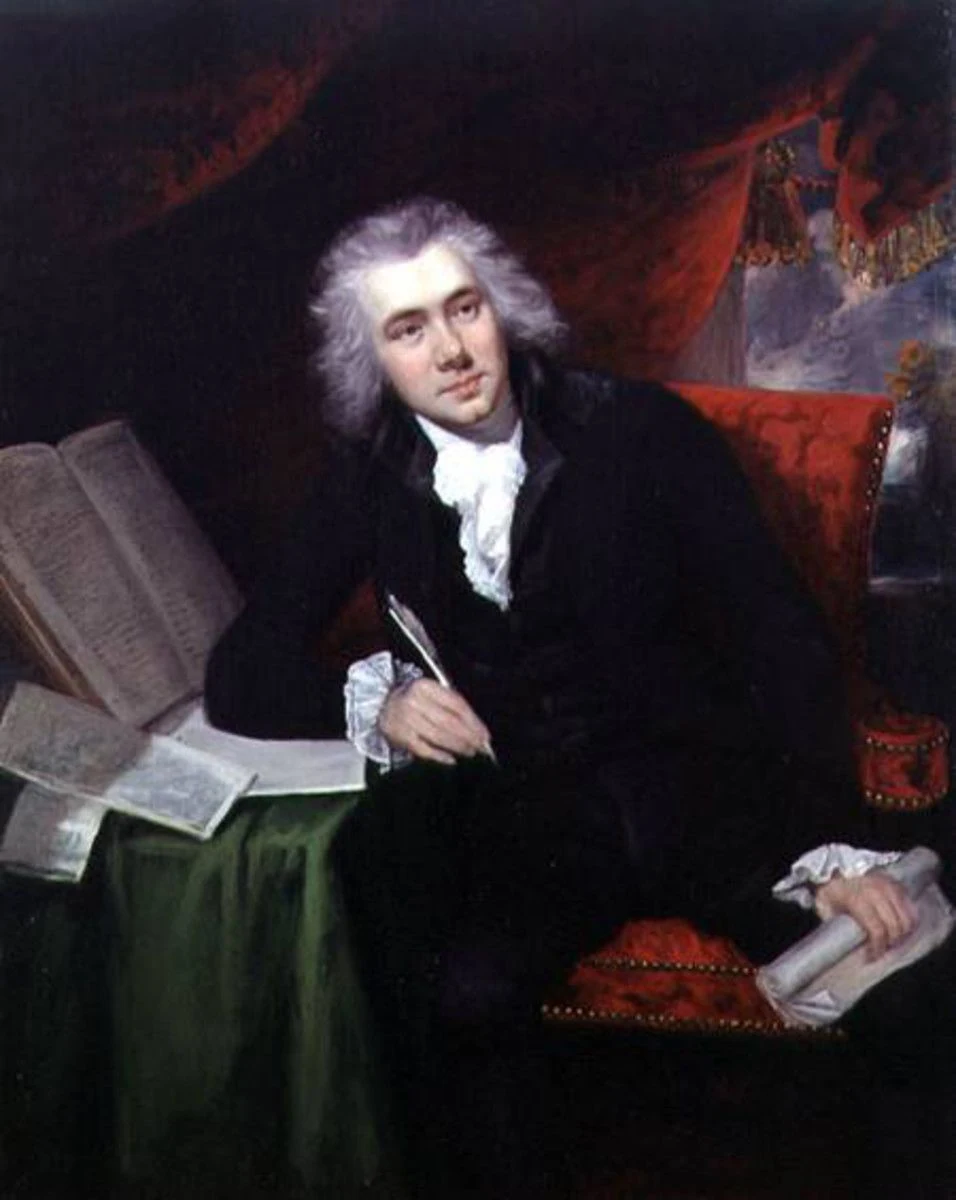
William Wilberforce did not abolish slavery single-handedly, and the British slave trade did not end at the first attempt. His achievement was to keep abolition before Parliament through years of defeat, political resistance and war, while working alongside campaigners who gathered evidence and built public pressure beyond Westminster. In 1807, Parliament outlawed the British slave trade. Slavery itself continued, and the law that abolished it across most of the British Empire did not receive Royal Assent until after Wilberforce’s death.
That distinction matters to his story. Born into a wealthy Hull merchant family, Wilberforce used his position within British public life to challenge a trade in which British shipping and commerce were deeply involved. His persistence helped change the law; his career also included conservative positions that complicate any simple portrait of him as a champion of freedom. Both belong in an account of the politician and the campaign.
A Hull upbringing and a conversion of purpose
Wilberforce was born in Kingston upon Hull on 24 August 1759, the only son of Robert Wilberforce, a wealthy merchant, and Elizabeth Bird. His grandfather had made the family fortune through Baltic maritime trade and had twice served as Hull’s mayor. William was educated at Hull Grammar School and Pocklington School before entering St John’s College, Cambridge, in 1776. The deaths of his grandfather and uncle left him independently wealthy. He took a degree, but university life offered him more social opportunities than financial pressure to pursue his studies.
He entered Parliament in 1780, aged 21, as MP for Kingston upon Hull. He later represented Yorkshire and, from 1812, Bramber. He sat as an independent, though his friendship with William Pitt the Younger placed him close to the centre of political life. Wilberforce was known for his wit and conversational skill; his speaking voice became one of his strengths in the Commons. His political career began before the religious commitment that would shape his public purpose.
In 1784, Wilberforce travelled in Europe with his family and Isaac Milner, a former schoolmaster’s brother. On the journey back to England, he and Milner read a work of religious instruction. Wilberforce’s evangelical conversion followed in 1785. He questioned whether he should remain in public life, but the evangelical clergyman John Newton advised him to stay. Wilberforce resolved to continue in politics with greater conscientiousness, treating public office as a means of serving his convictions.
Those convictions did not make him a political radical. He generally favoured reform through Christian belief, education and moral improvement, and feared abrupt challenges to the established social and political order. The conversion gave his work a durable moral framework, but his politics could also be restrictive. That tension would persist: he could argue forcefully against the enslavement of people while resisting forms of democratic and labour activism at home.
Building an abolition campaign
Wilberforce did not originate the movement against the slave trade. Quakers had organised against it and petitioned Parliament; Granville Sharp helped make the case against slavery; and Thomas Clarkson collected testimony about the trade. Black abolitionists, including Olaudah Equiano, also brought the experiences of enslaved people into public debate. Wilberforce’s role was to give the campaign a leading voice inside the Commons, where legislation could be changed.
In 1787, Wilberforce became involved with the Society for Effecting the Abolition of the Slave Trade and worked with Clarkson and other campaigners. He used his parliamentary position to bring the issue before the House and to press for action. The work depended on more than speeches: campaigners assembled evidence, promoted petitions and sought support beyond Parliament, while Wilberforce pursued the argument within it. His London home became a meeting place for abolitionist planning.
In May 1789, he made a major Commons speech against the trade. He drew on evidence gathered by Clarkson and others about the conditions on slave ships and argued that the trade was morally indefensible. The case reached beyond the conduct of individual traders. British ships and commerce carried enslaved Africans across the Atlantic to labour on plantations, and the wealth generated by slavery touched merchants, ports, investors and consumers. Abolition required Parliament to confront the country’s involvement, not merely condemn cruelty in the abstract.
The first bill Wilberforce introduced to abolish the trade was defeated in 1791. Other attempts also failed or were delayed. The outbreak of the French Revolution and then war made reform harder to advance; opponents associated abolition with radical politics, while West Indian interests pressed against it. In 1792, a proposal for gradual abolition passed the Commons, but it did not bring an end to the trade. A measure passed by the Commons in 1804 did not complete its passage through Parliament, and a renewed bill was defeated in 1805.
Wilberforce and his allies adapted their tactics as well as persevering. In 1806, a measure against British subjects participating in the slave trade to French colonies became law. The campaign then advanced towards a final abolition bill. Wilberforce and Clarkson continued to marshal evidence, while the changed political circumstances after Pitt’s death helped bring abolitionists into government. The Slave Trade Act received Royal Assent on 25 March 1807.
The 1807 law ended the British slave trade; it did not free people already enslaved in the British Empire. That limit is central to an accurate account of the victory. Wilberforce’s parliamentary campaigning helped secure a major legal change, but the end of the trade and the abolition of slavery were separate struggles. His success rested on collaboration with campaigners outside Parliament as well as his own political work.
Reform, religion and a contested record
After 1807, Wilberforce remained involved in the movement against slavery. His attention increasingly turned to emancipation itself, although for years he favoured gradual change rather than immediate abolition. In 1823, he published an appeal calling for the end of slavery, and he supported the campaign as his health worsened and his parliamentary role diminished. He resigned from Parliament in 1825. In later years, Thomas Fowell Buxton took a leading role in the Commons campaign, while Wilberforce continued to lend his support.
The Slavery Abolition Act 1833 abolished slavery in most of the British Empire. Wilberforce did not live to see it receive Royal Assent. On 26 July 1833, he heard that concessions had been made which assured the bill’s passage; he died on 29 July. The Act became law on 28 August. Emancipation came with serious compromises: compensation went to slave-owners rather than the enslaved, and a staged system delayed full freedom in much of the empire until 1838.
Abolition was one strand of a broader religious and reforming life. Wilberforce helped found the Church Missionary Society in 1799 and was among the founders of the Society for the Prevention of Cruelty to Animals in 1824, later the RSPCA. He supported missionary work and education, and took an interest in prison reform and other moral causes. His book A Practical View, published in 1797, argued that religious profession without changed conduct was insufficient. For Wilberforce, belief and public action belonged together.
His record also shows the limits of his reforming politics. Wilberforce opposed trade union organisation and supported measures that restricted political meetings and public agitation. He feared radical change and could be paternalistic in his approach to social questions. These positions sit uneasily beside his campaigning against the enslavement of Africans. They should neither be concealed nor treated as a reason to disregard the work he did against the British slave trade. They show that his moral commitments were strong, but not consistently emancipatory across every issue.
Wilberforce died in London and was buried in Westminster Abbey in August 1833, after leading parliamentarians urged that he be honoured there. In Hull, the city where he was born, Wilberforce House preserves his connection to the place and to the history of abolition. These commemorations mark his public standing, but his historical significance depends less on the honours than on the movement and legislative change with which his name became associated.
Why William Wilberforce deserves a place in British Legacy
Wilberforce deserves a place in British Legacy because his career makes the relationship between British power and moral responsibility difficult to avoid. The country whose Parliament he served was not a distant observer of the Atlantic slave trade: British ships and commercial interests were involved in it. He helped bring that reality into parliamentary argument and, through repeated efforts, helped secure a law that ended British participation in the trade. That was a consequential change, achieved not by one politician acting alone but through the combined labour of parliamentary advocates, evidence-gatherers, petitioners and campaigners, including Black abolitionists.
His legacy also offers a useful account of how reform can proceed—and of what it can leave unfinished. The 1807 Act ended the trade, not slavery; emancipation followed only in 1833, with compensation for slave-owners and a delay before full freedom. Wilberforce’s own politics had restrictive and paternalistic elements, and remembering those limits helps prevent a complicated history from becoming a simple tale of national virtue. His connection to Hull, his parliamentary work and his continued association with Westminster Abbey give that history a distinct British setting. Above all, his campaign shows how gathered evidence, sustained public pressure and legislative persistence can challenge an entrenched interest, while the unfinished work after victory remains part of the reckoning.
Sources
William Wilberforce — Wikipedia, revision 1374397380
Adapted in part from William Wilberforce by Wikipedia contributors, under CC BY-SA 4.0. Text has been edited and combined with the existing article; this adapted text is shared under the same licence. Contributor history.