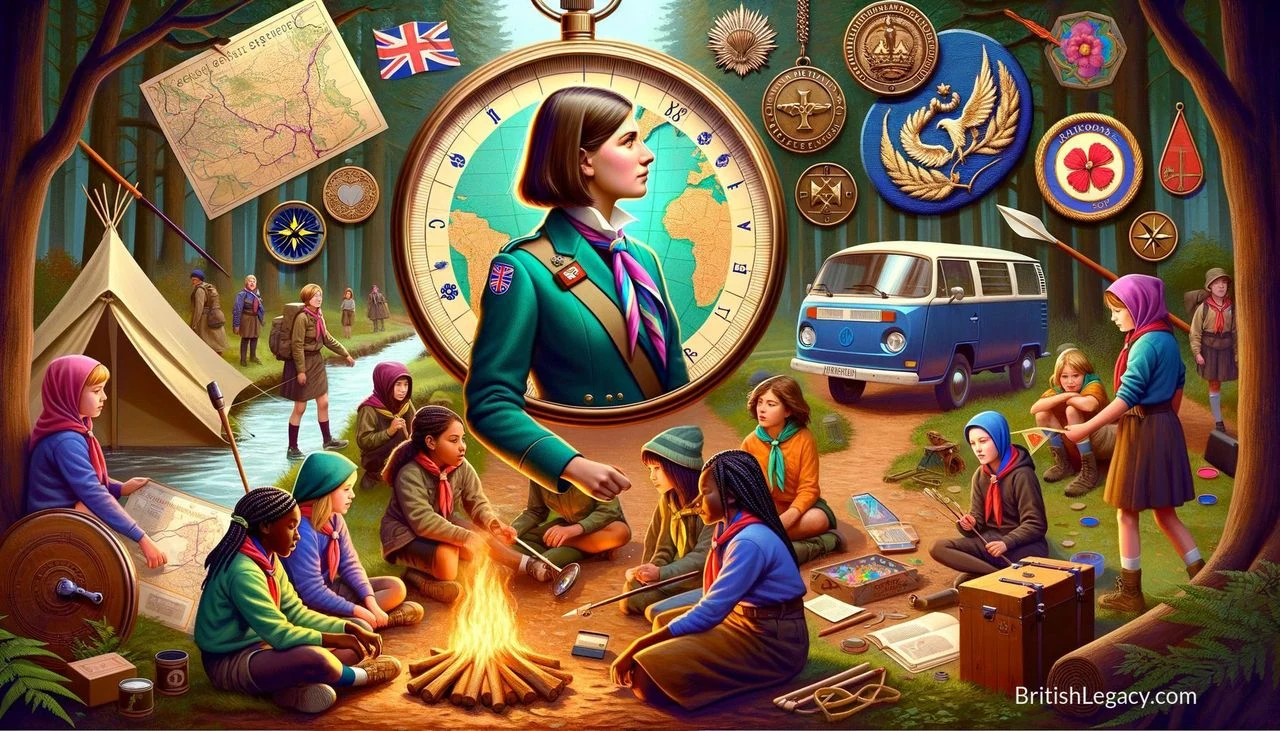
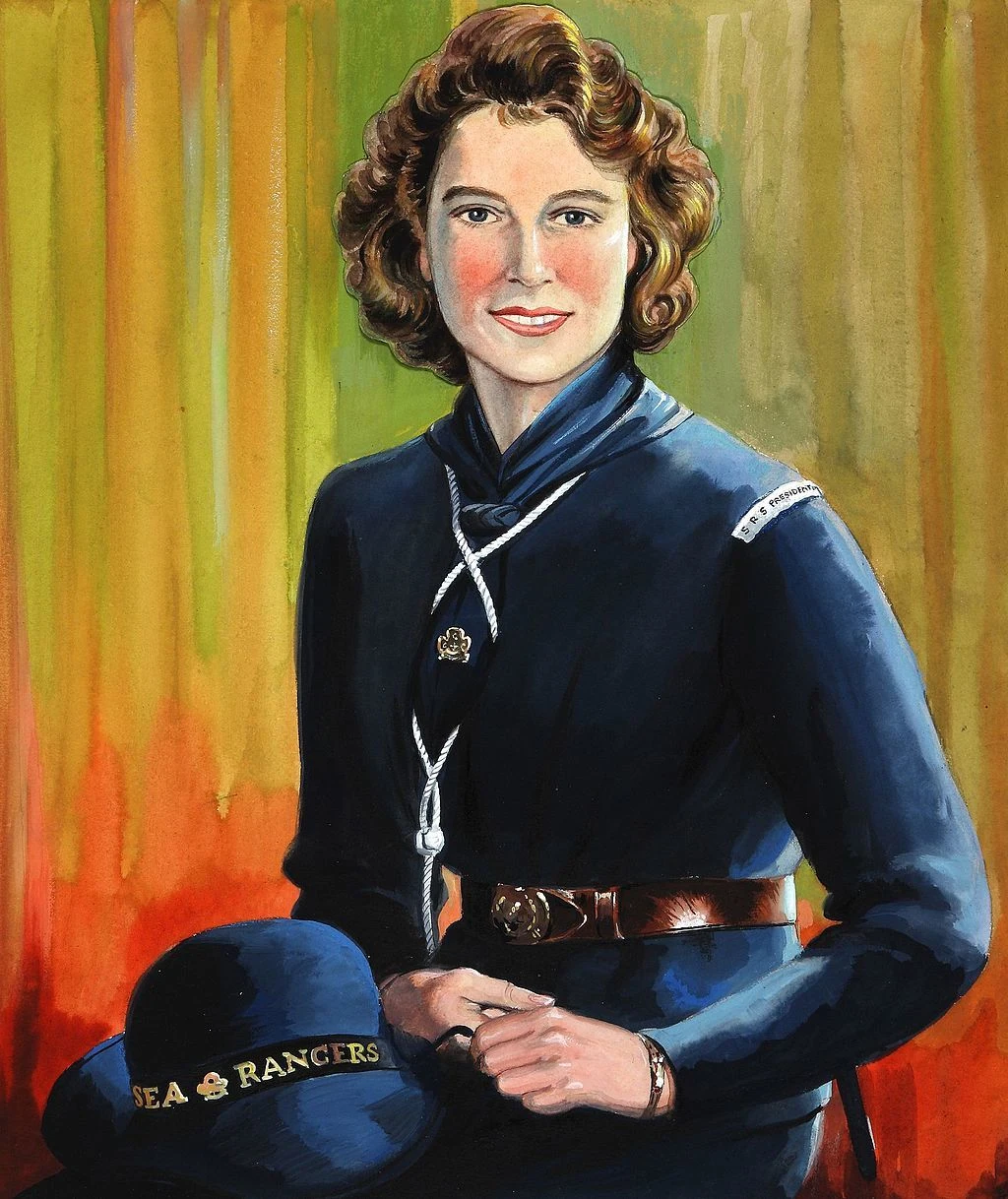
When hundreds of girls appeared at the 1909 Crystal Palace gathering of Boy Scouts, they made a public case for taking part. Their presence helped prompt Robert Baden-Powell to establish a separate organisation for girls. He asked his sister Agnes to organise it. In 1910, the Girl Guide Association was created with Agnes as its president; she went on to write its first handbook, published in 1912. Her contribution was practical as well as symbolic: she helped turn a call for participation into an organisation with a programme and a handbook of its own.
A family shaped by education and loss
Agnes Smyth Baden-Powell was born in Paddington, London, on 16 December 1858. Her father, the Reverend Professor Baden Powell, was Savilian Professor of Geometry at the University of Oxford. Her mother, Henrietta Grace Smyth, was a musician and artist, and the daughter of Admiral William Henry Smyth. Agnes was her mother's third daughter; the two elder girls had died before her birth. She was one of ten children left in the household after her father died when she was two.
Her mother's response to widowhood included adding Baden, her husband's first name, to the family surname, which became Baden-Powell. Henrietta raised the children and, according to the biographical account, was determined that they should succeed. Agnes's brothers included Robert, who became associated with the Boy Scout movement, and Baden, with whom she later worked on balloon and aircraft projects.
Agnes's interests ranged well beyond organising. She played the organ, piano and violin, and was interested in natural history and astronomy. She kept bees, birds and butterflies at home. These details complicate any picture of her as defined by one public role: her working life encompassed civic service, practical making and a range of personal interests.
Building an organisation for girls
The Crystal Palace gathering took place in 1909. Among the thousands of Boy Scouts were several hundred girls registered as Scouts. A smaller group, dressed in Scout uniforms, arrived without tickets and gained public attention. Their presence came at a time when mixed activities for girls faced opposition. Robert Baden-Powell first tried other organisations, but, after being turned down by first-aid societies, approached Agnes to take on the work of organising a movement for girls.
Agnes agreed, though the account describes her as reluctant. In late 1909, Robert published two pamphlets proposing the Baden-Powell Girl Guides and subjects for training; the proposals met fierce opposition in the press. The Girl Guide Association was established in 1910, with Agnes as president. By April that year, 6,000 girls were registered as Guides. The early growth gives a measure of the demand the new organisation was meeting, without making the founding story a simple matter of unchallenged popular approval.
In 1912 Agnes wrote How Girls Can Help to Build Up the Empire, the first Girl Guide handbook. It drew partly on Robert's earlier Scouting for Boys, while adding chapters of its own. The title belongs to its period; the significant point is that the movement now had a guidebook written for its members. The Association was incorporated in 1915.
Service beyond the Guides
Girl Guiding was not Agnes's only public commitment. For some years she was president of the Westminster division of the Red Cross. She also worked for the League of Mercy and Queen Mary's Needlework Guild. These roles place her organisational work in a broader pattern of voluntary service, rather than presenting the Guides as her sole concern.
Her technical interests brought another kind of collaboration. Agnes and her younger brother Baden made aeronautical balloons, working the silk for their envelopes, and made flights together. Later, she helped him build and fly gliders and aeroplanes. In 1938 she became an honorary companion of the Royal Aeronautical Society. The account of her life thus includes both the detailed work of making the balloons and the later recognition attached to her involvement in aviation.
Changing roles within the movement
Agnes did not remain the Girl Guides' principal leader throughout its development. In 1916 Robert Baden-Powell arranged for his wife, Olave, to become a county commissioner in Sussex. Later that year, county commissioners elected Olave to the new post of Chief Guide, placing her in charge of the Association. Agnes was offered the honorary presidency and accepted, although reluctantly. In 1917 she was pressed to resign from that presidency in favour of Princess Mary, a supporter of the Guides, and became vice-president. She held that position until her death.
This later history matters to a fair account of Agnes's contribution. She helped organise the Association and wrote its first handbook, but its leadership changed as the institution developed. Describing her as its founder should not obscure either the early work she did or the subsequent transfer of authority within the movement.
In April 1901 Agnes became engaged to Sir William Bisset Berry, Speaker of the South African parliament, but they did not marry. She never married. She died in North East Surrey on 2 June 1945, aged 86, having outlived her siblings. She was buried in the family grave at Kensal Green Cemetery, London.
Why Agnes Baden-Powell deserves a place in British Legacy
Agnes Baden-Powell deserves a place in British Legacy for helping establish an organisation that gave girls a structure in which to take part, learn and organise. At Crystal Palace in 1909, girls made their presence visible within a movement intended for boys. The Association formed the following year, and 6,000 girls had registered by April. Agnes took on the organising work, became its first president and wrote the first handbook. These are specific contributions: she helped build the institution and supplied a text that could guide its members. They make her part of the history of British youth organisations and of efforts to widen girls' access to organised activities at a time when mixed participation faced opposition.
Her legacy is not that she alone created everything Girl Guiding later became. The movement developed under changing leadership, including Olave Baden-Powell and, from 1917, Princess Mary as president. Agnes's place is clearest when those changes are included: she helped establish the Association, served in its early leadership and remained vice-president until her death. Her work beyond the Guides also shows a life of public and practical engagement, from voluntary service to balloon-making and aviation. Remembering her in British Legacy recognises both the organisation she helped found and the particular work through which she contributed to it.
Sources
Agnes Baden-Powell — revision 1379518144
Adapted in part from Agnes Baden-Powell by Wikipedia contributors, under CC BY-SA 4.0. Text has been edited and combined with the existing article; this adapted text is shared under the same licence. Contributor history.