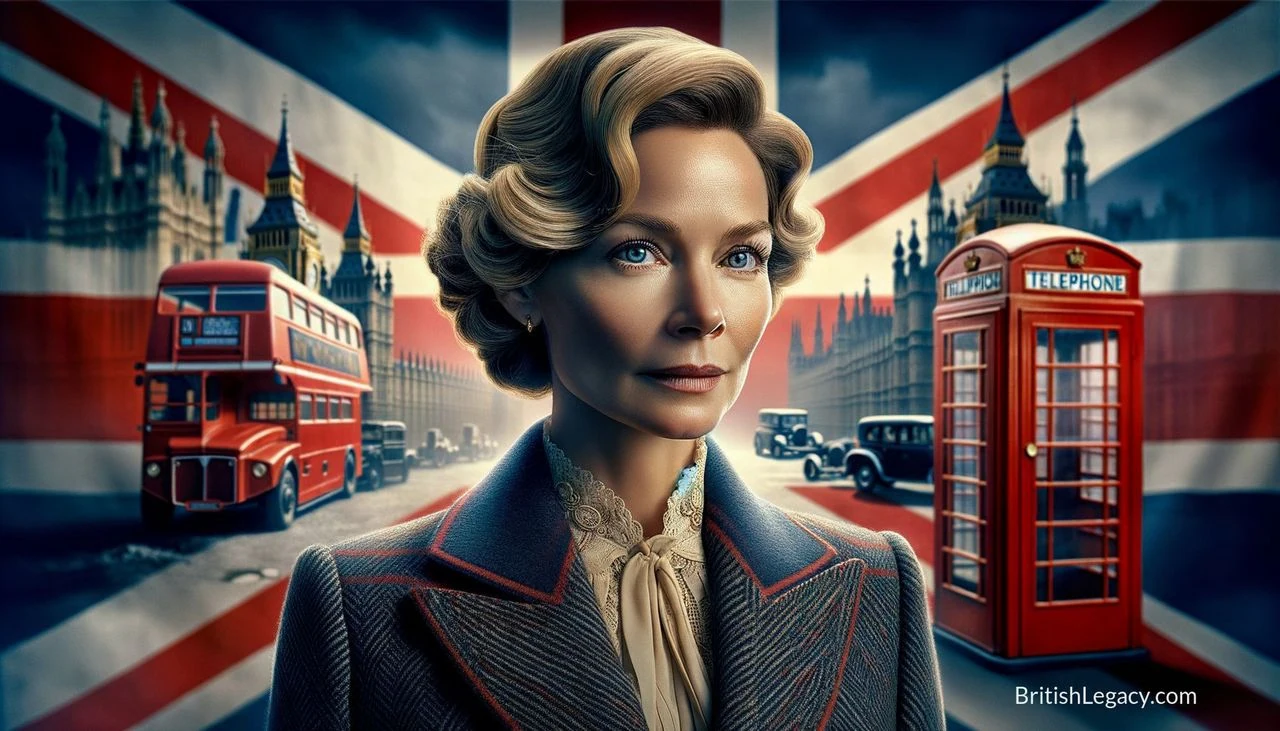
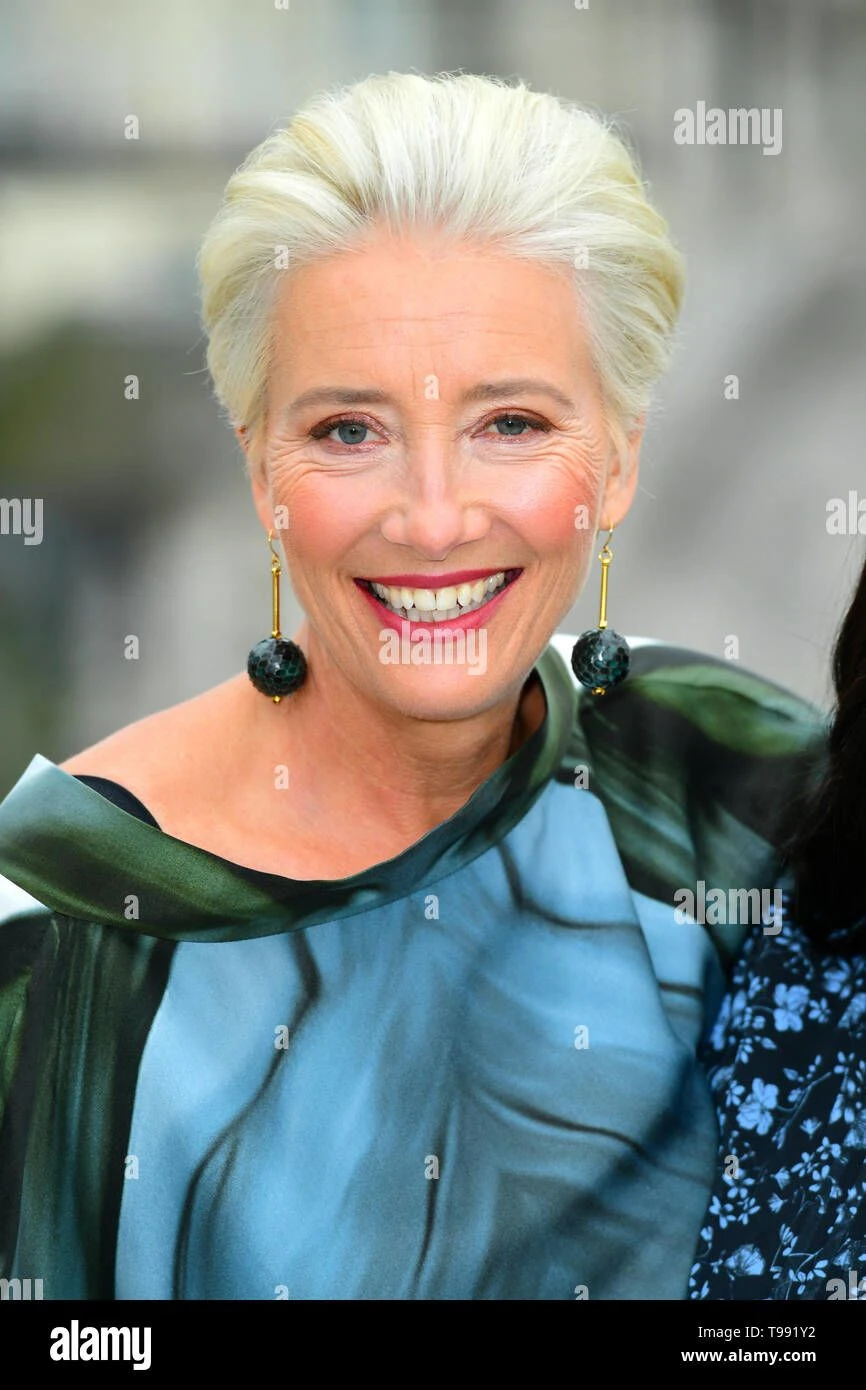
Emma Thompson’s career has repeatedly crossed the line between performing a story and shaping it. She became an international film star in the 1990s, winning an Academy Award for acting in Howards End and another for the screenplay of Sense and Sensibility. But her work began in comedy and theatre, and her later screen roles have ranged from Jane Austen’s Elinor Dashwood to the formidable Miss Trunchbull. Across those changes, she has brought a writer’s attention to character and a comic performer’s feel for timing.
Cambridge comedy and a stage breakthrough
Born in Hammersmith, London, on 15 April 1959, Thompson grew up in a family of performers. Her father, Eric Thompson, was an actor and writer; her mother, Phyllida Law, is an actress. Thompson attended Camden School for Girls before studying English at Newnham College, Cambridge. She joined the Cambridge Footlights sketch-comedy troupe, became its vice-president in 1980 and co-directed its first all-female revue, Woman’s Hour. In 1981, her Footlights team won the Perrier Award at the Edinburgh Festival Fringe for The Cellar Tapes.
Comedy supplied her first professional footholds. She appeared on BBC Radio 4’s Injury Time while still at university, then toured in a stage version of Not the Nine O’Clock News. Television work followed, including the sketch series Alfresco, with fellow performers Hugh Laurie and Stephen Fry. In 1985, she took the role of Sally Smith in the West End revival of the musical Me and My Girl. Its success marked a major step in her career.
Two television performances brought wider notice in 1987: the wartime drama Fortunes of War and the Scottish rock-band comedy Tutti Frutti. Thompson won the BAFTA TV Award for Best Actress for her work in the series. Film and Shakespearean roles followed, including Princess Katherine in Kenneth Branagh’s Henry V (1989). The mixture of comedy, classical theatre and television drama would remain characteristic of her work.
International recognition and a writer’s Oscar
Thompson’s performance in Merchant Ivory’s Howards End (1992), an adaptation of E. M. Forster’s novel, brought her international recognition. She played an idealistic, observant woman drawn into the affairs of a privileged family in Edwardian Britain. The film received nine Academy Award nominations; Thompson won Best Actress, as well as a BAFTA and a Golden Globe for the performance.
In 1993, she appeared in two very different films: The Remains of the Day, another Merchant Ivory adaptation, and In the Name of the Father. For the latter, she played lawyer Gareth Peirce. Her work earned Academy Award nominations for both films in the same year, in the Best Actress and Best Supporting Actress categories.
Her next defining achievement joined screen acting to screenwriting. Thompson spent five years developing the screenplay for Sense and Sensibility, adapting Jane Austen’s novel, and played Elinor Dashwood in Ang Lee’s 1995 film. She won the Academy Award for Best Adapted Screenplay, as well as a BAFTA for her performance and a Golden Globe for the screenplay. The Oscars made her the first person to win Academy Awards for both acting and screenwriting. The film’s success gave a new audience a lively, carefully constructed route into Austen’s work, while Thompson’s adaptation made the novel’s wit and social observation work on screen.
Thompson’s writing continued in projects that she also performed in. She wrote and starred in the children’s film Nanny McPhee (2005), a story she had spent years developing from the Nurse Matilda books she knew as a child. The film topped the UK box office and was followed by Nanny McPhee and the Big Bang (2010), for which she again wrote the screenplay and played the title character. In 2012, publishers authorised her to add a new book to Beatrix Potter’s Peter Rabbit series. She went on to write two more Peter Rabbit books.
Range across film, television and stage
Thompson’s screen work has never belonged to one genre. In the 1990s she appeared in the comedy Peter’s Friends, Branagh’s Much Ado About Nothing and the American political satire Primary Colors. In Wit (2001), adapted from Margaret Edson’s play, she led a television drama about a university professor facing cancer. Her performance earned nominations at the Golden Globes, Emmys and Screen Actors Guild Awards.
She played a wife confronting her husband’s infidelity in Richard Curtis’s ensemble comedy Love Actually (2003), then took three roles in the television miniseries Angels in America. From 2004, she appeared as Professor Sybill Trelawney in three films in the Harry Potter series: Harry Potter and the Prisoner of Azkaban, Harry Potter and the Order of the Phoenix and Harry Potter and the Deathly Hallows – Part 2. In 2012, she voiced Queen Elinor in Pixar’s Scottish-set animation Brave.
Later film roles included P. L. Travers in Saving Mr. Banks (2013), Mrs Potts in the live-action Beauty and the Beast (2017), and the Baroness in Cruella (2021). Thompson returned to live performance in 2014, playing Mrs Lovett in a Lincoln Center production of Stephen Sondheim’s Sweeney Todd. She also starred in Good Luck to You, Leo Grande (2022), and played Miss Trunchbull in the film adaptation of Matilda the Musical that year. These roles show the breadth of her screen presence, but the writing credits remain central: she has repeatedly taken responsibility for the stories and characters she brings to audiences.
Public work and recognition
Thompson has used her public profile to campaign on human rights and environmental issues. She is chair of the Helen Bamber Foundation, which works with victims of torture, and a patron of the Refugee Council and the Elton John AIDS Foundation. She has supported Greenpeace campaigns, including action on climate change and the Arctic, and is an ambassador for the Galapagos Conservation Trust. These activities sit alongside, rather than replace, her artistic career: they demonstrate a sustained engagement with causes beyond the stage and screen.
In 2018, Thompson was made a Dame Commander of the Order of the British Empire for services to drama. Her awards include two Academy Awards, three BAFTA Awards, two Golden Globes and a Primetime Emmy Award. In 2021 she was elected a Fellow of the Royal Society of Literature. The honours reflect distinct parts of her work: acting, screenwriting and a career that has moved between popular entertainment and literary adaptation.
Why Emma Thompson deserves a place in British Legacy
Thompson’s place in British cultural history rests on more than a list of celebrated performances. Her two Academy Awards recognise two different forms of authorship: the ability to inhabit a character and the ability to adapt a novel for the screen. With Sense and Sensibility, she brought Austen’s dialogue and social observation into a successful film without separating the work of the writer from that of the actor. Her approach helped make a British literary classic accessible to a wide international audience, while her award-winning performance in Howards End gave another major work of English fiction a memorable screen interpreter.
She has continued to connect British theatre, literature and screen culture in practical ways: from Footlights and the West End to writing the Nanny McPhee films and adding new stories to the Peter Rabbit books. Her performances in the Harry Potter films and Matilda the Musical also place her within adaptations that have carried British writing to audiences around the world. Alongside that creative work, her campaigning for refugees, survivors of torture, people affected by AIDS and environmental causes gives her public role a more direct civic dimension. Thompson’s legacy is therefore not simply that of a prominent British actor. It is that of a performer who has repeatedly taken part in making the stories she tells, and who has used her standing to support causes outside her profession.
Sources
Adapted in part from Emma Thompson by Wikipedia contributors, under CC BY-SA 4.0. Text has been edited and combined with the existing article; this adapted text is shared under the same licence. Contributor history.