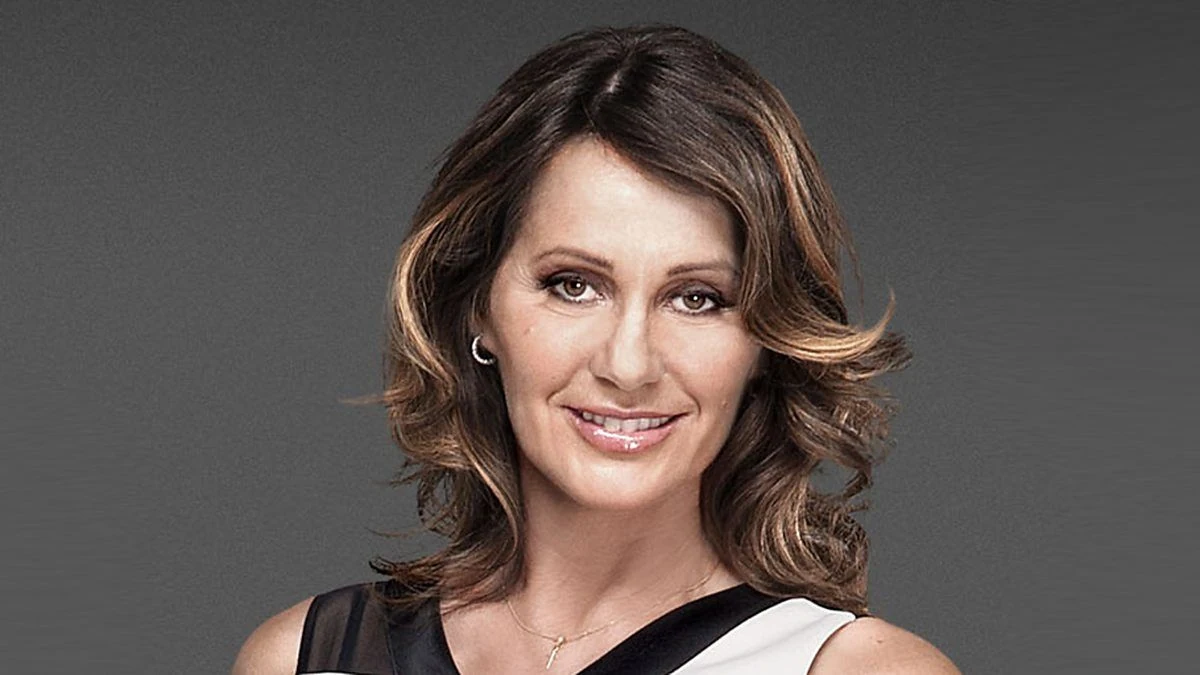
At the Montreal Olympics in 1976, 14-year-old Nadia Comăneci received a score that the official scoreboard could not display. Its makers had not expected a gymnast to earn a perfect 10, so her first Olympic perfect score appeared as “1.00”. Comăneci went on to receive six more 10s at those Games and win three gold medals. The moment made her an international sporting figure; the career behind it was built on years of training, a difficult path through Romanian elite sport and achievements that extended well beyond Montreal.
A young gymnast from Onești
Nadia Elena Comăneci was born on 12 November 1961 in Onești, Romania. She began gymnastics as a young child with a local team called Flacără, or “The Flame”. At six, she was selected for the experimental gymnastics school run by Béla and Márta Károlyi. She was among the first pupils at their school in Onești, and for years could live at home while many of the other students boarded there.
Comăneci was competing for her home-town team by 1970. A year later, she won her first all-around title at an international junior meet between Romania and Yugoslavia. In 1973 she won the all-around, vault and uneven bars at the Junior Friendship Tournament, an important competition for junior gymnasts. Her progress continued at senior level: aged 13, she won the all-around title at the 1975 European Championships in Skien, along with gold in every event except the floor exercise, where she took silver.
Before the Olympics, she also won the all-around and balance beam at the Montreal pre-Olympic test event. Her results were already exceptional, but the Games would give her performances an audience far beyond the gymnastics world.
Montreal: the perfect 10
On 18 July 1976, Comăneci became the first gymnast to receive a perfect 10 at the Olympic Games. The score came for her uneven-bars routine in the team compulsory competition. Because the scoreboard could not show 10.00, it displayed 1.00 instead. She earned six further perfect scores during the Games, including on the uneven bars and balance beam.
Comăneci won individual all-around gold, as well as gold on the balance beam and uneven bars. She also took bronze in the floor exercise and silver in the team all-around. She was the first Romanian gymnast to win the Olympic all-around title, and at 14 the youngest Olympic gymnastics all-around champion. The minimum age for Olympic gymnastics was subsequently raised, leaving her record beyond the reach of gymnasts competing under the later rule.
Her achievement was not simply a striking number. Comăneci was known for precise execution, difficult original skills and a composed presence in competition. On the beam, she was the first gymnast to perform an aerial cartwheel-back handspring series successfully; her uneven-bars repertoire included skills that now bear her name in the Code of Points. Her artistry and technical control helped draw worldwide attention to gymnastics.
In 1976 she was named BBC Overseas Sports Personality of the Year and Associated Press Female Athlete of the Year. The BBC award is one of the clear points of contact between her rise to international fame and British sporting audiences, though it does not by itself establish a wider effect on British participation or training.
Further titles, and a difficult return to training
Comăneci defended her European all-around title in 1977. The competition ended amid a scoring dispute: after questions were raised, Romania’s leader Nicolae Ceaușescu ordered the team home, and the gymnasts withdrew during the event finals. The Romanian Gymnastics Federation then removed Comăneci from the Károlyis and sent her to train in Bucharest. The change unsettled her, and her performances suffered as she adjusted to a new training environment and the physical changes of adolescence.
At the 1978 World Championships in Strasbourg, a fall from the uneven bars left her fourth in the all-around. She nevertheless won the beam title and a silver medal on vault. After the championships she was allowed to return to Deva and the Károlyis’ school. In 1979 she became the first gymnast, male or female, to win three consecutive European all-around titles.
That December, at the World Championships in Fort Worth, Comăneci helped Romania win its first team gold at the event. Before the optional part of the team competition, she was hospitalised with blood poisoning from an infected cut to her wrist. Against medical advice, she left hospital and competed on the beam, scoring 9.95. She later needed a minor operation and several days of recovery.
Two more Olympic golds
At the 1980 Moscow Olympics, Comăneci won gold on the balance beam and floor exercise, sharing the latter title with Soviet gymnast Nellie Kim. She also earned silver in the team and individual all-around competitions. Two more perfect scores brought her career Olympic total to nine: five gold, three silver and one bronze.
Scoring controversies followed the all-around and floor exercise events. Her coach protested what he regarded as unfair judging, and his objections were broadcast. Comăneci later described how the protest affected the relationship between the Károlyis and the Romanian authorities. At the 1981 Summer Universiade in Bucharest, she won five gold medals. Her official retirement took place in Bucharest in 1984, although she attended that year’s Los Angeles Olympics as an observer rather than competing.
Leaving Romania and building a life in the United States
Comăneci’s life after competition remained subject to the Romanian authorities’ restrictions on her travel. In November 1989, a few weeks before the Romanian revolution, she crossed the border into Hungary with a group of other Romanians. Their journey continued through Austria before she flew to the United States. She settled in Oklahoma in 1991, where she helped her friend and fellow Olympic champion Bart Conner with his gymnastics school.
Comăneci and Conner married in Bucharest in 1996. Their wedding, after the fall of the Communist regime, was televised live in Romania. She became a naturalised United States citizen in 2001 while retaining Romanian citizenship. She and Conner have remained involved in gymnastics through their academy, sports businesses and work in the sport’s media.
Her public roles have also included serving as honorary president of the Romanian Gymnastics Federation and Romanian Olympic Committee, and as a member of the International Gymnastics Federation Foundation. She has supported charitable work, including the Nadia Comăneci Children’s Clinic in Bucharest, which provides low-cost and free medical and social support to Romanian children. These activities form part of her broader contribution to gymnastics and public life, distinct from claims about a specific influence on British clubs or coaching.
Her documented British connection
Comăneci’s sporting career was Romanian, and the evidence for her direct influence on British gymnastics is more limited than some accounts suggest. The record includes a Romania–Great Britain dual meet in 1976, placing her in competition against a British team during the year of her Montreal triumph. In that same year, the BBC named her Overseas Sports Personality of the Year, bringing her achievement into British sporting recognition.
Her most visible connection with Britain came at the London 2012 Olympic Games. On 21 July, she carried the Olympic torch to the roof of the O2 Arena as part of the relay. The moment linked one of the most recognisable figures in Olympic gymnastics with London’s hosting of the Games. It is a concrete contribution to Britain’s Olympic story, rather than proof that she shaped the country’s gymnastics programmes or caused later medal success.
Why Nadia Comăneci deserves a place in British Legacy
Comăneci merits a place in British Legacy not because her achievements were British—they were made as a Romanian gymnast—but because her career intersected meaningfully with British sporting life. The BBC’s 1976 Overseas Sports Personality of the Year award recognised her while the impact of Montreal was still unfolding. A Romania–Great Britain dual meet in the same year provides a direct competitive connection. Later, she carried the Olympic flame to the roof of the O2 Arena during the London 2012 relay, taking part in a defining public ritual of Britain’s Games.
Those connections sit alongside an achievement that changed the sport watched by British audiences: the first perfect 10 at the Olympic Games, followed by six more at Montreal. Her precision, inventive skills and five Olympic gold medals give the story real substance, while her return to the Olympics in Moscow and eventual retirement show a career extending well beyond a single celebrated performance. A careful account should not claim, without evidence, that she prompted a surge in British club membership, transformed coaching or set the conditions for later British medals. Her place here is stronger for being specific: an international champion honoured by the BBC, a competitor against a British team and a participant in the London Olympic relay.
Sources
Adapted in part from Nadia Comăneci by Wikipedia contributors, under CC BY-SA 4.0. Text has been edited and combined with the existing article; this adapted text is shared under the same licence. Contributor history.