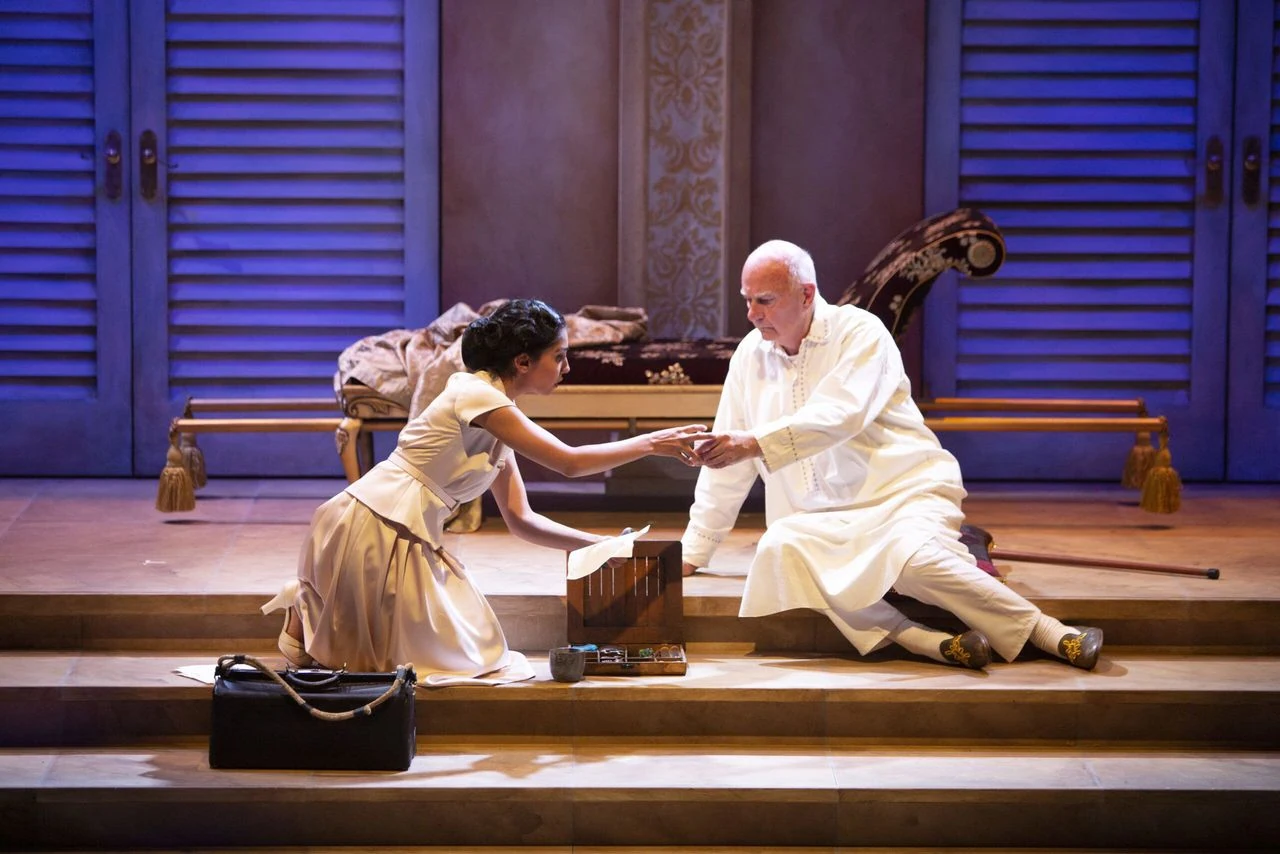
Helena cures the King of France and claims the husband of her choice. Bertram, the young nobleman she loves, responds with rejection: he regards her as beneath his rank and sets conditions he believes she cannot meet. Helena’s ingenuity moves the plot towards a marriage apparently secured by wit and persistence. Yet Bertram’s abrupt final acceptance leaves the play’s promise of a happy ending open to question.
Introduction
William Shakespeare’s All’s Well That Ends Well was published in the First Folio of 1623, where it appears among the comedies. Its date of composition is uncertain: suggested dates range from 1598 to 1608. It is often described as a “problem play”, a term for drama whose ethical dilemmas resist the simple resolutions associated with comedy. Here, the difficulty lies not only in the deception Helena uses to meet Bertram’s demands, but in whether the ending amounts to a genuine reconciliation.
The play combines romantic plotting with questions of rank, gender and obligation. Helena acts with determination in a society that gives Bertram greater status and freedom. The conclusion brings them together, but its speed and circumstances leave room for different interpretations on stage.
Authorship and Initial Staging
No records of early performances have been found, so a first staging at the Globe cannot be established from the available evidence. The documented performance history begins in 1741 at Goodman’s Fields, with a later transfer to Drury Lane. The opening was delayed after the actor playing the king fell ill. On the first night, Peg Woffington, who played Helena, fainted and her part was read. The actor playing the king fell ill again and died on 6 February. Further stories of illness during the run are described as unsubstantiated, though they contributed to the play’s reputation as unlucky.
The work’s composition date remains debated, with proposed dates spanning 1598 to 1608. Modern discussion has also included the argument that Shakespeare co-authored the play with Thomas Middleton. These uncertainties sit alongside a clearer publication landmark: its inclusion in the First Folio in 1623.
Plot Summary
Helena, a physician’s daughter and ward of the Countess of Roussillon, loves the countess’s son, Bertram. He is indifferent to her. When Bertram travels to Paris to attend the ailing King of France, Helena follows, offering her skill as a healer. She stakes her life on the treatment: if the king dies, she will die; if he recovers, she may choose a husband at court.
The king is cured, and Helena chooses Bertram. He rejects the match because of her low birth, but the king compels him to marry her. Bertram then leaves for war in Italy without so much as a farewell kiss. He tells Helena that he will accept her as his wife only when she has borne his child and obtained his family ring—conditions he considers impossible.
In Italy, Bertram becomes a successful soldier and pursues Diana, the daughter of an impoverished local noblewoman. Helena follows him and befriends Diana. Together they arrange for Helena to take Diana’s place in bed with Bertram. Diana obtains Bertram’s ring in exchange for one of Helena’s. Helena thus fulfils Bertram’s stated demands without his knowledge, by means of concealment rather than mutual understanding.
Helena also makes others believe she has died. Bertram returns to France, thinking himself free to marry a French lord’s daughter. Diana appears and disrupts the proposed match. Helena then reveals the exchange of rings and declares that she has met Bertram’s challenge. He promises to love her, and the play ends with the prospect of reconciliation. Whether this promise marks a convincing change of heart is one of the drama’s lasting difficulties.
Background and Context
A second plot follows Parolles, Bertram’s boastful and disloyal companion. The Countess, Helena, Lafew, the household fool Lavatch and the Lords Dumaine recognise his character, but Bertram takes him to war. The two lords trick Parolles into crossing enemy lines to recover a lost drum. Disguised as enemy soldiers, they capture him while Bertram watches. Under interrogation, Parolles betrays his companions and surrenders a letter warning Diana about Bertram’s intentions.
The episode makes a comic spectacle of the gap between Parolles’s claims and his conduct, while sharpening the contrast with Bertram. He keeps company with a man whose vanity is plain to those around him, yet treats Helena’s social position as a reason to refuse her. The play’s concern with status therefore runs through both its marriage plot and its subplot.
Helena’s conduct has prompted sharply different responses. The play challenges conventional expectations of women’s passivity, but her pursuit of Bertram and the bed trick can also unsettle audiences. Bertram, likewise, can be presented as a callow youth who learns from events or as a husband whose final promise is too sudden to persuade. Some readings stress the qualification in his words: he says he will love Helena “if” she can make her achievement clear. The text leaves performers room to make the ending seem sincere, reluctant or bewildered.
Contribution to British Theatrical Heritage
After the eighteenth-century performances, revivals were sporadic. Henry Woodward helped popularise Parolles during the era of David Garrick, and Covent Garden staged an operatic version in 1832. The play’s changing reception provides a record of shifting expectations about gender. Victorian criticism could condemn Helena’s pursuit of Bertram: Ellen Terry called her both “really despicable” and a “doormat”, while also accusing her of pursuing men in an undignified way. Her friend George Bernard Shaw admired Helena and compared her with the “New Woman” figures associated with Henrik Ibsen.
In 1896, Frederick S. Boas coined the term “problem play” for works including All’s Well That Ends Well, Hamlet, Troilus and Cressida and Measure for Measure. The label gave a name to a kind of drama that resists easy classification, though it does not settle how any particular production should interpret the characters.
Later British productions have made the ending’s uncertainty visible in different ways. Trevor Nunn’s 1982 Stratford staging featured Peggy Ashcroft as the Countess and was praised for her worldly wisdom and compassion. A 2009 National Theatre production reportedly left Bertram and Helena hand in hand, while their expressions suggested that he had yielded to save face. In 2018, Caroline Byrne’s production at the Sam Wanamaker Playhouse brought an infant child to the final confrontation, making Bertram face the condition he had set. Each staging offers a different answer to the question of what reconciliation might mean.
Conclusion
The play’s title proposes that everything ends well, but its final scene does not compel an uncomplicated reading. Helena has secured the marriage she wanted; Bertram has promised love after resisting her throughout the story. The audience must decide how much weight to give that promise, and whether the means by which Helena fulfils his conditions can be separated from the question of mutual consent.
That tension helps explain why the work has remained available for reinterpretation despite its uneven performance history. Its characters and plot invite comedy, but the social and moral costs of their choices do not disappear with the final reconciliation. In performance, the tone of a glance, a pause or a final gesture can make the ending look celebratory, uneasy or both.
Why All’s Well That Ends Well deserves a place in British Legacy
All’s Well That Ends Well deserves a place in British Legacy because it gives theatrical form to conflicts that its ending cannot simply smooth over. Shakespeare puts Helena’s intelligence and persistence against a social order in which birth affects who is considered suitable for marriage. She acts decisively in a world that gives Bertram greater status and freedom, yet the play does not make the cost or fairness of her victory disappear. Its comic plot raises questions about class, gender, consent and the difference between fulfilling a condition and freely choosing a relationship.
The play’s British theatrical legacy is also concrete: its documented stage history includes Goodman’s Fields and Drury Lane in the eighteenth century, Covent Garden’s operatic version, and later productions at Stratford, the National Theatre and the Sam Wanamaker Playhouse. Those productions have not merely repeated a settled interpretation. They have made changing attitudes to Helena, Bertram and marriage visible to successive audiences. The play matters not because it has been universally popular or easy to admire, but because its unresolved questions give British performers and audiences continuing material for debate. That capacity for renewed interpretation is a specific and enduring contribution to the country’s theatrical culture.
Sources
All's Well That Ends Well — Wikipedia revision
Adapted in part from All's Well That Ends Well by Wikipedia contributors, under CC BY-SA 4.0. Text has been edited and combined with the existing article; this adapted text is shared under the same licence. Contributor history.