An Inspector Calls: Illuminating British Theatre and Society
Introduction:
"An Inspector Calls," written by the notable British dramaturgist J.B. Priestley, stands as a pillar in the annals of British theatre. First performed in 1945, the play continues to captivate audiences with its incisive social commentary, gripping narrative, and masterful structure. This article delves into the origins, thematic depth, and enduring legacy of "An Inspector Calls," highlighting its significant contribution to British theatre and its broader cultural heritage.
Origins and Production History:
J.B. Priestley penned "An Inspector Calls" in the immediate aftermath of the Second World War, during a period of intense social reflection and reconstruction in Britain. The play premiered in 1945 in the Soviet Union and subsequently opened in the United Kingdom at London's New Theatre (now known as the Noël Coward Theatre) on 1 October 1946. Its initial run was met with critical acclaim and widespread public interest, leading to numerous revivals and adaptations over subsequent decades. The play’s enduring popularity is evidenced by its continued presence in theatre repertoires and its inclusion in British educational curricula.
Plot Summary:
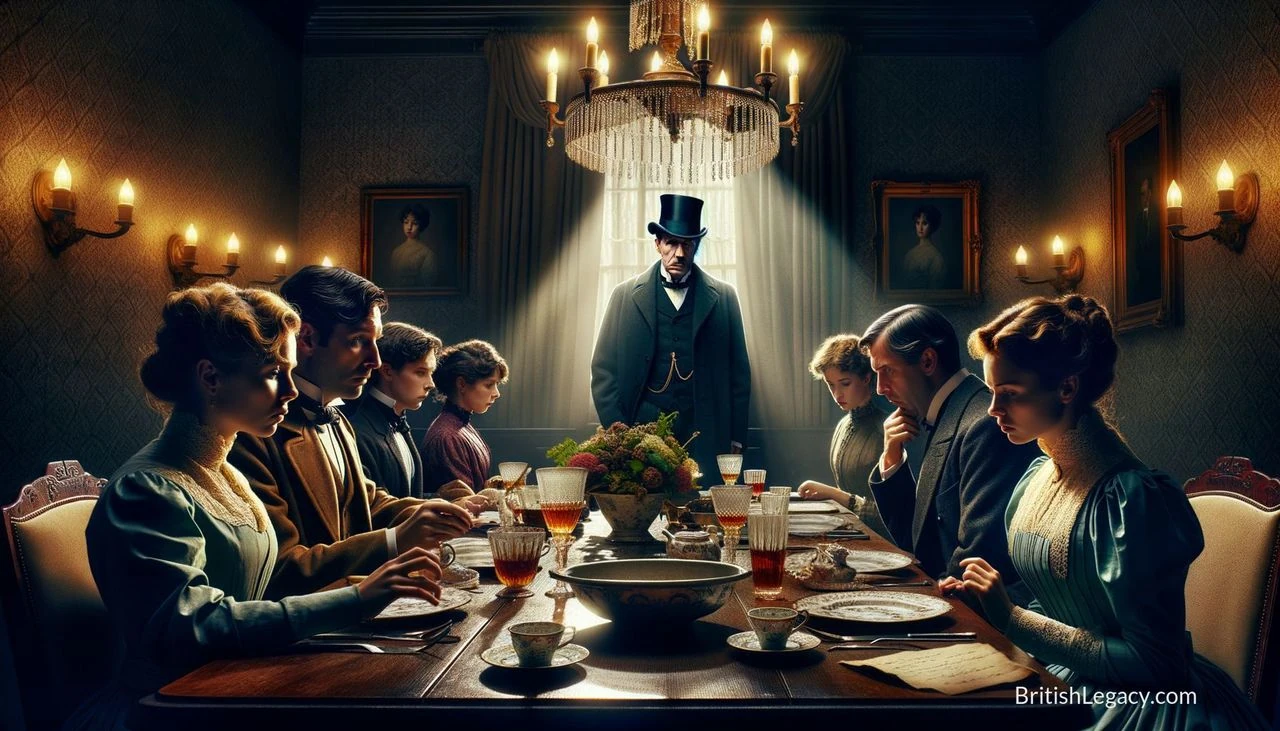
Set in 1912, "An Inspector Calls" unfolds in the dining room of the prosperous Birling family. The Birlings are celebrating the engagement of their daughter, Sheila, to Gerald Croft, a union intended to signify stability and social ascent. However, the evening is interrupted by the unexpected arrival of Inspector Goole, who brings news of a young woman named Eva Smith having committed suicide.
As the narrative progresses, the inspector methodically interrogates each member of the Birling family and Gerald, revealing their connections to the unfortunate Eva Smith. Through these revelations, the superficial facade of the family’s respectability begins to crumble. Arthur Birling's dismissal of Eva from his factory, Sheila's jealousy leading to Eva’s firing from a departmental store, Gerald’s affair with her, Sybil Birling's denial of aid from her charitable organisation, and Eric Birling's exploitative relationship with her all unravel under the piercing scrutiny of Inspector Goole.
The inspector's departure leaves the Birlings in disarray, grappling with the moral implications of their actions. The play concludes on an ambiguous note, with the sudden announcement that a real inspector is on his way to investigate a young woman's death, leaving the audience to question the nature of Inspector Goole and the profound message he imparts.
Themes and Impact:
"An Inspector Calls" is distinguished by its exploration of themes such as social responsibility, class disparity, and the interconnectedness of human actions. Priestley utilises the character of Inspector Goole as a moral compass, urging both the characters and the audience to reflect on their societal roles and ethical responsibilities. The play is a critique of the entrenched class system and the indifference of the wealthy elite towards the plight of the working class.
Priestley's work is also notable for its structure and dramatic tension, with the confines of a single setting amplifying the intensity of the unfolding drama. The play's didactic nature and its call for a more equitable society resonated deeply with post-war audiences and remain relevant in contemporary discourse.
Legacy and Contribution:
"An Inspector Calls" has secured its place as a seminal work in British theatre, revered for its compelling narrative and powerful social commentary. It has been adapted into multiple formats, including radio, television, and film, each adaptation introducing the play to new generations of audiences.
The play's influence extends beyond its immediate theatrical context, contributing significantly to British cultural heritage. By challenging social norms and advocating for collective responsibility, "An Inspector Calls" echoes the progressive ideals that have shaped modern British society.
Furthermore, the play has played a crucial role in theatre education, illuminating the power of drama as a tool for social critique and ethical contemplation. Its inclusion in the academic syllabus ensures that young minds engage with its timeless themes, fostering a deeper understanding of social dynamics and moral integrity.
Conclusion:
In conclusion, J.B. Priestley’s "An Inspector Calls" is more than just a classic play; it is a vital text that bridges literature, history, and social consciousness. Its probing questions about morality and social justice continue to resonate, making it an integral part of the rich tapestry of British theatre and cultural legacy. Through its timeless relevance and profound impact, "An Inspector Calls" remains a testament to the enduring power of theatre to mirror society and inspire change.