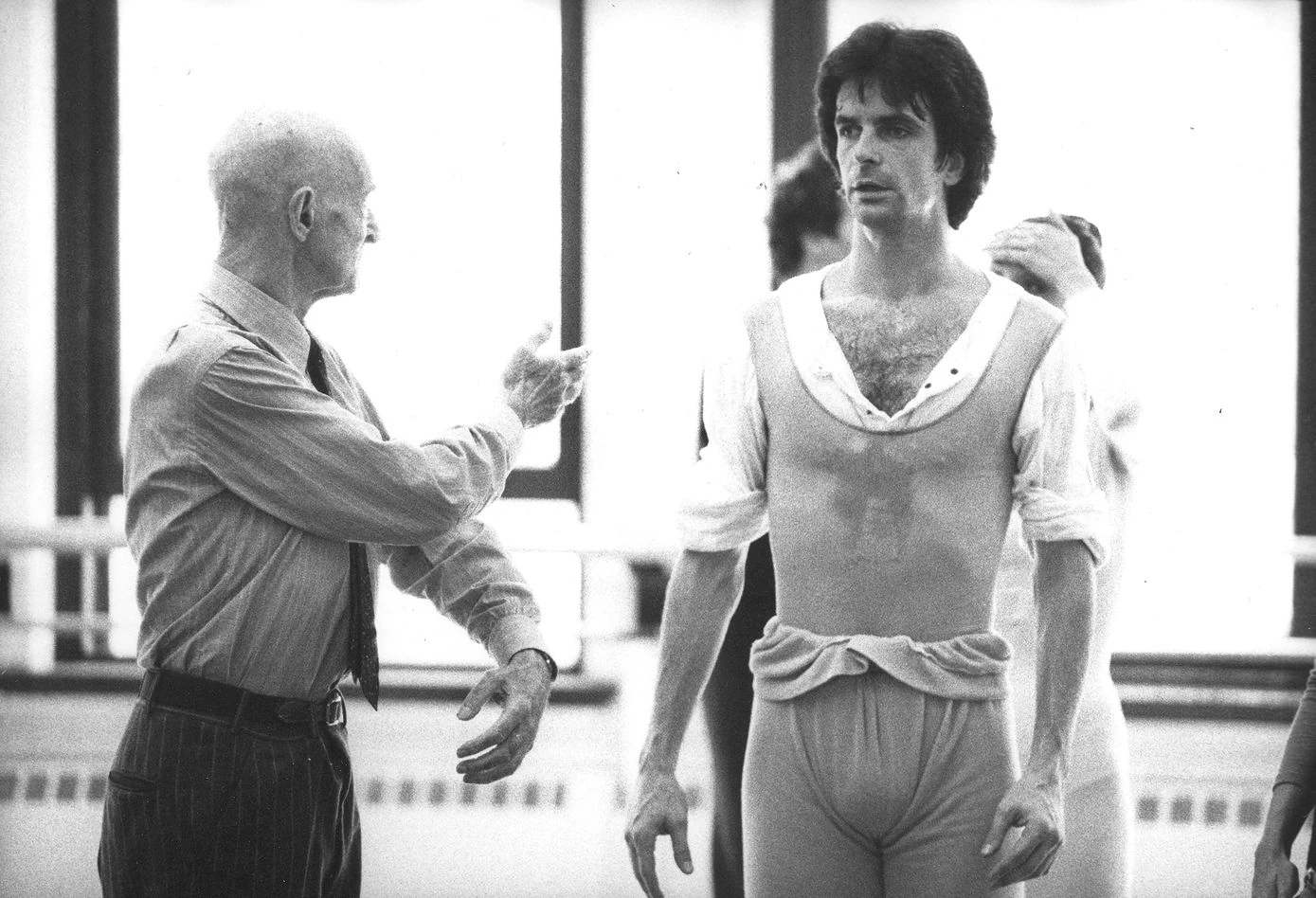
Antony Tudor made ballet tell stories from the inside out. In works such as Jardin aux lilas and Pillar of Fire, the drama lies not only in what characters do, but in the pressure of what they feel and cannot say. Born William Cook in London in 1908, Tudor began his professional dance career with Marie Rambert’s company before building a body of work that carried a distinctly psychological approach from Britain to the United States.
A London beginning
Tudor grew up in the Finsbury area of East London. His route into ballet began with watching rather than training: as a young man, he saw the Ballets Russes, including Serge Lifar dancing in George Balanchine’s Apollon Musagète in 1928. He later sought advice from ballet-bookshop owner Cyril W. Beaumont, who directed him to Marie Rambert, a former Ballets Russes dancer and teacher of the Cecchetti method.
Tudor began dancing professionally with Rambert in 1928. The relationship soon became a creative partnership. By 1929 he was her Ballet Club’s general assistant, and he began making work for its dancers. Among his early ballets were Cross Garter’d, Lysistrata and The Planets. He danced leading roles in his own choreography, joining the demands of making and performing the work.
Some of his most important early pieces arrived before he was 30. Jardin aux lilas and Dark Elegies established a choreographic voice that treated movement as a means of revealing private conflict. Rather than relying on spectacle alone, Tudor shaped gesture and relationships to show the emotional stakes within a scene. His work is often described as psychological ballet, but it remained grounded in classical forms: the innovation was in how those forms could make inward experience legible.
Private tensions on stage
First performed in 1936, Jardin aux lilas centres on a young woman betrothed to a man she does not love. At an Edwardian garden party, she bids farewell to the man she loves. The setting is socially composed; the emotional situation is not. Tudor’s choreography brings the two into tension, making restrained behaviour part of the drama rather than an obstacle to it.
Pillar of Fire, created in 1942, is another of his defining works. The story follows a young woman confronting social judgement and personal despair. Tudor’s American Ballet Theatre career gave the piece a place in a growing repertoire of works for the company, alongside Romeo and Juliet, Dim Lustre and Undertow. These ballets show the breadth of his work beyond the two titles most often associated with him.
His approach required dancers to do more than reproduce steps. In teaching, he focused on physical and psychological detail, asking performers to move beyond habitual mannerisms towards the character. The demand was exacting: the dancer had to make the emotional life of a role present through the body, while working within the discipline of ballet. Tudor’s own description of the process stressed not only the need to break down a performer’s habits, but the teacher’s responsibility to help rebuild them.
From the London Ballet to the United States
In 1938, Tudor founded the London Ballet with artists from Rambert’s circle. Among them were Hugh Laing, his future life partner, Andrée Howard, Agnes de Mille, Peggy van Praagh, Maude Lloyd and Walter Gore. The company gave Tudor and his collaborators a base for making and presenting work in London.
In 1940, with the Second World War under way, Tudor and members of the company went to New York at the invitation of Richard Pleasant and Lucia Chase. They joined the reorganised Ballet Theater, later known as American Ballet Theatre. Tudor remained closely associated with the company for the rest of his life and served as its resident choreographer for ten years. There he restaged earlier works and created new ones, including Pillar of Fire.
After retiring from dancing in 1950, he headed the faculty of the Metropolitan Opera Ballet School and taught at the Juilliard School recurrently from that year. In the mid-1950s he established the Philadelphia Ballet Guild and taught its weekly classes. He also mentored dancers of colour. His work as a teacher therefore extended beyond passing on steps: it connected his exacting attention to character and movement with the development of dancers and institutions.
Tudor continued to hold positions across the international dance world. He was artistic director of the Royal Swedish Ballet from 1963 to 1964 and choreographed three works for New York City Ballet. From 1973 he taught ballet technique at the University of California, Irvine, although a serious heart condition curtailed that work. He rejoined American Ballet Theatre in 1974 as associate artistic director. His later choreography included The Leaves Are Fading and The Tiller in the Fields, his last major work, created in 1978.
Recognition, preservation and a lasting method
Tudor’s work received recognition from arts organisations and universities. His awards included a creative arts medal from Brandeis University, the Dance Magazine and Capezio awards, New York City’s Handel Medallion, and Kennedy Center and Dance/USA National Honours. In 1988, he was inducted into the Hall of Fame at the National Museum of Dance.
He died in New York on 19 April 1987, aged 79. The preservation of his choreography continued through the Antony Tudor Ballet Trust, established to keep his works available for staging. Thirty of his dances have also been documented in Labanotation by the Dance Notation Bureau. These records include material on the dances’ histories, casts, style, music and production requirements, giving future companies practical resources alongside the choreography itself.
Tudor is often placed among the choreographers who helped make ballet a modern art. His particular contribution was not to abandon ballet’s formal discipline, but to use it to show complicated emotional lives. The result is a body of work in which restraint can carry force, and character is expressed through precise choices of movement.
Why Antony Tudor deserves a place in British Legacy
Tudor’s British legacy begins with the London training and company life that formed his early career. Marie Rambert gave him a place to dance, assist and choreograph; the Ballet Club became the setting for work that included Jardin aux lilas and Dark Elegies. In 1938 he founded the London Ballet with colleagues from that artistic circle. Those are specific British foundations for a career that later developed internationally, not a claim that his influence stopped at the country’s borders.
His significance lies in what he made possible within ballet. Tudor used classical technique to explore inner conflict, requiring dancers to communicate character and feeling as carefully as they executed movement. The approach shaped works that continued to be staged and documented, and it also informed his substantial teaching career, from Juilliard to the Philadelphia Ballet Guild and the Royal Swedish Ballet. His achievements connect British choreographic invention with the companies, performers and audiences who encountered his work elsewhere. For British Legacy, Tudor represents a practical artistic inheritance: ballets that remain performable, a method of attending closely to human behaviour, and a London-born choreographer whose early British work helped set the direction of an international career.
Sources
Antony Tudor — revision 1338989988
Adapted in part from Antony Tudor by Wikipedia contributors, under CC BY-SA 4.0. Text has been edited and combined with the existing article; this adapted text is shared under the same licence. Contributor history.