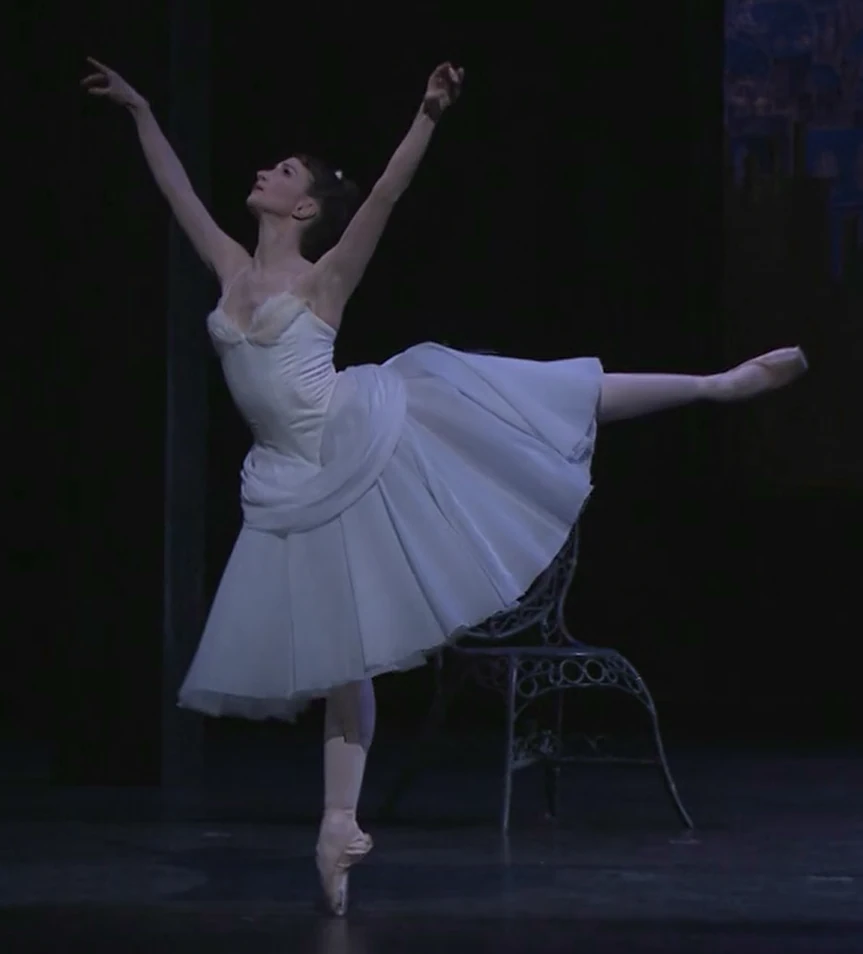
Lauren Cuthbertson’s career with the Royal Ballet has involved both a steady progression through the company’s ranks and the creation of roles in new work. She joined the corps de ballet in 2002, became a principal dancer in 2008 and originated the parts of Alice in Alice’s Adventures in Wonderland and Queen Hermione in The Winter’s Tale. Her route to the London company began with dance classes in Devon and continued through the Royal Ballet School.
Training in Devon and Richmond Park
Cuthbertson was born in Devon on 11 June 1984. She began studying dance at a local school run by Pamela De Waal, now Buckingham Dance Studios in Paignton. A place on the Royal Ballet School’s Junior Associate Programme gave her weekly classes based on the school’s training system, alongside young dancers in major cities around the UK.
She later won a permanent place at the school’s White Lodge, in Richmond Park. Cuthbertson attended from the age of 11 to 16 before continuing at the upper school. She moved directly into its third year, skipping the second, and graduated at 17. That training led into a professional career with the Royal Ballet, rather than an immediate appointment at the top of the company.
Rising through the Royal Ballet
Cuthbertson joined the Royal Ballet’s corps de ballet in February 2002. The company promoted her to soloist in September 2003, first soloist in September 2006 and principal in June 2008. A principal is one of a company’s leading dancers and holds its highest rank. The sequence of promotions gives a clear account of her development within the organisation: she advanced through several levels before becoming a principal, six years after joining.
Her early distinctions included the silver medal at the Adeline Genée Award in 2001 and the Young British Dancer of the Year title that year. She received the Dame Ninette de Valois Award in 2001–02 and the silver medal at the Varna International Ballet Competition in 2006. In 2007, she won the Arts and Culture Women of the Future Award. These recognitions span competition, dance-specific honours and a broader arts award, documenting a career that attracted attention before and after her promotion to principal.
Creating Alice and Hermione
In 2011 the Royal Ballet premiered Alice’s Adventures in Wonderland, Christopher Wheeldon’s ballet based on Lewis Carroll’s story. Cuthbertson originated the title role. The production brought a familiar literary character into a new full-length ballet, and her part required her to carry its central journey on stage. Critics acclaimed her performance, according to the biographical account.
Three years later, she originated Queen Hermione in Wheeldon’s The Winter’s Tale, based on Shakespeare’s play. The role placed her within another new full-length work, this time drawing on a story from the British theatrical canon. The existing account describes her performance as emotionally forceful; the firmer biographical detail is that she created the role when the ballet premiered in 2014.
The two parts show Cuthbertson working in newly made ballets rather than only in established repertory. Alice and Hermione belong to very different stories: one follows a child through a fantastical world, while the other centres on a Shakespearean tragedy of jealousy, loss and restoration. By originating each role, Cuthbertson helped establish how these characters first appeared in the Royal Ballet’s productions. Both ballets were choreographed by Wheeldon, linking two prominent projects across three years.
A career marked by awards and new work
Cuthbertson’s honours record reaches back to 2000, when she received the Phyllis Bedell’s Bursary Award and the Lynn Seymour Award for Expressive Dance. In 2001 she won the silver Adeline Genée Award and was named Young British Dancer of the Year. The Dame Ninette de Valois Award followed in 2001–02, before the Southwark Newcomer Award nomination in 2004. Her silver medal at Varna in 2006 and the Women of the Future Arts and Culture Award in 2007 came as she moved through the Royal Ballet’s ranks.
These details complement, rather than replace, the central record of her company career. The promotions from corps de ballet to soloist, first soloist and principal chart changes in professional responsibility; the awards show recognition at different points in her development. The roles of Alice and Hermione add another dimension, marking her participation in the first staging of two full-length ballets that entered the Royal Ballet’s repertory.
Why Lauren Cuthbertson deserves a place in British Legacy
Cuthbertson’s place in British Legacy rests on a specific connection between training, institution and performance. She began her dance education in Devon, joined the Royal Ballet School’s Junior Associate Programme and went on to train at White Lodge and the upper school. In 2002 she entered the Royal Ballet as a member of its corps de ballet; six years later she became a principal. That chronology makes her career a documented example of a dancer progressing through British ballet training into a leading position with one of the country’s major companies.
Her contribution also includes the creation of roles in new work. She originated Alice in the Royal Ballet’s 2011 production of Alice’s Adventures in Wonderland and Queen Hermione in the 2014 premiere of The Winter’s Tale. The first brought Lewis Carroll’s story into a new full-length ballet; the second translated Shakespeare’s play into dance. In both cases, Cuthbertson’s work formed part of the first performance history of the production, not simply its later interpretation. Taken together with her progression through the company and a record of awards from early in her career, these achievements show how an English dancer’s training and sustained work have contributed to the continuing life of British ballet on stage.
Sources
Lauren Cuthbertson — revision 1363344507 · Lauren Cuthbertson
Adapted in part from Lauren Cuthbertson by Wikipedia contributors, under CC BY-SA 4.0. Text has been edited and combined with the existing article; this adapted text is shared under the same licence. Contributor history.