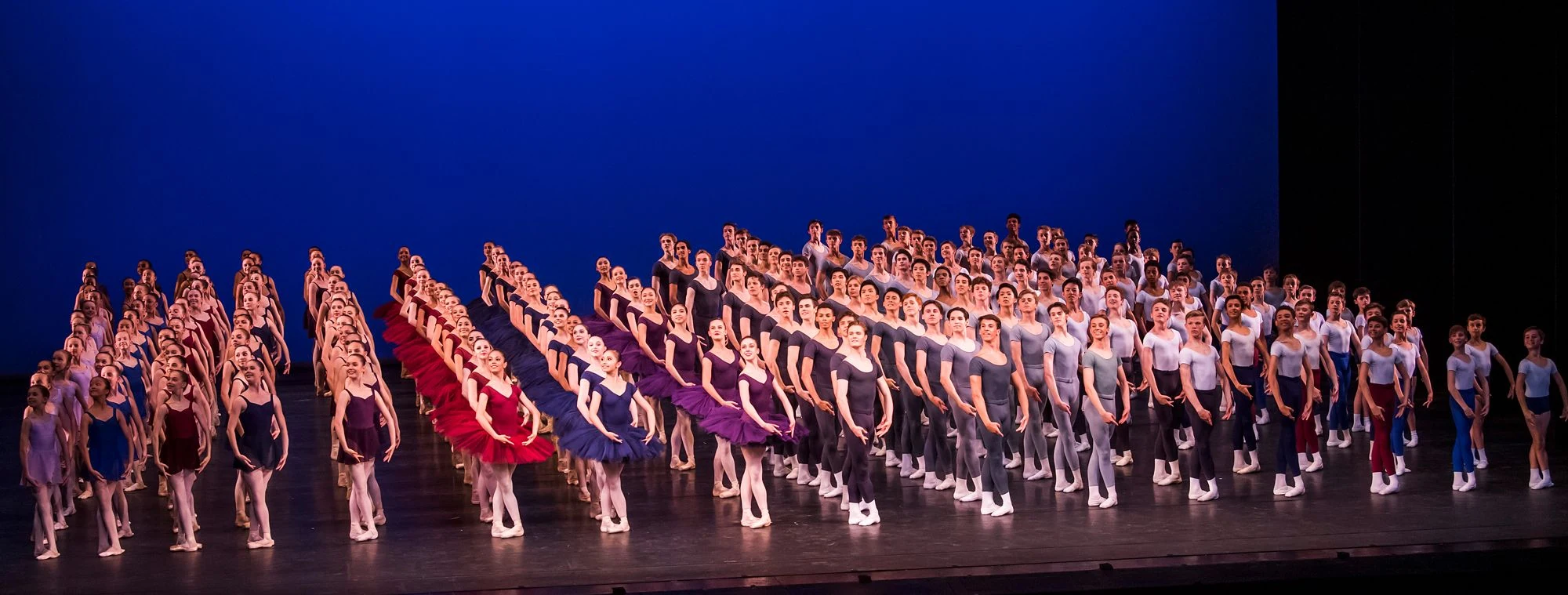
The Royal Ballet School has trained dancers for stages in Britain and around the world since its foundation in 1926. Its story is closely tied to the development of British ballet: founder Ninette de Valois set out to create both a school and a repertory company, and the institution’s history has since followed the changing homes and fortunes of those organisations. Today, students aged 11 to 19 train at two London sites, combining intensive dance instruction with academic study.
A school with a company in its sights
De Valois, an Irish-born dancer and choreographer, founded the Academy of Choreographic Art in 1926. Her ambition was not limited to teaching dance: she wanted to establish a repertory ballet company as well as a school. To pursue that aim, she collaborated with Lilian Baylis, a theatre producer and owner who ran the Old Vic and had acquired Sadler’s Wells Theatre in 1925.
In 1928, Baylis engaged de Valois to stage dance performances at both theatres. When Sadler’s Wells reopened in 1931, the school moved into studios there and became the Sadler’s Wells Ballet School, teaching girls and boys. The Vic-Wells Ballet Company was formed at the same time, using students from the school alongside other dancers. The school and company grew together; after ballet performances at the Old Vic ended, the company took the name Sadler’s Wells Ballet.
The company moved in 1946 to the Royal Opera House in Covent Garden, becoming its resident ballet company. The following year, the school moved from Sadler’s Wells to premises in Barons Court, and academic education was introduced for younger students. A Royal Charter granted in October 1956 formally linked the school and ballet company as The Royal Ballet School and Royal Ballet Company. De Valois remained director until her retirement in 1970.
Two sites, different stages of training
The school’s split-site structure took shape in 1955, when it secured White Lodge in Richmond Park for its younger pupils. The Georgian building, formerly a royal residence and hunting lodge, became the Lower School: a boarding school for students aged 11 to 16, combining general education with vocational ballet training. The Upper School remained at Barons Court, where students aged 16 to 19 focused on full-time ballet study.
In January 2003, older students moved from Barons Court to purpose-built premises on Floral Street in Covent Garden, close to the Royal Opera House. A bridge links the school building to the theatre and The Royal Ballet’s studios. Known as the Bridge of Aspiration, it received an architectural award. The school’s two locations thus serve distinct stages of training: White Lodge accommodates younger pupils, while Covent Garden places older students close to a major professional ballet company and its working environment.
At White Lodge, entry is by audition, and the school describes admission as based on dancing talent and potential, regardless of academic ability or personal circumstances. The school receives applications from Britain and overseas. Most students board at White Lodge, with a small number attending as day pupils. Alongside classical ballet, the dance curriculum includes character and contemporary dance, gymnastics, and Irish, Morris and Scottish dancing. Older pupils study repertoire, solos and pas de deux; boys also undertake upper-body conditioning.
Dance training sits alongside a general secondary education, with pupils studying the curriculum at Key Stages 3 and 4 and sitting GCSE examinations. At Covent Garden, the purpose-built complex includes six dance studios, a studio theatre and facilities for fitness, Pilates and physiotherapy. Academic provision includes classrooms, a library, an art studio and audiovisual facilities. Classes and rehearsals can be filmed for students to analyse their work. Alongside ballet, older students study subjects including stagecraft, make-up and body conditioning, as well as contemporary dance and repertoire.
From school performances to professional careers
The school’s work is visible each year in its summer performances, which bring together students from different age groups in classical and contemporary pieces. A further annual event at the Royal Opera House features graduating students preparing to enter professional life, as well as dancers from across the school. Its programme can combine new work with pieces from the Royal Ballet repertory, concluding with a grand défilé in which every student appears in a choreographed curtain call.
Graduates have gone on to careers as dancers and choreographers, including with The Royal Ballet and Birmingham Royal Ballet, the two companies with which the school is affiliated. Its alumni include Margot Fonteyn, Beryl Grey, Kenneth MacMillan, Darcey Bussell, Alessandra Ferri and Lauren Cuthbertson. Former students have also worked in musical theatre, contemporary and jazz dance, television and film. The range of careers reflects a training route rooted in classical ballet but not confined to a single company or performance setting.
The school’s connection to professional ballet has changed alongside the companies themselves. A second company that continued to perform at Sadler’s Wells and tour the UK became Sadler’s Wells Royal Ballet; in 1990, it moved to Birmingham Hippodrome and was renamed Birmingham Royal Ballet. That history helps explain why the school’s purpose has extended beyond supplying dancers to one London stage. Its graduates and training links have formed part of a wider British ballet network.
Why Royal Ballet School deserves a place in British Legacy
The Royal Ballet School deserves a place in British Legacy because its history shows how an educational institution helped build a national ballet tradition. De Valois founded the school with a company in mind, and her collaboration with Lilian Baylis connected teaching to the theatres where a repertory could be created and performed. The successive moves from Sadler’s Wells to Barons Court, White Lodge and Covent Garden reflect the practical work of sustaining that ambition: providing training, education and facilities for dancers at different stages of their development.
Its contribution is also evident in the breadth of its training and the careers of its alumni. Students learn classical ballet alongside other dance forms and academic subjects; performances give them opportunities to appear before professional careers begin. Graduates have contributed to The Royal Ballet, Birmingham Royal Ballet and many other areas of performance, while the school’s annual presentation at the Royal Opera House makes its transition from education to professional life visible to audiences. That combination of long-term training, institutional partnership and public performance has helped British ballet develop and renew its talent. The school’s place in that history rests not on a general claim of excellence, but on its sustained role in educating dancers and connecting them with the companies and stages that shape the art form.
Sources
Royal Ballet School (revision 1368320871)
Adapted in part from Royal Ballet School by Wikipedia contributors, under CC BY-SA 4.0. Text has been edited and combined with the existing article; this adapted text is shared under the same licence. Contributor history.