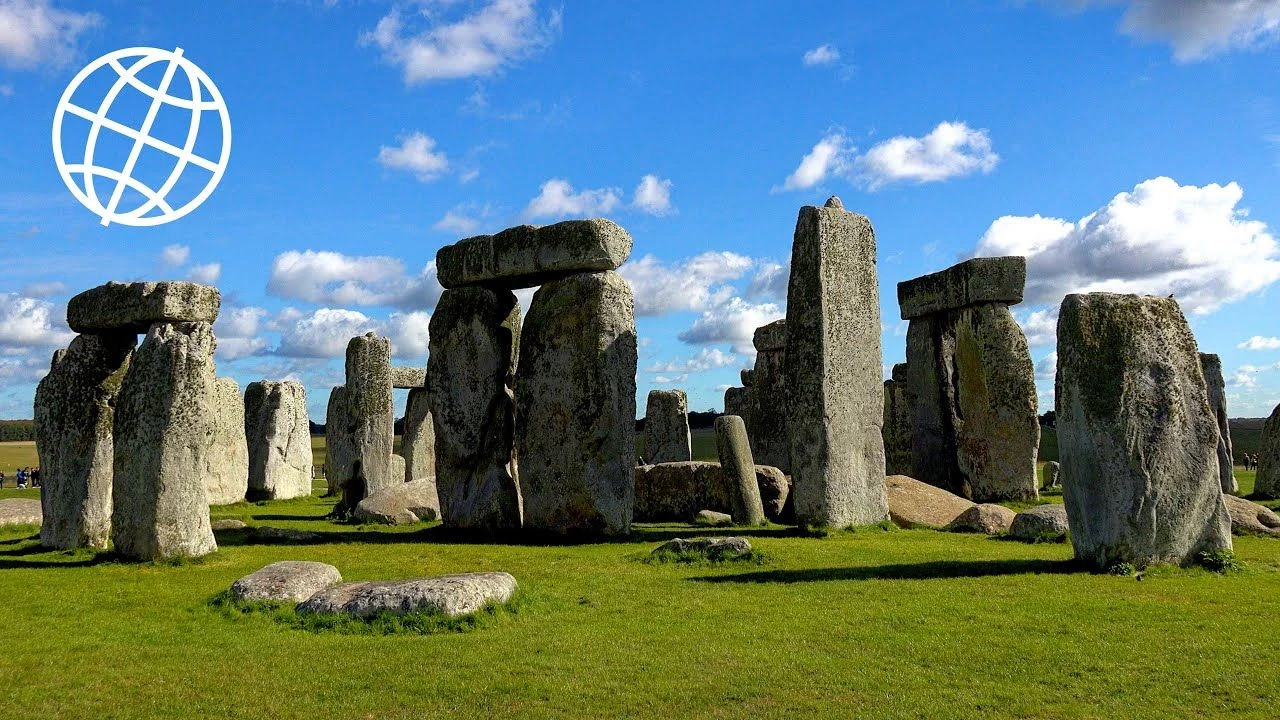
Stonehenge is not a single act of construction but a monument assembled in stages across many centuries. Its circular earthworks and later stone settings belong to a prehistoric landscape in Wiltshire, where the scale and arrangement of the stones continue to invite questions about the people who built them and the uses they made of the site.
Built in stages
The earliest components described in the account of Stonehenge are its circular ditches and banks, dated to about 3100 BC and associated with the late Neolithic period. The monument took shape over an extended period: the account places its recognisable stone form, including the great sarsens, at around 2500 BC. This long development matters. Stonehenge was not simply put up at one moment, but altered and built upon by people across generations.
Some of the stones are said to weigh more than 25 tonnes and to have been brought from a quarry nearly 20 miles away. Moving and setting stones of that scale with the tools and techniques available in prehistory would have required substantial organisation and skill. The arrangement, as well as the effort involved in transport and construction, has helped keep discussion of the monument’s purpose alive. The stones are evidence of deliberate building, but they do not provide a straightforward explanation of what every phase meant to its makers.
Purpose, alignment and interpretation
Stonehenge has been interpreted as a ceremonial or burial site, a place of healing, a celestial observatory or a location for other ritual practices. These are possibilities rather than a settled account of the monument’s original purpose. Its alignment with the solstices is one reason the site is often connected with the changing seasons and the movement of the sun.
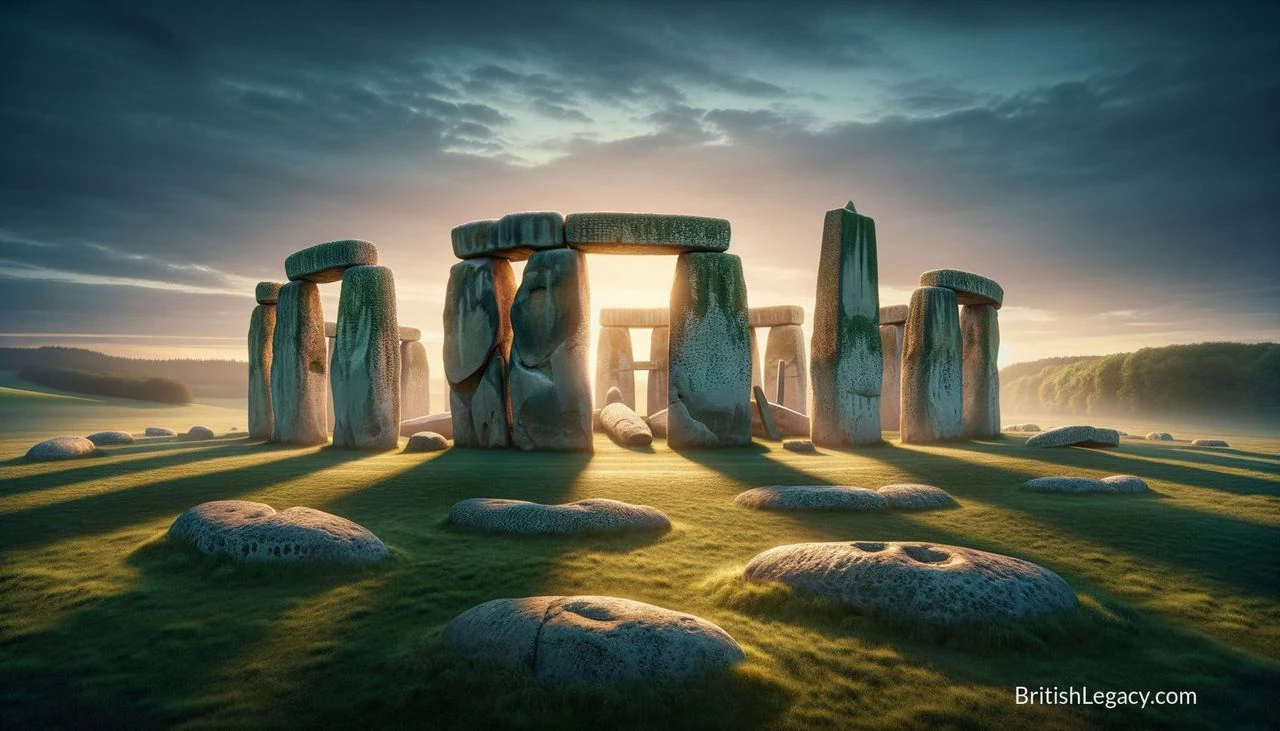
At the summer solstice, the sun rises over the Heel Stone and shines towards the stone circle. The alignment gives the monument a striking relationship with the sky, but it does not, by itself, establish exactly how prehistoric communities understood or used it. Its association with seasonal observation is one part of a larger story that remains open to interpretation.
A protected site and a modern destination
Stonehenge was designated a UNESCO World Heritage site in 1986. That recognition places it within a heritage shared beyond Britain, while its location in Wiltshire gives it a particular place in the history and landscape of England. The site is managed by English Heritage and attracts visitors interested in its stones, its prehistoric setting and the questions surrounding its construction.
The monument also has a life in modern culture, with references to it in literature, film and music. Visitors gather at the site for the solstice, and Stonehenge has become a focus for varied contemporary spiritual practices. Such uses belong to its continuing public history; they should not be confused with proof of what its builders intended. The gap between the monument’s physical presence and the incomplete knowledge of its original purposes is part of why it remains compelling.
Why Stonehenge deserves a place in British Legacy
Stonehenge deserves a place in British Legacy because it makes the distant past tangible without pretending that every question about it has been answered. Its banks, ditches and great stones record construction on a scale that required planning, labour and knowledge of materials. The movement of stones weighing many tonnes over a considerable distance is a reminder that prehistoric communities could organise ambitious work, even though the precise methods and meanings cannot be fully recovered from the monument alone.
Its legacy also reaches beyond the ancient building project. Stonehenge is a protected heritage site in Wiltshire, recognised internationally and encountered by visitors as both a landmark and a place of continuing cultural significance. The solstice alignment offers a visible connection between architecture and the sky, while the range of interpretations keeps the distinction between evidence and speculation in view. Remembering Stonehenge in a British context means recognising both its importance to England’s historic landscape and its place in a wider human heritage. Its enduring value lies not in a single definitive story, but in the material achievement and the questions it continues to raise.