The University of Cambridge is made up of 31 colleges, each with its own history and traditions. Together, they give the university a distinctive structure: academic life is shared across the institution, while each college maintains its own identity. Their buildings and grounds are part of Cambridge’s historic landscape, but the colleges are also places where students learn and university life continues.
A university built around colleges
Cambridge dates its foundation to 1209 and is among the oldest universities in the world. Its colleges are not simply a collection of historic buildings. They form the basic structure of the university, with each college operating as an independent entity and developing its own history and traditions. The resulting combination of shared university life and distinct college identities is central to how Cambridge is organised.
One feature of Cambridge teaching is the supervision system, described as a formal and informal tutorial arrangement. It offers students a more personal setting for academic discussion alongside their wider studies. The colleges are therefore not only custodians of older buildings: they have a role in the day-to-day educational experience of the university.
Three colleges, three histories
Trinity College was founded by Henry VIII in 1546. Its celebrated former students include Isaac Newton, Charles Darwin and Stephen Hawking, figures whose work spans different periods and fields. The college’s library, described as holding more than 200,000 books, is another part of its scholarly life. These details suggest the range of associations carried by an individual college: a long institutional history, collections for study and links to influential scholars.
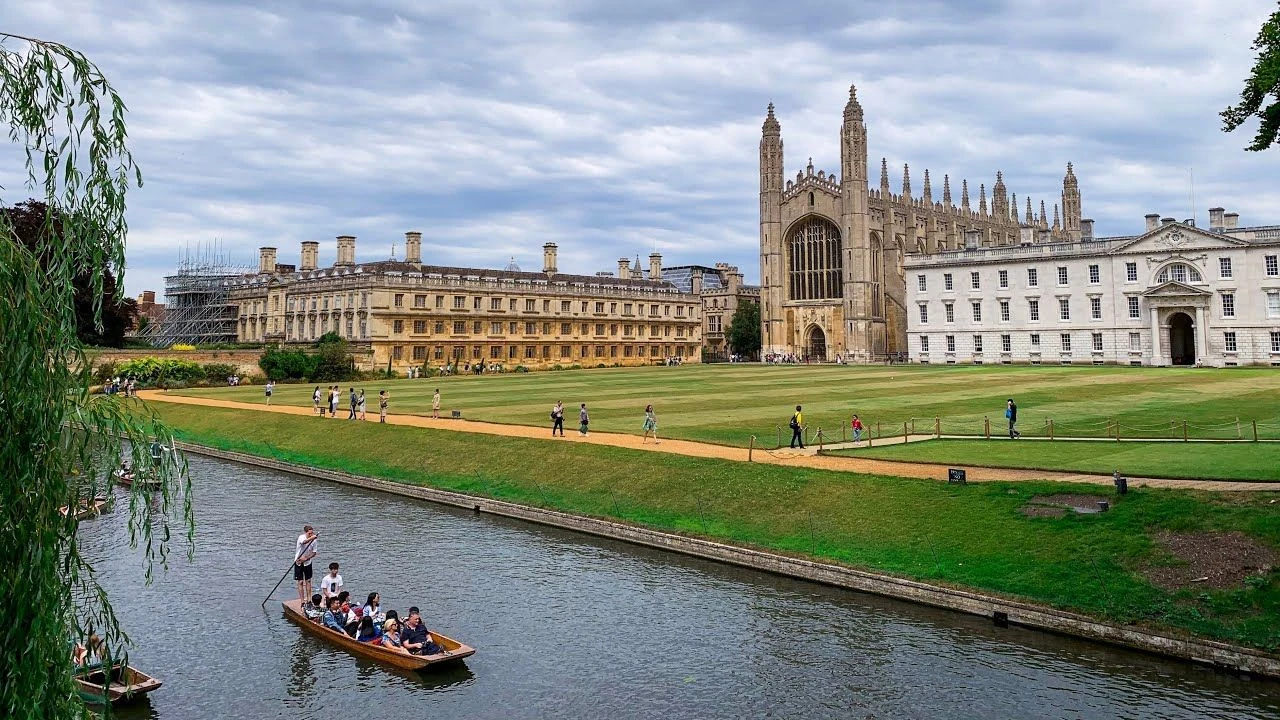
King’s College was founded by Henry VI in 1441. Its chapel is among the best-known buildings in Cambridge, recognised for its Gothic architecture, fan vaulting and stained-glass windows. The King’s College Choir is another longstanding feature of the college’s public identity. The chapel’s architecture and music make King’s a particularly visible meeting point between university life and the city’s cultural landscape.
Pembroke College, founded in 1347, has a different architectural distinction: its chapel was designed by Sir Christopher Wren and is described as the first chapel of his design. The college is also associated with gardens and academic initiatives. Its history illustrates how Cambridge colleges can retain historic buildings and traditions while continuing to develop their educational work.
Ideas, scholarship and public life
Cambridge’s influence extends beyond its colleges and the people who study within them. Former students named in the university’s history include political figures Sir Robert Walpole and Sir Winston Churchill, as well as the writer Virginia Woolf. These lives belong to different areas of public and cultural history; together, they indicate the breadth of fields in which Cambridge-educated people have become prominent.
The university is also associated with major scientific work. James Watson and Francis Crick’s discovery of the structure of DNA is linked to Cambridge’s Cavendish Laboratory, and Cambridge scholars have worked in quantum mechanics and theoretical physics. These examples place scientific research alongside teaching and the colleges’ historical and cultural roles. The colleges are part of a larger university, rather than the sole setting for every research achievement, but they form an enduring part of the institution through which its academic community is organised.
Architecture, landscape and visitors
Cambridge’s college grounds and buildings contribute to the character of the city. Courtyards and gardens sit alongside buildings of different ages and styles. The Backs, the riverside area where several colleges have gardens beside the River Cam, gives visitors a view of this relationship between college grounds and the wider landscape. Its appeal lies not in a single monument but in the way the river, gardens and historic buildings meet.
The colleges also attract visitors interested in Cambridge’s architecture and history. Tours can introduce the public to buildings and traditions that remain part of an active university. The visitor experience and the academic purpose of the colleges sit side by side: these are historic places to explore, but they are also working institutions with student life continuing within them.
Why The Cambridge University Colleges deserve a place in British Legacy
The Cambridge colleges deserve a place in British Legacy because they connect a long institutional history with the continuing work of education. Founded from 1209 onwards, the colleges have developed distinct identities within a shared university. Their role is not merely to preserve old buildings: the supervision system and college-based academic life give them an ongoing place in how students learn. That combination of continuity and active educational purpose makes the colleges significant beyond their age or appearance.
Their contribution is also visible in the city and in wider intellectual and cultural history. King’s College Chapel, Pembroke’s Wren-designed chapel and the landscape of the Backs make college history tangible in Cambridge. The named scholars, scientists, writers and political figures associated with the university show the range of fields touched by its community, while the colleges remain part of the setting in which that community is organised. Their legacy, then, is both local and outward-looking: a distinctive feature of Cambridge’s built environment and a continuing part of a university whose teaching and scholarship have reached far beyond the city.