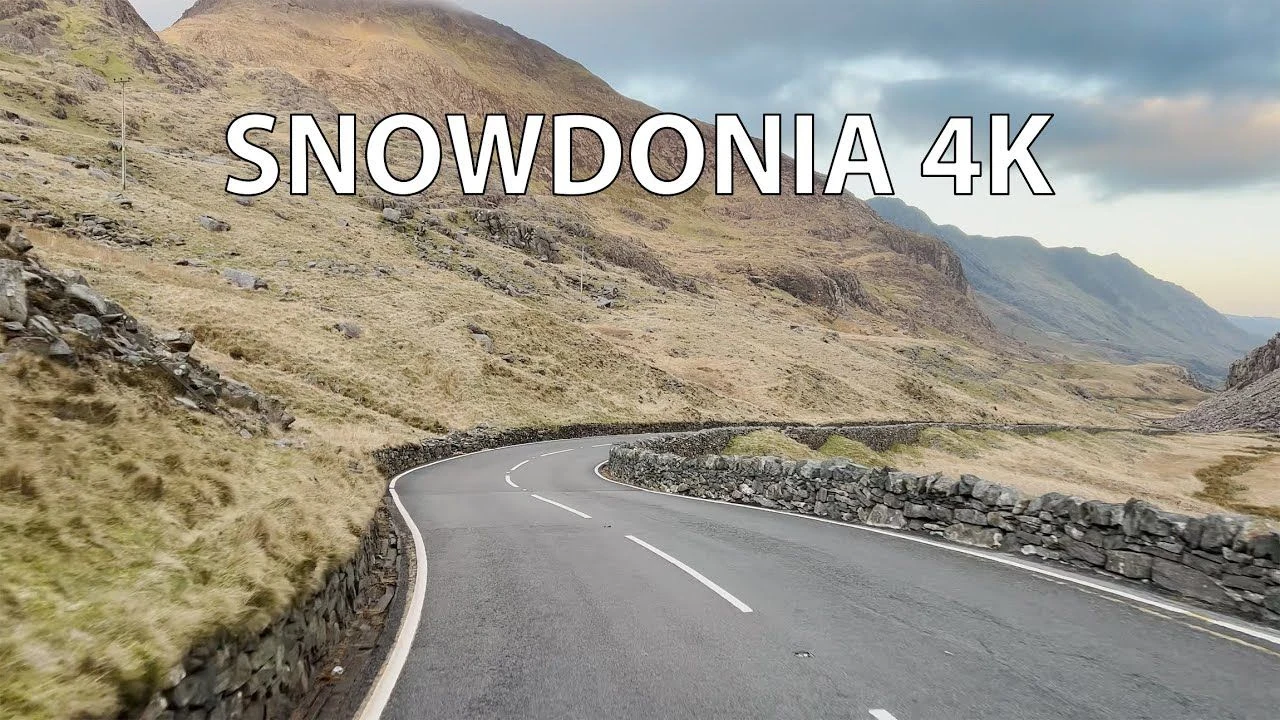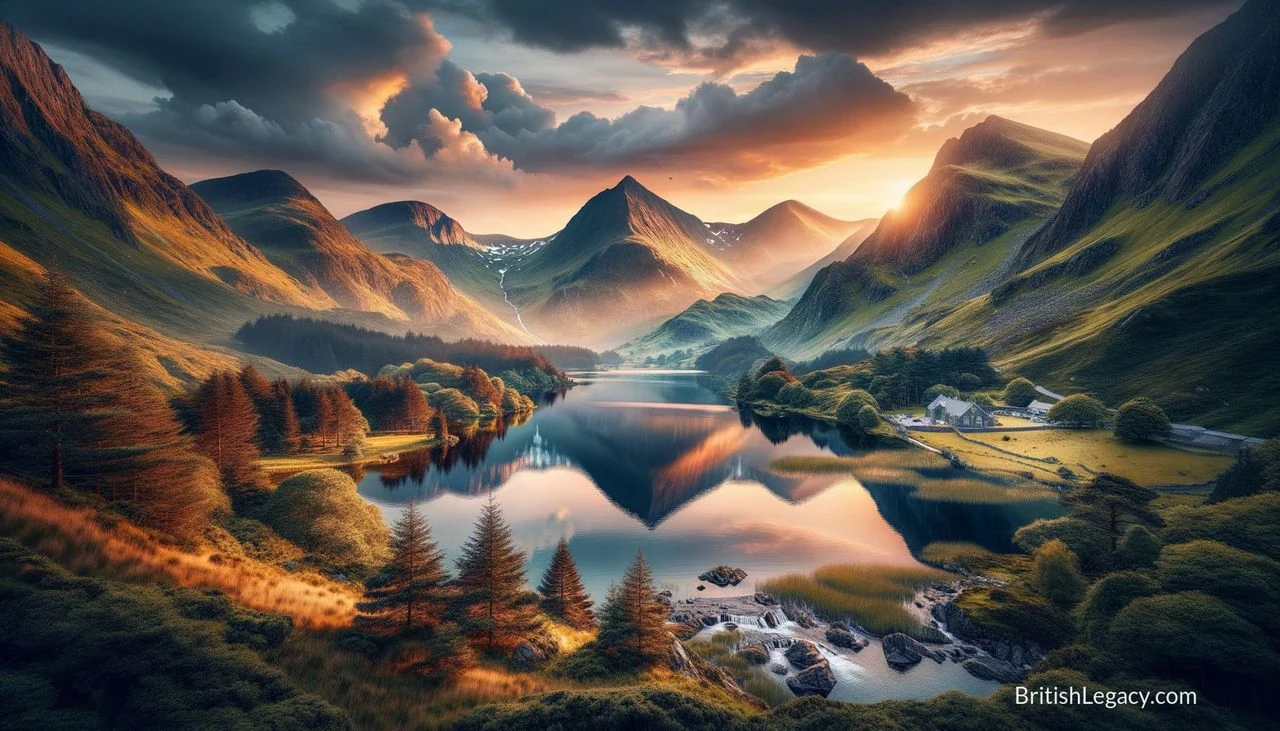
Snowdonia National Park brings together some of north Wales’s most recognisable mountain landscapes with a long human history and communities where Welsh remains part of daily life. Its best-known summit, Snowdon, draws walkers and mountaineers, while a mountain railway offers another way to reach the top. Beyond the peak, the park’s valleys, villages and historic sites give the region a character that cannot be reduced to its scenery alone.
A landscape shaped by mountains and valleys
The park covers an area given in the existing account as 827 square miles (2,140 square kilometres). Snowdon rises to 1,085 metres (3,560 feet), according to that account, and is the landscape’s defining summit. Walkers can approach it by several paths; the Snowdon Mountain Railway provides a rail journey to the summit. The combination of foot routes and railway makes the mountain accessible in different ways, while keeping the ascent itself central to the experience.
Snowdon is only part of the wider mountain country. The Carneddau, Glyderau and Moelwynion are among the other ranges named in the account. Valleys such as Ogwen and Nant Gwynant add a different scale to the landscape, with routes through enclosed terrain between the higher ground. Lakes, waterfalls and woodlands also feature in the park’s varied scenery. The Snowdon lily is identified as one of its rare plants, and the red kite as a notable bird.
Layers of Welsh history and culture
Historic places sit within this mountain setting. Dolbadarn Castle overlooks the Llanberis Pass and stands as a reminder of Wales’s medieval past. Bryn Cader Faner, described in the existing account as an ancient burial site, represents a much earlier period. The account also notes Roman remains in the region, adding another layer to a landscape whose history reaches beyond its famous castles.
Local life is part of the park’s identity, too. Betws-y-Coed is often known as a gateway to the area, while Beddgelert is associated with Welsh legend. The Welsh language is spoken by a significant part of the local population, and its presence gives the region a distinct cultural character. These communities, their language and traditions are not simply a backdrop for visitors: they are part of what makes this part of Wales recognisable within the wider British story.
Outdoor recreation and conservation
Walking and climbing are closely associated with Snowdonia, and mountain biking adds another way to explore its terrain. The account also points to nearby coastal outings, including Harlech Beach and the Llŷn Peninsula, which broaden the range of landscapes encountered on a visit to the region. Zip World is another modern attraction mentioned in connection with outdoor recreation. The existing text describes it as home to Europe’s longest zip line; without supporting detail, that superlative is not repeated here.
Alongside recreation, the original account emphasises sustainability, habitat restoration and the protection of biodiversity. These are important aims in a landscape that attracts visitors while supporting distinctive habitats and local communities. The article does not specify particular projects or outcomes, so they cannot be described in greater detail here. The broader point is clear: enjoying the park and caring for its natural environment need to be considered together.
Why Snowdonia National Park deserves a place in British Legacy
Snowdonia deserves a place in British Legacy because its significance comes from the close relationship between landscape, history and living culture. Snowdon and the surrounding ranges give the region a powerful physical identity, but the story also includes sites such as Dolbadarn Castle and Bryn Cader Faner, which connect the present landscape to different periods of Welsh history. The mountain railway and walking routes show how people encounter this terrain in different ways, while the valleys and villages make clear that the park is more than a collection of summits.
Its Welsh-speaking communities give that national story a particular character. The language, local traditions and places associated with Welsh history are part of the region’s heritage, not decorative additions to a scenic destination. Outdoor recreation brings visitors into contact with the landscape; conservation, in turn, matters if its habitats and natural features are to endure. Together, these qualities make Snowdonia a distinctive part of Wales and of Britain’s varied heritage: a place where natural grandeur, human history and contemporary life remain closely connected.