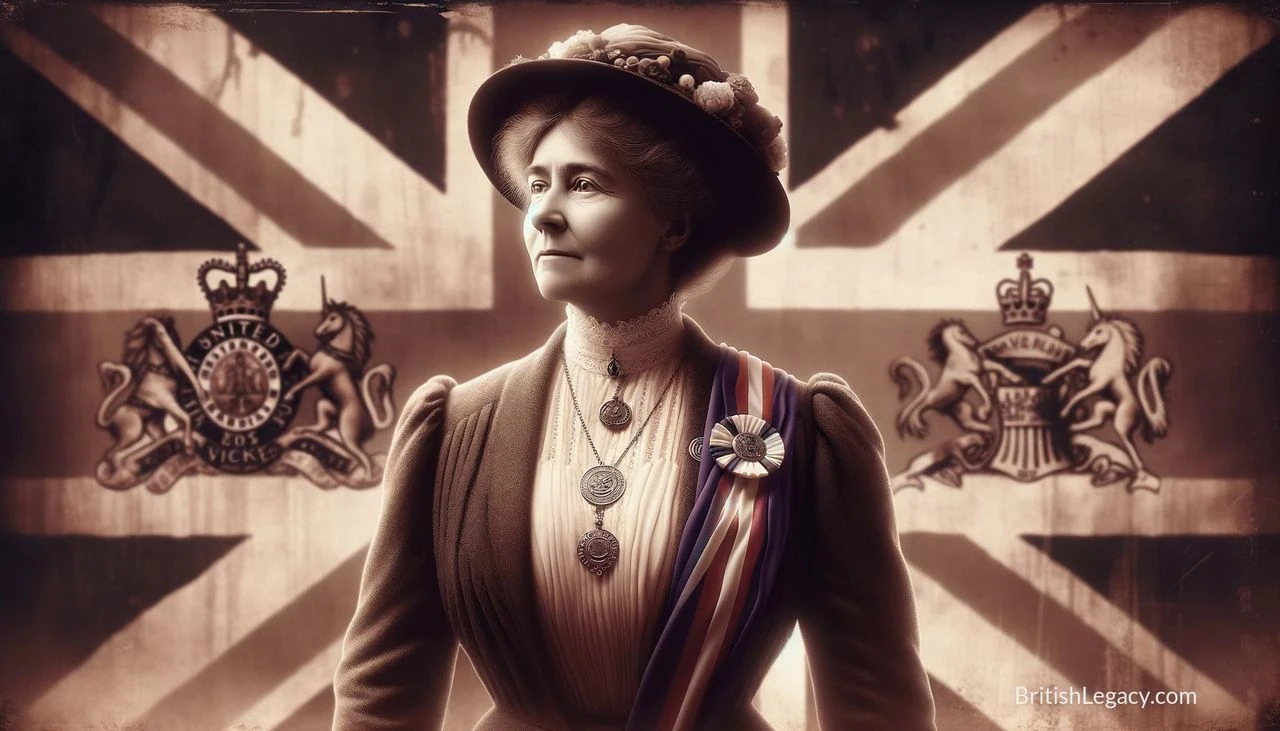
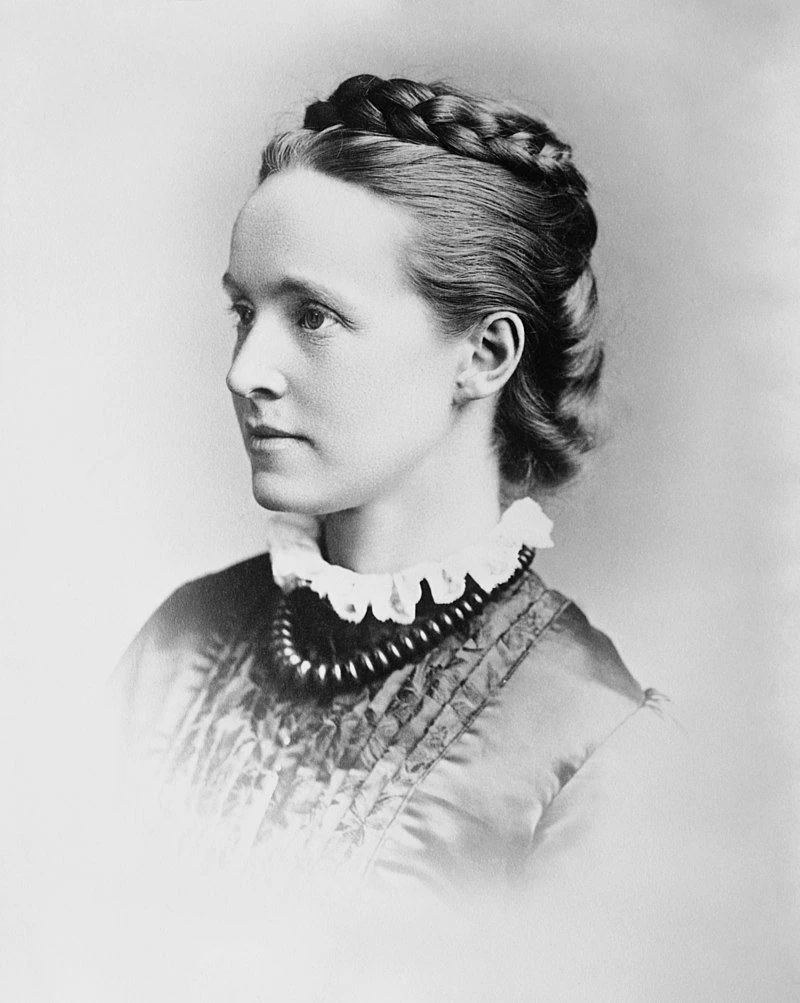
Millicent Fawcett spent decades arguing that women should have a voice in the government that shaped their lives. She pursued that case through public meetings, writing and organised political campaigning, insisting on legal change rather than the militancy of some other suffrage campaigners. As president of the National Union of Women’s Suffrage Societies (NUWSS), Britain’s largest suffragist organisation, she led a movement that continued to press for the vote during the First World War. The first women gained voting rights in 1918; equal voting terms with men followed in 1928.
A family shaped by education and reform
Millicent Garrett was born in Aldeburgh, Suffolk, on 11 June 1847, the eighth of ten children of businessman Newson Garrett and Louisa Dunnell. The family encouraged its children to read, speak their minds and take an interest in politics. Her elder sister Elizabeth Garrett Anderson became Britain’s first female doctor. When Millicent was twelve, she went with Elizabeth to a private boarding school in Blackheath. Later, Elizabeth introduced her to the suffragist Emily Davies, whose argument for women’s higher education and political rights helped define the work of the Garrett sisters’ generation.
In 1865, Fawcett attended a lecture by the philosopher and politician John Stuart Mill. The following year, she and a friend collected signatures for a petition asking Parliament to enfranchise women householders. Mill later introduced her to Henry Fawcett, a Liberal MP. They married in 1867. Henry had been blinded in a shooting accident, and Millicent acted as his secretary while pursuing her own writing and political work. Their daughter, Philippa, was born in 1868.
Fawcett’s interests extended beyond voting rights. In 1870, she published Political Economy for Beginners, a successful introductory book that went through ten editions over 41 years. She wrote and spoke about women’s education and political representation, and worked with Anne Clough to establish Newnham Hall in Cambridge in 1871. It became Newnham College, and Fawcett served on its council. She also backed women’s access to university degrees.
Building a national suffrage campaign
Fawcett joined the London Suffrage Committee in 1868 and spoke at a public pro-suffrage meeting in London the following year. After Henry’s death in 1884, she briefly withdrew from public life. When she returned to campaigning in 1885, she worked on women’s political representation and local government. In 1897, she became president of the newly formed NUWSS, which brought together suffrage societies across Britain.
Her approach was constitutional: argument, public campaigning and legal change, rather than violence or breaking the law. That set the NUWSS apart from the more militant Women’s Social and Political Union (WSPU). Fawcett argued that direct action risked alienating public opinion and MPs. The NUWSS organised demonstrations and public meetings, including the large open-air procession known as the Mud March in 1907 and a major march in 1908. Participants marched in groups reflecting their professions, making their public and professional standing part of the argument for political rights.
The organisation grew substantially under Fawcett’s leadership. By 1913, the NUWSS had almost 50,000 members, compared with 2,000 in the WSPU. The difference in size did not make the campaign simple: Fawcett had to hold together a broad association with differing views, while maintaining a strategy based on persuasion. Her own earlier writing also addressed the question of how votes should be represented, including proportional representation and the single transferable vote.
Her public work ranged beyond suffrage. Fawcett supported campaigns against the Contagious Diseases Acts, which subjected women suspected of prostitution to invasive medical examinations and imprisonment while not imposing equivalent penalties on men. She also backed campaigns concerning child protection and the treatment of working women. These causes reflected a recurring argument in her politics: women needed representation in public life if laws and institutions were to address unequal treatment.
War, partial enfranchisement and equal terms
During the First World War, the NUWSS continued its campaign for the vote while supporting hospital services in training camps, Scotland, Russia and Serbia. Fawcett and the organisation used women’s wartime contribution as an argument for political recognition. Their work formed part of a much wider movement, and the change in voting rights came in stages rather than as an immediate grant of equal suffrage.
The Representation of the People Act 1918 gave voting rights to some women aged 30 and over who met property qualifications. Fawcett remained president of the NUWSS until 1919, a year after the first women gained the vote. The Equal Franchise Act 1928 later gave women the same voting terms as men, extending the franchise to women aged 21 and over. The distinction matters: the 1918 settlement was a major advance, but it did not yet establish equal voting rights.
After leaving the suffrage campaign, Fawcett devoted more time to writing. Her publications included What I Remember and a biography of the social reformer Josephine Butler, written with Ethel M. Turner. Her career as an author had begun decades earlier, with works on political economy, women’s suffrage and other subjects. In 1925, she was appointed Dame Grand Cross of the Order of the British Empire.
Commemoration in London and beyond
Fawcett died at her home in Bloomsbury, London, on 5 August 1929, aged 82. A memorial to her and Henry was unveiled in Westminster Abbey in 1932, bearing the inscription: “A wise constant and courageous Englishwoman. She won citizenship for women.” Her name also became part of London’s civic landscape through Millicent Fawcett Hall in Westminster and a blue plaque at her former Bloomsbury home.
In 2018, a century after the 1918 Representation of the People Act, a statue of Fawcett by Gillian Wearing was unveiled in Parliament Square. She was the first woman commemorated there with a statue. Its banner carries the words “Courage calls to courage everywhere”, from a speech Fawcett gave in 1920. The anniversary brought renewed public attention to the campaign and to the difference between the limited franchise won in 1918 and equal terms achieved ten years later.
Why Millicent Fawcett deserves a place in British Legacy
Millicent Fawcett’s place in British history rests on sustained work rather than a single moment of triumph. She helped build a national organisation capable of keeping women’s suffrage in public debate over many years. As president of the NUWSS from 1897 to 1919, she led a large membership through public demonstrations, speeches and political argument. Her constitutional strategy differed from militant campaigning, but both approaches formed part of the wider struggle that changed women’s political rights. The 1918 Act granted the vote to some women, and the 1928 Act finally gave women the same voting terms as men.
Her significance also lies in the breadth of the work around that campaign. Fawcett wrote accessible books on political economy, promoted women’s access to higher education and helped establish Newnham Hall, later Newnham College. She also challenged laws that imposed unequal and intrusive treatment on women. These efforts connect political representation with practical opportunities: education, participation in public life and a voice in the laws that govern it. Her memorials, statue and continuing place in the story of British suffrage reflect that record. Remembering Fawcett means recognising both the progress achieved and the limits of the first victory; the long interval between 1918 and 1928 makes clear why her campaign mattered beyond the moment when women first entered the electorate.
Sources
Millicent Fawcett — Wikipedia revision · Millicent Fawcett — Wikipedia
Adapted in part from Millicent Fawcett by Wikipedia contributors, under CC BY-SA 4.0. Text has been edited and combined with the existing article; this adapted text is shared under the same licence. Contributor history.